Loading...
Done
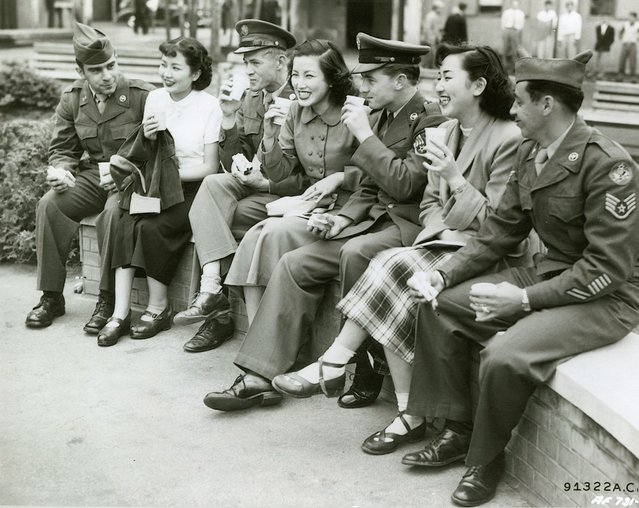
Airmen and their Japanese  dates “do” the town together, visiting the local points of interest. Almost every community in Japan has it's famous shrines and parks.  Tachikawa boasts beautiful environment. Girls are wearing western dress, May 1952. (Photo by National Archives and Records Administration)

Airmen and their Japanese dates “do” the town together, visiting the local points of interest. Almost every community in Japan has it's famous shrines and parks. Tachikawa boasts beautiful environment. Girls are wearing western dress, May 1952. (Photo by National Archives and Records Administration)
Details
10 Oct 2016 09:55:00
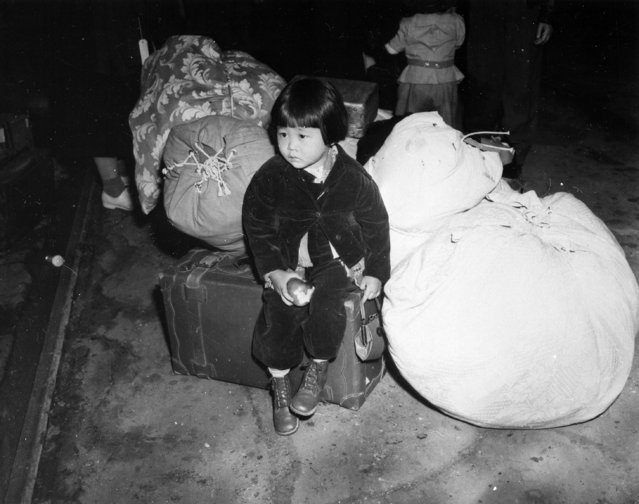
A young evacuee of Japanese ancestry waits with the family baggage before leaving by bus for an assembly center in California, in this April 1942 handout photo. (Photo by Courtesy Clem Albers/Department of the Interior/War Relocation Authority/National Archives/Reuters)

A young evacuee of Japanese ancestry waits with the family baggage before leaving by bus for an assembly center in California, in this April 1942 handout photo. February 19, 2017 marks the 75th anniversary of FDR signing executive order 9066, authorizing the internment of Japanese Americans during World War Two. (Photo by Courtesy Clem Albers/Department of the Interior/War Relocation Authority/National Archives/Reuters)
Details
19 Feb 2017 00:02:00
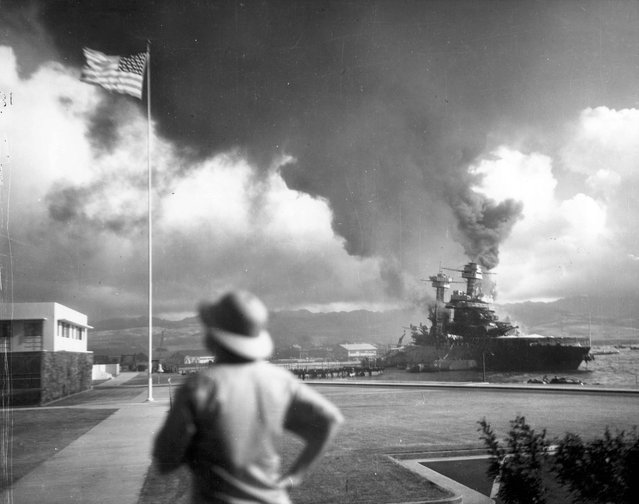
The damaged battleship USS California, listing to port after being hit by Japanese aerial torpedoes and bombs, is seen off Ford Island during the attack on Pearl Harbor, Hawaii, U.S. December 7, 1941. (Photo by Reuters/U.S. Navy/National Archives)

The damaged battleship USS California, listing to port after being hit by Japanese aerial torpedoes and bombs, is seen off Ford Island during the attack on Pearl Harbor, Hawaii, U.S. December 7, 1941. The 75th anniversary of the attack, which brought the United States into World War Two, is marked on December 7, 2016. (Photo by Reuters/U.S. Navy/National Archives)
Details
03 Dec 2016 11:07:00
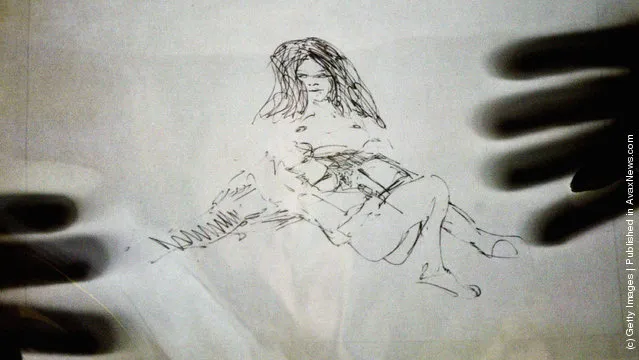
A lithographic sketch, purportedly by Beatles star John Lennon, shows his wife Yoko Ono in a sexual context within a document released by The National Archives

A lithographic sketch, purportedly by Beatles star John Lennon, shows his wife Yoko Ono in a sexual context within a document released by The National Archives March 23, 2004 in London. The document, which has been classified since 1970, contains sketches and letters which were seized by police to form part of the evidence for the indecency trial against the London Art Gallery which had been displaying the material. (Photo by Ian Waldie/Getty Images)
Details
02 Aug 2011 14:53:00
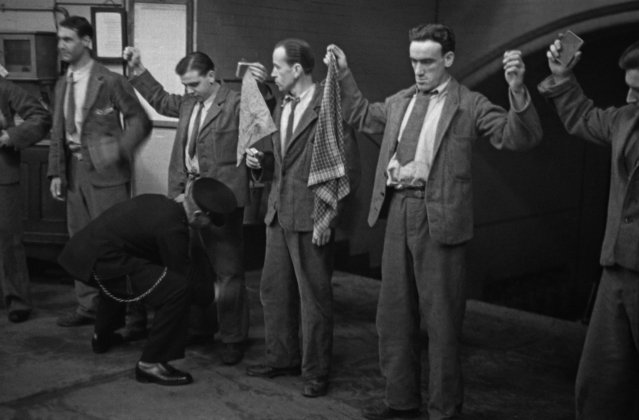
A prison officer frisking prisoners during the “rub-down” at Strangeways Prison in Manchester, UK on November 1948. (Photo by Bert Hardy/Picture Post/Hulton Archive/Getty Images)

Shot by Bert Hardy, the black and white images show prisoners carrying out remedial tasks such as untying knots in post office string and sewing mail bags. Other intriguing shots show lags doing their daily one hour outdoor exercise, being frisked for contraband items by officers during a routine “rub down” and serving evening meals. Strangeways was designed by Alfred Waterhouse and cost £170,000 ($207,910) to build. The prison, famed for its prominent ventilation tower and imposing design, has become a local landmark. Here: A prison officer frisking prisoners during the “rub-down” at Strangeways Prison in Manchester, UK on November 1948. (Photo by Bert Hardy/Picture Post/Hulton Archive/Getty Images)
Details
08 Mar 2017 00:01:00
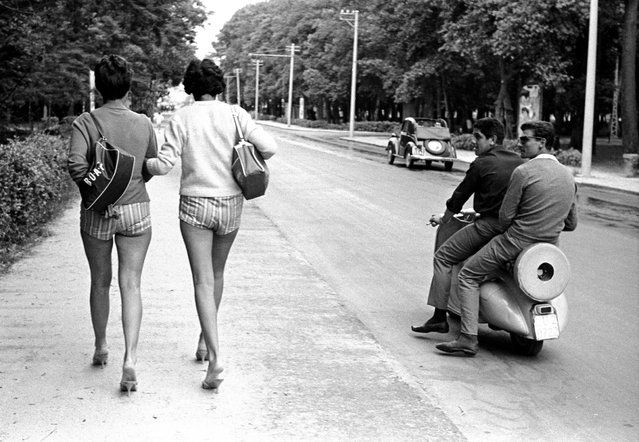
Viareggio in 1959. (Photo by Paolo Di Paolo/National Museum of 21st Century Arts)

The “Paolo Di Paolo: Lost World” exhibition presents more than 250 largely unseen images from the photographer’s archive. Di Paolo chronicled life in his country as an economic boom followed the destruction of the second world war. Although those were the years of la dolce vita he was an anti-paparazzo – he shunned the salacious and respected his subjects. The exhibition is at MAXXI, the National Museum of 21st Century Arts in Rome until 30 June. Here: Viareggio in 1959. (Photo by Paolo Di Paolo/National Museum of 21st Century Arts)
Details
01 May 2019 00:03:00
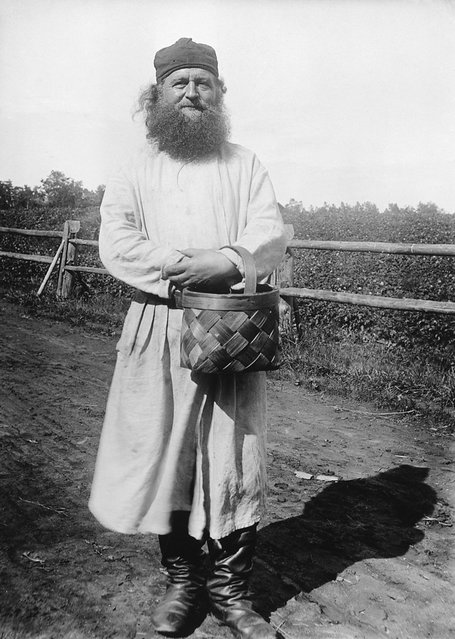
Priest, Valamo Monastery, Karelia, Russia (then Finland), 1930s. Father Venerius with a birchbark basket. (Photo by Einar Erici)

“Einar Erici (1885–1965) was a physician by profession, working at a tuberculosis hospital in Stockholm, even running a private medical practice. He was by then the most renowned Swedish expert of church organs and organ builders, and his archival collection is today held by the Swedish National Heritage Board. This archive includes mostly writings, such as letters and manuscripts for published articles and essays, but also more than 2 000 black and white photos – original prints, glass plates and film negatives”. – Swedish National Heritage Board

Photo: Priest, Valamo Monastery, Karelia, Russia (then Finland), 1930s. Father Venerius with a birchbark basket. (Photo by Einar Erici)
Details
09 Dec 2012 11:41:00
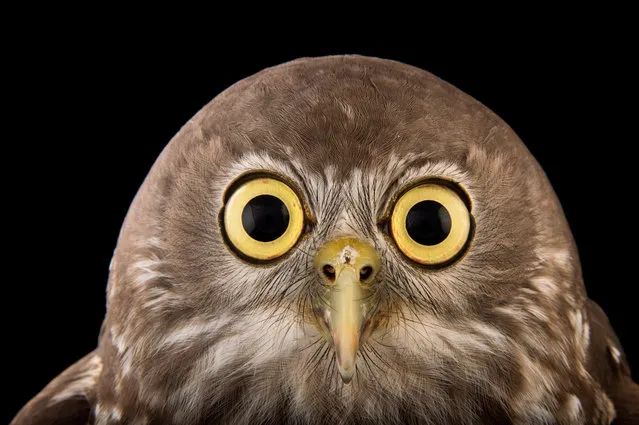
The National Geographic Photo Ark is a travelling exhibition of photographer Joel Sartore’s quest to create a photo archive of biodiversity around the world. So far, Sartore has captured studio portraits of more than 6,000 species – a number that he hopes to double. On 1 July, the ark will open at Melbourne zoo – the first time it has been exhibited in the southern hemisphere. More than 50 portraits will be on display, including many of Australian endangered animals being protected by programs at the zoo itself. These captions have been edited from text supplied by Melbourne zoo. Here: Barking owl. So-named because its call sounds like a barking dog, these birds are native to Australia, Indonesia and Papua New Guinea. In Victoria they are listed as an endangered species, and in 2003 there were estimated to be fewer than 50 breeding pairs. The main threat to the species in Victoria is loss of habitat, especially large trees with hollows in which they can nest and on which many of their prey depend. Apart from a bark, they may utter a chilling scream when they feel threatened. (Photo by Joel Sartore/National Geographic Photo Ark/The Guardian)

The National Geographic Photo Ark is a travelling exhibition of photographer Joel Sartore’s quest to create a photo archive of biodiversity around the world. So far, Sartore has captured studio portraits of more than 6,000 species – a number that he hopes to double. On 1 July, the ark will open at Melbourne zoo – the first time it has been exhibited in the southern hemisphere. More than 50 portraits will be on display, including many of Australian endangered animals being protected by programs at the zoo itself. These captions have been edited from text supplied by Melbourne zoo. Here: Barking owl. (Photo by Joel Sartore/National Geographic Photo Ark/The Guardian)
Details
01 Jul 2017 07:45:00