Loading...
Done
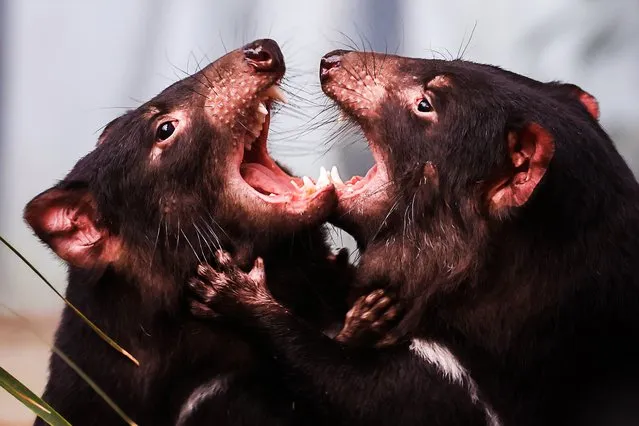
Tasmanian devils play on May 31, 2023 in Sydney, Australia. Creatures living at the zoo welcomed the arrival of winter with snow and an array of treats. Many of the zoo's species would naturally experience seasonal changes within their wild ranges. With the support of the SEA LIFE Sydney Aquarium's sub-Antarctic penguin team, snow is predicted to hit the Darling Harbour-based attraction on Wednesday morning. (Photo by Jenny Evans/Getty Images)

Tasmanian devils play on May 31, 2023 in Sydney, Australia. Creatures living at the zoo welcomed the arrival of winter with snow and an array of treats. Many of the zoo's species would naturally experience seasonal changes within their wild ranges. With the support of the SEA LIFE Sydney Aquarium's sub-Antarctic penguin team, snow is predicted to hit the Darling Harbour-based attraction on Wednesday morning. (Photo by Jenny Evans/Getty Images)
Details
11 Jun 2023 05:14:00
A bodybuilder applies tan on another participant during the Mr and Mrs East Africa Natural Body Building Contest at Rupaz Gym in Eldoret, western Kenya, on October 8, 2022. 168 bodybuilders from Rwanda, Uganda, Ethiopia, Tanzania and Kenia participate in this competition in Eldoret, a city known as “The City of Champions” for producing some of the best long distance runners in the world, that has not hosted a bodybuilding event since 2015. (Photo by Patrick Meinhardt/AFP Photo)

A bodybuilder applies tan on another participant during the Mr and Mrs East Africa Natural Body Building Contest at Rupaz Gym in Eldoret, western Kenya, on October 8, 2022. 168 bodybuilders from Rwanda, Uganda, Ethiopia, Tanzania and Kenia participate in this competition in Eldoret, a city known as “The City of Champions” for producing some of the best long distance runners in the world, that has not hosted a bodybuilding event since 2015. (Photo by Patrick Meinhardt/AFP Photo)
Details
25 Oct 2022 04:26:00
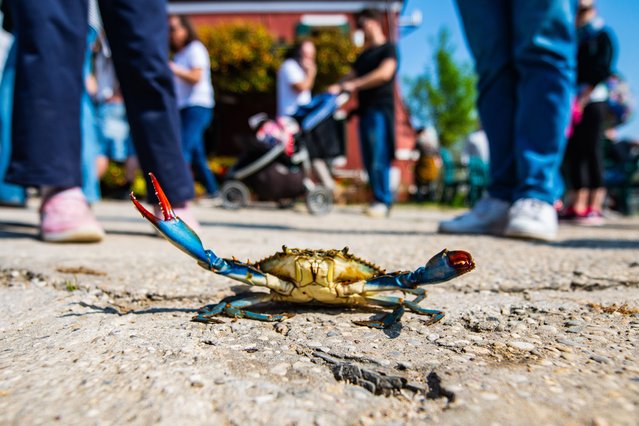
A blue crab, a highly invasive alien species, is seen at Lio Piccolo during the reforestation day on April 05, 2025 in Venice, Italy. The island of Lio Piccolo in the northern lagoon of Venice is being replanted with 16,000 new trees that will protect the salt marsh ecosystem that is fundamental to the natural health of Venice and the lagoon by WOWnature project, an Etifor initiative. (Photo by Simone Padovani/Getty Images)

A blue crab, a highly invasive alien species, is seen at Lio Piccolo during the reforestation day on April 05, 2025 in Venice, Italy. The island of Lio Piccolo in the northern lagoon of Venice is being replanted with 16,000 new trees that will protect the salt marsh ecosystem that is fundamental to the natural health of Venice and the lagoon by WOWnature project, an Etifor initiative. (Photo by Simone Padovani/Getty Images)
Details
20 Apr 2025 02:43:00
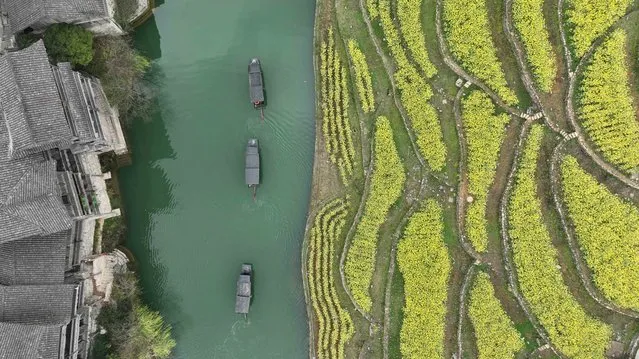
An aerial drone photo shows a view of the Wujiangzhai scenic spot in Zunyi, southwest China's Guizhou Province, March 14, 2024. The Wujiangzhai scenic spot, with its natural landscape and local folk customs, offers a blend of sightseeing, leisure activities and exhibitions, making it a popular destination for tourists. (Photo by Xinhua News Agency/Rex Features/Shutterstock)

An aerial drone photo shows a view of the Wujiangzhai scenic spot in Zunyi, southwest China's Guizhou Province, March 14, 2024. The Wujiangzhai scenic spot, with its natural landscape and local folk customs, offers a blend of sightseeing, leisure activities and exhibitions, making it a popular destination for tourists. (Photo by Xinhua News Agency/Rex Features/Shutterstock)
Details
08 Apr 2024 03:47:00
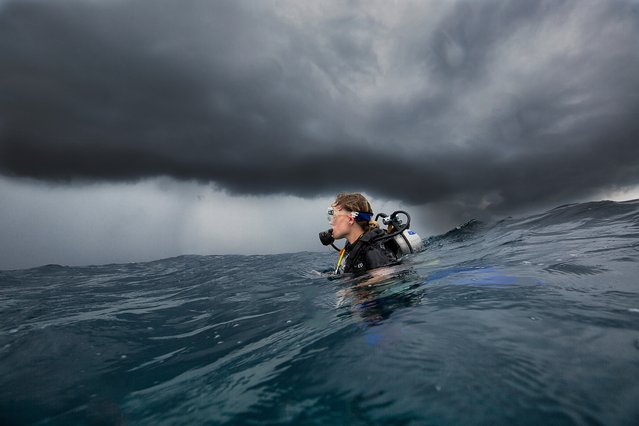
Winner. “This was taken in the South Ari Atolls, Maldives, as the south-west monsoon season was setting in. It features my partner – and dive buddy – Emma after surfacing at the end of the last dive of the day to find 1.5 metre swells and dark monsoon clouds. MICK RYAN, JUDGE: This beautiful portrait of a diver in an ocean swell below a menacing sky stands out this month for its emotional and elemental beauty. It is a reminder that while we may play among nature we are always dwarfed by its power and must be constantly on our guard”. (Photo by Simon Dunn/The Guardian)

Winner. “This was taken in the South Ari Atolls, Maldives, as the south-west monsoon season was setting in. It features my partner – and dive buddy – Emma after surfacing at the end of the last dive of the day to find 1.5 metre swells and dark monsoon clouds. MICK RYAN, JUDGE: This beautiful portrait of a diver in an ocean swell below a menacing sky stands out this month for its emotional and elemental beauty. It is a reminder that while we may play among nature we are always dwarfed by its power and must be constantly on our guard”. (Photo by Simon Dunn/The Guardian)
Details
04 Oct 2016 10:55:00
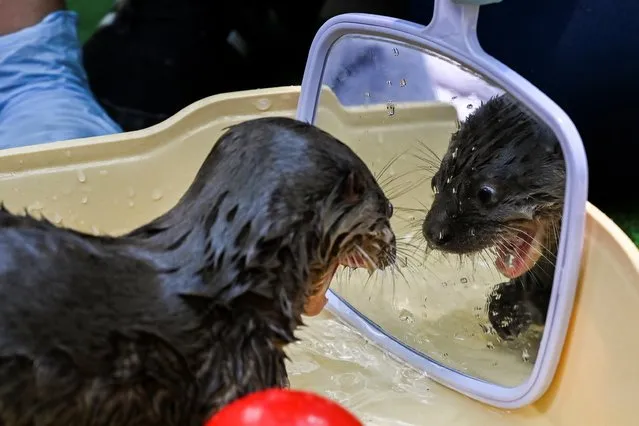
A river otter (lontra longicaudis) of 6-weeks-old looks in the mirror during a bath in the Animal Welfare Unit of the Zoo in Cali, Colombia, on October 22, 2019. The baby otter was found abandoned brought to the Cali Zoo for breeding, for its extensive experience in raising these species. According to the International Union for Conservation of Nature the river otter (lontra longicaudis) are in danger of extinction, because of mining, agriculture, pollution of rivers and housing construction in their habitat. (Photo by Luis Robayo/AFP Photo)

A river otter (lontra longicaudis) of 6-weeks-old looks in the mirror during a bath in the Animal Welfare Unit of the Zoo in Cali, Colombia, on October 22, 2019. The baby otter was found abandoned brought to the Cali Zoo for breeding, for its extensive experience in raising these species. According to the International Union for Conservation of Nature the river otter (lontra longicaudis) are in danger of extinction, because of mining, agriculture, pollution of rivers and housing construction in their habitat. (Photo by Luis Robayo/AFP Photo)
Details
27 Oct 2019 00:03:00
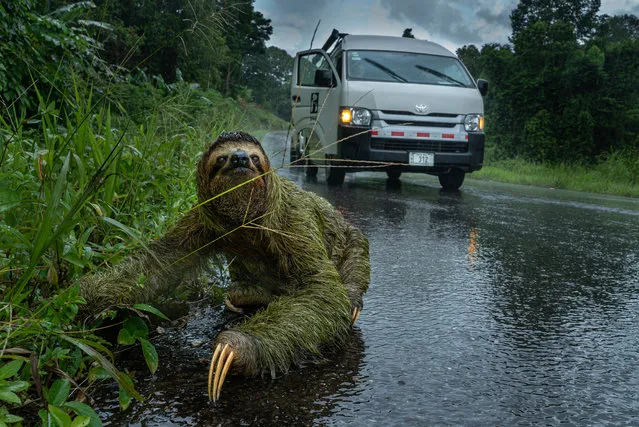
People and Nature category winner: Why did the sloth cross the road? by Andrew Whitworth (Osa Conservation and University of Glasgow), taken in Osa Peninsula, Costa Rica. “I was driving out from the Osa Peninsula, located on the southern Pacific coast of Costa Rica on a dark, stormy day. This female three-toed sloth (Bradypus variegatus) had luckily just about made it across the road, and the drivers of the Toyota on this occasion had spotted her in good time”. (Photo by Andrew Whitworth/2019 British Ecological Society Photography Competition)

People and Nature category winner: Why did the sloth cross the road? by Andrew Whitworth (Osa Conservation and University of Glasgow), taken in Osa Peninsula, Costa Rica. “I was driving out from the Osa Peninsula, located on the southern Pacific coast of Costa Rica on a dark, stormy day. This female three-toed sloth (Bradypus variegatus) had luckily just about made it across the road, and the drivers of the Toyota on this occasion had spotted her in good time”. (Photo by Andrew Whitworth/2019 British Ecological Society Photography Competition)
Details
30 Nov 2019 00:05:00
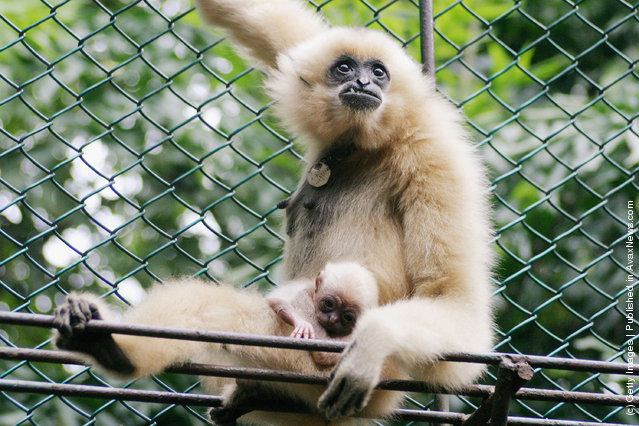
Newborn White-Cheeked Gibbon Nomascus

“Nomascus is the second most speciose genus of gibbons (family Hylobatidae). Originally this genus was a subgenus of Hylobates, and all individuals were considered one species, Hylobates concolor. Species within Nomascus are characterized by 52 chromosomes. Some species are all black, some light with a distinct black tuft of crown fur, and some by distinct, light-colored cheek patches. Nomascus is found from southern China (Yunnan) to southern Vietnam, and also on Hainan Island. One of the genus' species, Nomascus nasutus, has been deemed “the most critically endangered ape species in the world”. All of the species in this genus are endangered or critically endangered”. – Wikipedia

Photo: A newborn White-Cheeked Gibbon clings to its mother in the Nanning Zoo on April 12, 2004 in Nanning, Guangxi province, China. The White-Cheeked Gibbon's natural habitat is Southern China as well as Vietnam and Laos. They are classified as highly endangered and are on the brink of extinction due to poaching and reduction of natural rainforests. (Photo by Getty Images)

Details
12 Aug 2011 11:51:00