Loading...
Done
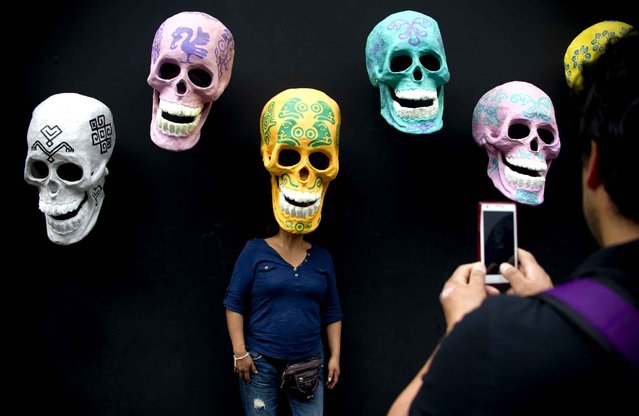
A woman poses for pictures with skulls made of cardboard placed on an altar next to the San Francisco church in Mexico City during the celebration of All Souls Day on November 2, 2015. (Photo by Yuri Cortez/AFP Photo)

A woman poses for pictures with skulls made of cardboard placed on an altar next to the San Francisco church in Mexico City during the celebration of All Souls Day on November 2, 2015. (Photo by Yuri Cortez/AFP Photo)
Details
05 Nov 2015 08:08:00
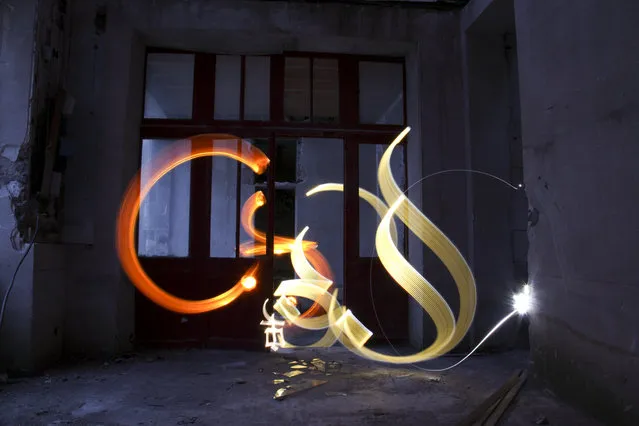
Light Calligraphy By Julien Breton

French artist Julien Breton aka Kaalam started calligraphy in 2001 by copying Arabic calligraphers. Self-taught, he began to incorporate long exposure photography to create incredible light paintings around the world. All of the images in this gallery were created in-camera, meaning there is no Photoshop trickery or post-production manipulation involved in creating these works of art.
Details
28 Jul 2014 06:24:00
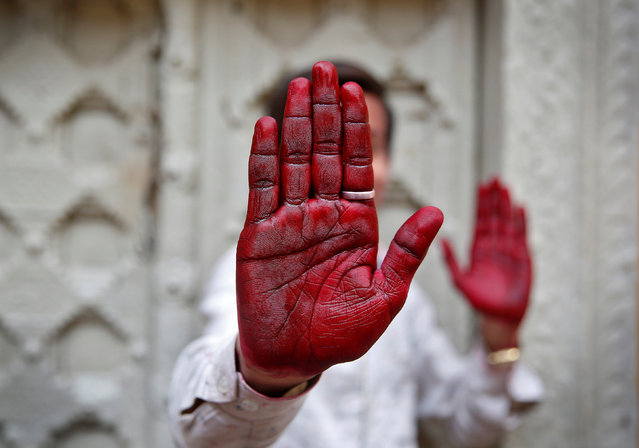
A Hindu devotee displays his inked hand after taking part in the religious festival of Holi in Vrindavan, in the northern state of Uttar Pradesh, India, March 8, 2017. (Photo by Cathal McNaughton/Reuters)

A Hindu devotee displays his inked hand after taking part in the religious festival of Holi in Vrindavan, in the northern state of Uttar Pradesh, India, March 8, 2017. (Photo by Cathal McNaughton/Reuters)
Details
10 Mar 2017 00:05:00
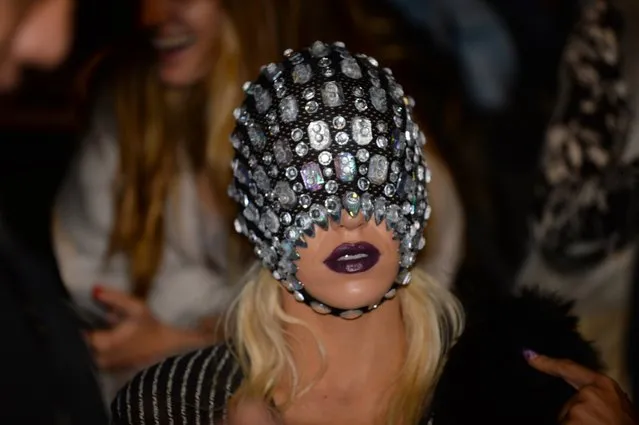
A visitor wears an outfit as she watches the St. George NextGen show for Fashion Week in Sydney on May 16, 2017. (Photo by Peter Parks/AFP Photo)

A visitor wears an outfit as she watches the St. George NextGen show for Fashion Week in Sydney on May 16, 2017. (Photo by Peter Parks/AFP Photo)
Details
17 May 2017 08:34:00
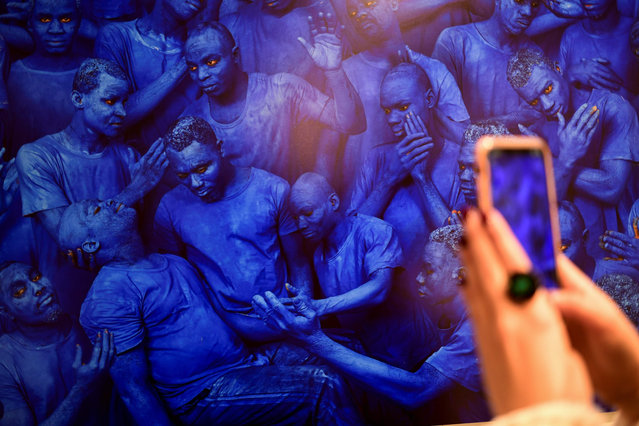
A visitor takes pictures with a smartphone of an artwork entitled “Blue Europe, 2015” by Chinese artist Liu Bolin, on display during the exhibition “Visible Invisible” at the Mudec Museum in Milan on May 14, 2019. Liu Bolin known as “the invisible man” for his photographic self-portraits, focused on a body-painting blending with the surrounding area. (Photo by Miguel Medina/AFP Photo)

A visitor takes pictures with a smartphone of an artwork entitled “Blue Europe, 2015” by Chinese artist Liu Bolin, on display during the exhibition “Visible Invisible” at the Mudec Museum in Milan on May 14, 2019. Liu Bolin known as “the invisible man” for his photographic self-portraits, focused on a body-painting blending with the surrounding area. (Photo by Miguel Medina/AFP Photo)
Details
16 May 2019 00:07:00
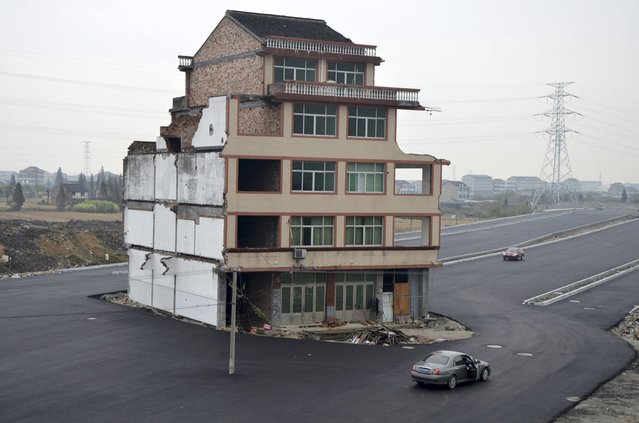
An isolated five-floor building stands in the middle of a new road on November 22, 2012 in Wenling, Zhejiang Province of China. Zhejiang Province of China. 67-year-old Luo Baogen and his 65-year-old wife from Xiazhangyang village still live in the half-demolished residential building, because they are dissatisfied with the relocation compensation. The road, which leads to the Wenling Railway Station, has not been put into use. (Photo by ChinaFotoPress)

An isolated five-floor building stands in the middle of a new road on November 22, 2012 in Wenling, Zhejiang Province of China. Zhejiang Province of China. 67-year-old Luo Baogen and his 65-year-old wife from Xiazhangyang village still live in the half-demolished residential building, because they are dissatisfied with the relocation compensation. The road, which leads to the Wenling Railway Station, has not been put into use. (Photo by China Foto Press)
Details
25 Nov 2012 09:49:00
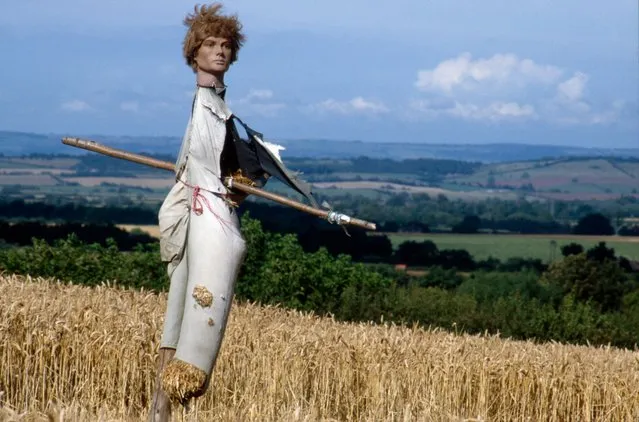
“The ripening crops eloquently signify that the scarecrow’s work is done. Few remain to see their task fulfilled because if they become entangled in the harvesting machinery it causes serious damage”. (Photo by Colin Garratt)

When Colin Garratt went to photograph the traditional sentinels of the British countryside, he found they ranged from the dapper to the downright sinister. “They are not from the anaesthetised world of the craft fair”, says Colin Garratt, “but are the direct descendants of the ancient spectres which have haunted the landscape for centuries”. The Scarecrow Exhibition is at Geddes Gallery, London, from 25 to 30 March. (Photo by Colin Garratt)
Details
29 Mar 2016 11:46:00
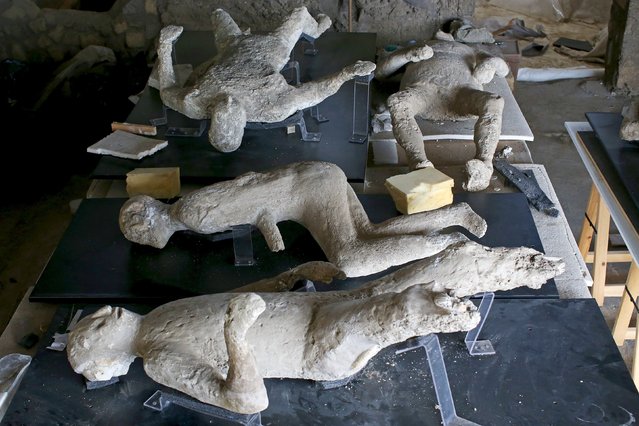
Plaster cast moulds of victims of the Mount Vesuvius eruption lie on a display table in a laboratory at Pompeii October 13, 2015. An expert team made up of archaeologists, radiologists, orthodontists and anthropologists began on September 2015 to use CAT scan technology (computerised axial tomography) to peer inside the plaster cast moulds of Pompeii's victims, in a study that has added more detail to previous findings. (Photo by Alessandro Bianchi/Reuters)

Plaster cast moulds of victims of the Mount Vesuvius eruption lie on a display table in a laboratory at Pompeii October 13, 2015. An expert team made up of archaeologists, radiologists, orthodontists and anthropologists began on September 2015 to use CAT scan technology (computerised axial tomography) to peer inside the plaster cast moulds of Pompeii's victims, in a study that has added more detail to previous findings. A 16-layer scan had to be used in order to penetrate the hardened plaster but the results showed up impressive skeletal remains and near perfect teeth. (Photo by Alessandro Bianchi/Reuters)
Details
22 Oct 2015 08:02:00