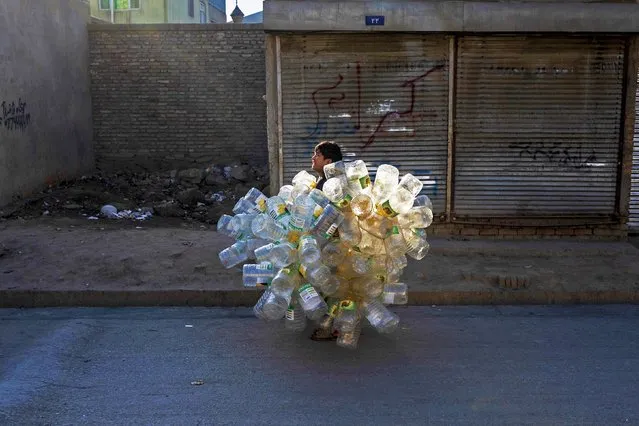
A man carrying wall-clocks for sale walks along closed currency exchange shops, in Peshawar, Pakistan on September 12, 2023. (Photo by Fayaz Aziz/Reuters)
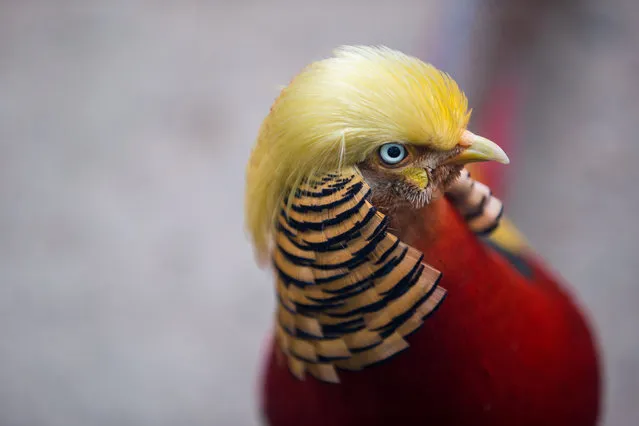
A golden pheasant is seen at Hangzhou Safari Park in Hangzhou, Zhejiang Province, China, November 13, 2016. According to local media, the pheasant gains popularity as its golden feathers resemble the hairstyle of U.S. President-elect Donald Trump. (Photo by Reuters/Stringer)
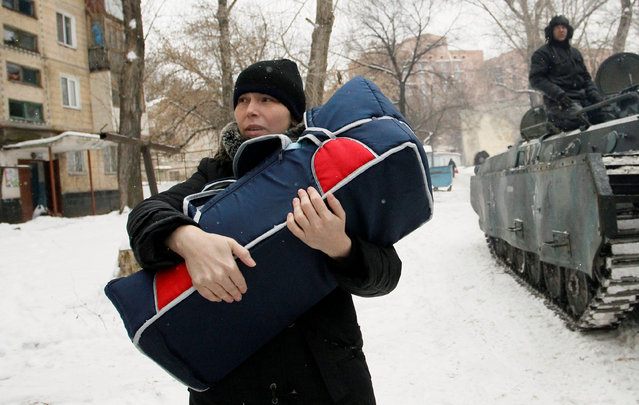
A woman carries a bag with a baby while being evacuated by local emergencies ministry members in Donetsk, Ukraine, February 2, 2017. (Photo by Alexander Ermochenko/Reuters)
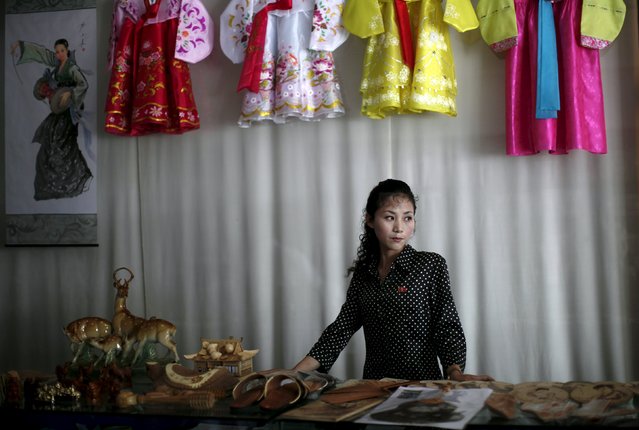
A woman stands in a gift shop in central Rason city, part of the special economic zone northeast of Pyongyang, in this August 30, 2011 file photo. North Korea is a militarized, male-dominated society, but it is women who are making the money as the insular nation allows an unofficial market-based economy to take shape. (Photo by Carlos Barria/Reuters)
English singer and songwriter Anne-Marie performs on stage during day two of Capital's Jingle Bell Ball with Seat at London's O2 Arena on December 8, 2019. (Photo by Isabel Infantes/PA Images via Getty Images)
I know, this answer was a little too short, so let me explain in a little more detail.
Imagine tossing a coin. Normally, any normal coin toss has two possible outcomes - heads or tails - with each one having a 50% chance of happening. Ideally, that is, because factors like the force of your finger tossing the coin, gravity, the wind, the moon phase and a passing TARDIS can all influence the outcome of the toss - but I have deviated from the subject.
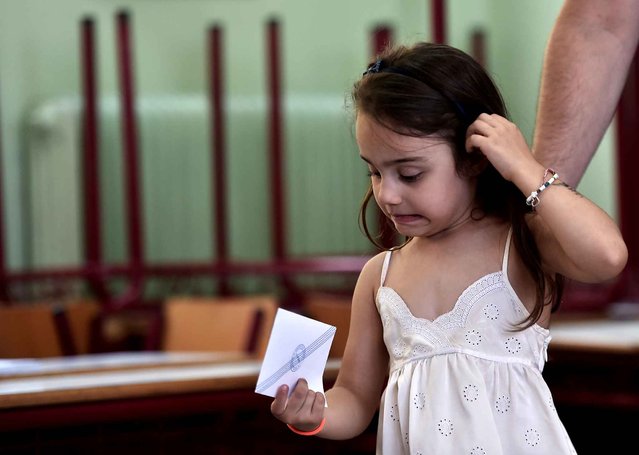
A young girls holds a ballot during the Greek referendum in Athens on July 5, 2015. Greek voters headed to the polls today to vote in a historic, tightly fought referendum on whether to accept worsening austerity in exchange for more bailout funds, in a gamble that could see it crash out of the euro. (Photo by Aris Messinis/AFP Photo)