Loading...
Done
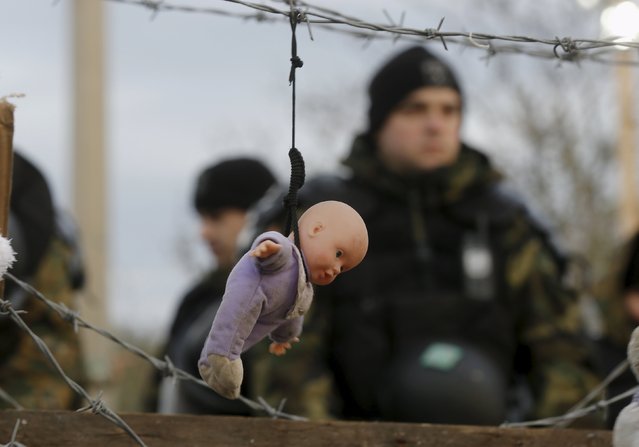
A doll, placed by stranded Iranian migrant protesters, hangs from barbed wire in front of Madedonian police at the Greek-Macedonian border near to the Greek village of Idomeni November 29, 2015. The protesters were demonstrating against what they say is the closure of the border for Iranian migrants. (Photo by Yannis Behrakis/Reuters)

A doll, placed by stranded Iranian migrant protesters, hangs from barbed wire in front of Madedonian police at the Greek-Macedonian border near to the Greek village of Idomeni November 29, 2015. The protesters were demonstrating against what they say is the closure of the border for Iranian migrants. According to the demonstrators, the hanging toys and dolls represent the outcome of being unable to return, if they are sent back to Iran. (Photo by Yannis Behrakis/Reuters)
Details
30 Nov 2015 09:48:00
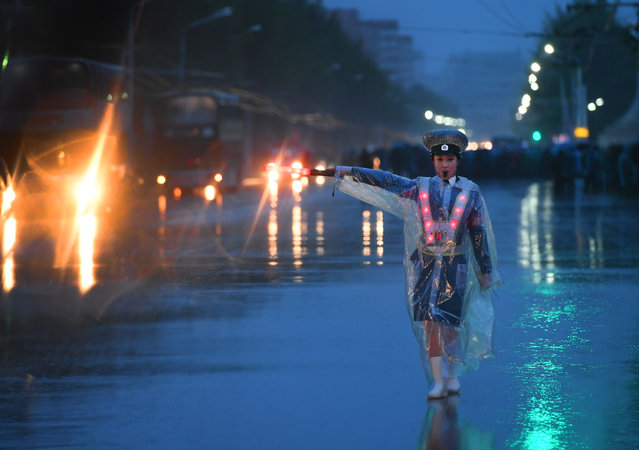
A woman directs traffic in the pouring rain in Pyongyang, North Korea on May 3, 2016. The city is preparing for the Workers' Party Congress starting on May 6th.  It will be the first time since 1980 that the ruling party has convened. (Photo by Linda Davidson/The Washington Post)

A woman directs traffic in the pouring rain in Pyongyang, North Korea on May 3, 2016. The city is preparing for the Workers' Party Congress starting on May 6th. It will be the first time since 1980 that the ruling party has convened. (Photo by Linda Davidson/The Washington Post)
Details
09 May 2016 09:27:00
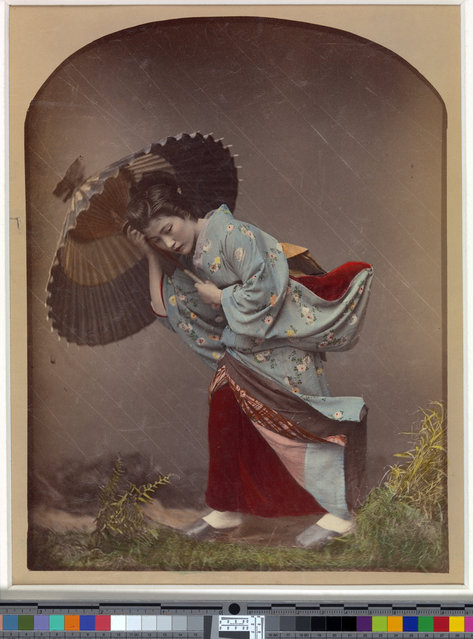
“Woman with Umbrella in Rain” by Raimund von Stillfried. Artist: Kusakabe Kimbei (Japanese, 1841–1934), 1870s. (Photo courtesy of The Metropolitan Museum of Art)

“Woman with Umbrella in Rain” by Raimund von Stillfried. Artist: Kusakabe Kimbei (Japanese, 1841–1934), 1870s. Commercial photography studios in Meiji-era Japan were renowned for the subtlety and refinement of their coloring techniques. This hand-tinted image of a young woman caught in a heavy rainstorm achieved its naturalistic effect by knitting together multiple strands of artifice: the greenery in the foreground was a studio prop; the flaps of the kimono were suspended by thin wires to create the impression of a strong wind; and long, diagonal marks were made on the negative to suggest streaks of rain. (Photo courtesy of The Metropolitan Museum of Art)
Details
12 May 2013 10:13:00
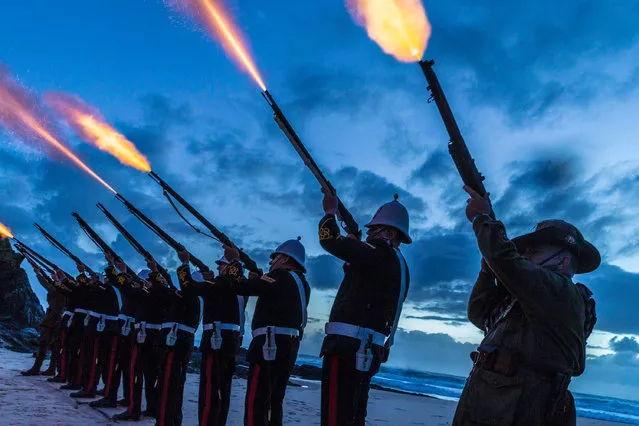
Members of the Albert Battery perform a gun salute during the Anzac Day dawn service held by the Currumbin RSL on the Gold Coast in Currumbin, Australia, 25 April 2016. The Anzac day marks the landing of the Australian and New Zealand Army Corps (Anzac) troops at Gallipoli in what is today Turkey during WWI. World War One, also called the Great War, according to official statistics cost more than 37 million military and civilian casualties between 1914 and 1918. (Photo by Glenn Hunt/EPA)

Members of the Albert Battery perform a gun salute during the Anzac Day dawn service held by the Currumbin RSL on the Gold Coast in Currumbin, Australia, 25 April 2016. The Anzac day marks the landing of the Australian and New Zealand Army Corps (Anzac) troops at Gallipoli in what is today Turkey during WWI. World War One, also called the Great War, according to official statistics cost more than 37 million military and civilian casualties between 1914 and 1918. (Photo by Glenn Hunt/EPA)
Details
26 Apr 2016 12:23:00
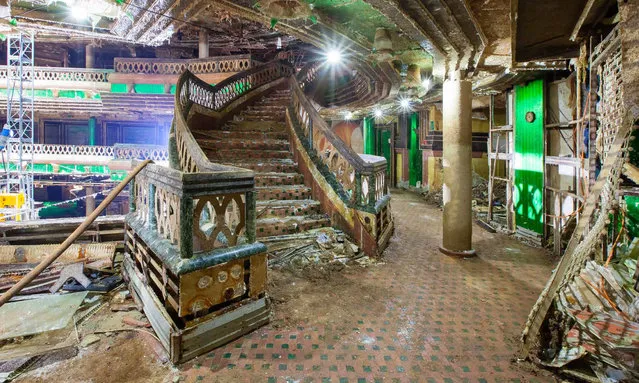
Extraordinary images of the cruise ship by Jonathan Danko Kielkowski from his book Concordia, published by White Press. The German photographer swam out to where the ship – which ran aground off Tuscany in 2012 with the loss of 32 lives – is moored. Francesco Schettino, the ship’s captain, was jailed for 16 years over the accident. (Photo by Jonathan Danko Kielkowski)

Extraordinary images of the cruise ship by Jonathan Danko Kielkowski from his book Concordia, published by White Press. The German photographer swam out to where the ship – which ran aground off Tuscany in 2012 with the loss of 32 lives – is moored. Francesco Schettino, the ship’s captain, was jailed for 16 years over the accident. (Photo by Jonathan Danko Kielkowski)
Details
23 Jan 2016 13:34:00
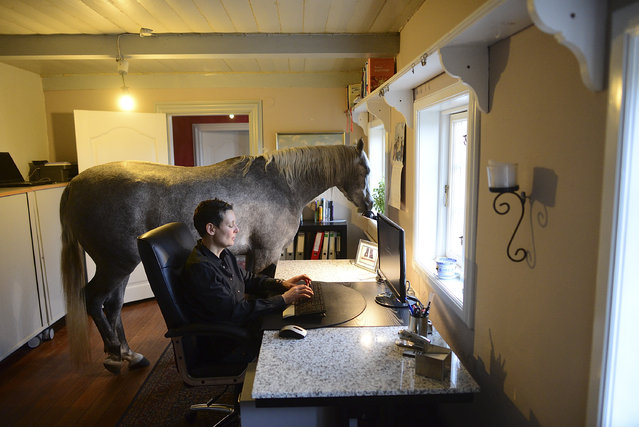
Nasar, an Arabian horse, stands in the office of doctor Stephanie Arndt at her home on February 19, 2014 in Holt, Germany. Fearing for the horse's safety, Mrs. Arndt brought the horse into her house during the Xaver heavy storm back in December, and the horse now wanders through the house daily, inspecting details and looking for snacks. Mrs. Arndt says she doesn't mind, and though the horse never spends the night, it does occasionally take a nap in the house. (Photo by Patrick Lux/Getty Images)

Nasar, an Arabian horse, stands in the office of doctor Stephanie Arndt at her home on February 19, 2014 in Holt, Germany. Fearing for the horse's safety, Mrs. Arndt brought the horse into her house during the Xaver heavy storm back in December, and the horse now wanders through the house daily, inspecting details and looking for snacks. Mrs. Arndt says she doesn't mind, and though the horse never spends the night, it does occasionally take a nap in the house. (Photo by Patrick Lux/Getty Images)
Details
23 Feb 2014 09:44:00
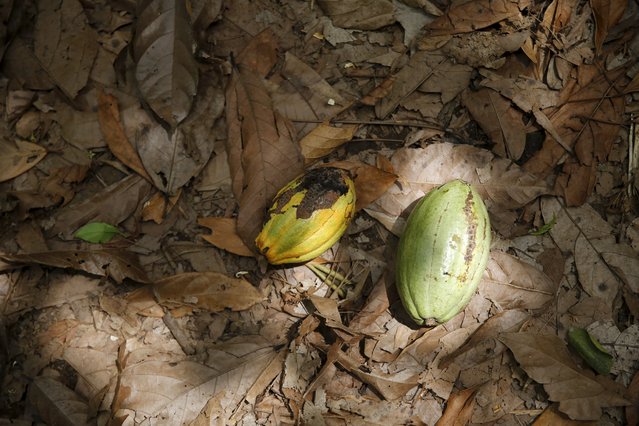
Cocoa pods are seen on the ground at a farm in Ile-Oluji village in Ondo state, southwest Nigeria March 29, 2016. (Photo by Akintunde Akinleye/Reuters)

Cocoa pods are seen on the ground at a farm in Ile-Oluji village in Ondo state, southwest Nigeria March 29, 2016. (Photo by Akintunde Akinleye/Reuters)
Details
11 Apr 2016 11:02:00

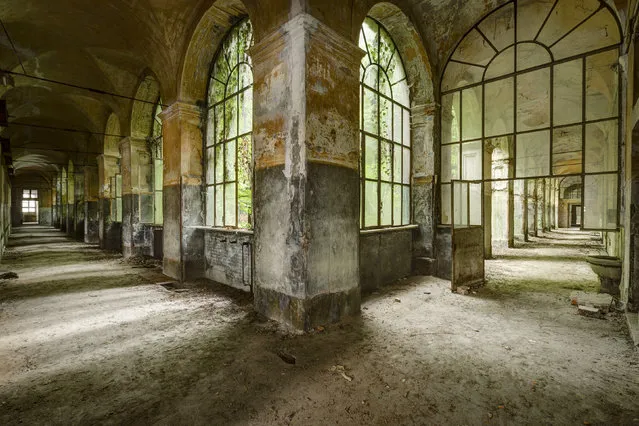
A hallway within an abandoned hospital. (Photo by Thomas Windisch/Caters News)

These images of abandoned hospitals across Italy are not for the faint-hearted. Both of the hospitals featured in the photographs are Italian asylums – known as manicomios – that were used as mental hospitals. Shut down by law in 1978, the derelict buildings are visibly overgrown and make for very eerie portraits. Photographer Thomas Windisch, 32, of Graz, Austria, said the asylums, located in top-secret spots, can get very creepy when there aren't many people there with him. Here: a hallway within an abandoned hospital. (Photo by Thomas Windisch/Caters News)
Details
09 Sep 2015 12:35:00