Loading...
Done


Playboy founder Hugh Hefner (not pictured) arrives at Stansted Airport on June 2, 2011 in Stansted, England. The photograph is a recreation of a picture originally taken in the 1960's, with ten of the new London Bunnies. Mr Hefner is back in the UK to mark the launch of the new Playboy Club in Mayfair, which opens on June 4. The clubs opening will welcome back the iconic Playboy Bunny to Londonafter a 30 year absence. Famous Bunnies have included Debbie Harry and Lauren Hutton. (Photo by Dan Kitwood/Getty Images)
Details
03 Jun 2011 08:58:00
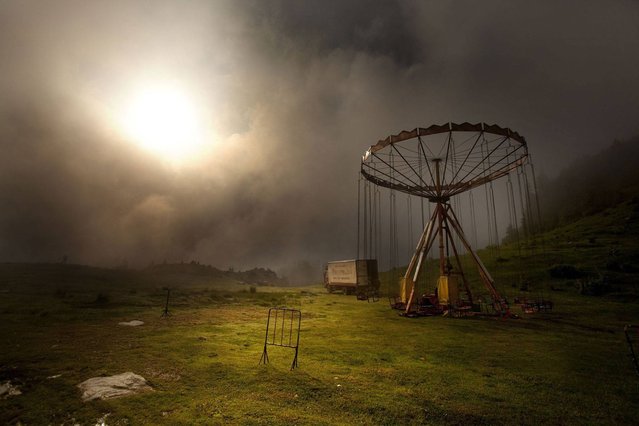
“Carousel in the mist”; Prokoshko, Bosnia. (Photo by Marko Stamatovic/PA Wire)

The UK VELUX Lovers of Light competition attracted 15,000 entries from amateur, professional and mobile phone photographers. Entrants were asked to create a landscape image which celebrates and captures daylight. The judges have whittled these down to a shortlist of ten finalists. The winner will be announced at the end of march with the snapper of the best shot winning a trip to Norway – which will be made during the summer period when the country experiences 24 hour daylight. Photo: “Carousel in the mist”; Prokoshko, Bosnia. (Photo by Marko Stamatovic/PA Wire)
Details
22 Mar 2014 07:30:00


William Gibson is not one of the authors that spits out novels like a machine – in his long and fruitful career he has only published 11 novels andof short stories and articles in the tens each. Still his impact on modern literature was huge – the “noir prophet” of the cyberpunk subgenre (that he was one of the pioneers of) has predicted the rise of reality television, virtual reality, video games and the internet. He is a Hugo and Nebula award winning science fiction writer, with a special eye for what the future might bring.
Details
05 May 2015 09:00:00
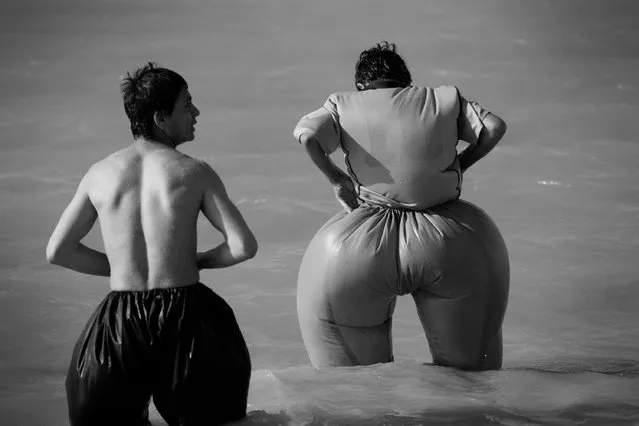
Afghan men escape increasing summer temperatures by wading in the Qarga reservoir on July 9, 2010 in a suburb of Kabul, Afghanistan. (Photo by Majid Saeedi/Getty Images)

“Life in War” (FotoEvidence Press) by Iranian photographer Majid Saeedi is probably the only book about Afghanistan that doesn’t show images of war. For ten years his camera photographed daily life in the context of war. His photographs reveal the humanity of a people living through decades of war. Here: Afghan men escape increasing summer temperatures by wading in the Qarga reservoir on July 9, 2010 in a suburb of Kabul, Afghanistan. (Photo by Majid Saeedi/Getty Images)
Details
17 Oct 2014 12:07:00
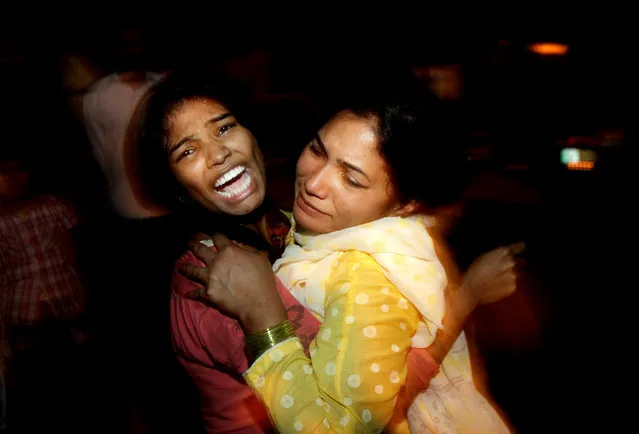
Women comfort each other as they mourn over the death of a family member who was killed in a bomb blast, at a local hospital in Lahore, Pakistan, Sunday, March, 27, 2016. (Photo by K.M. Chuadary/AP Photo)

Women comfort each other as they mourn over the death of a family member who was killed in a bomb blast, at a local hospital in Lahore, Pakistan, Sunday, March, 27, 2016. A bomb blast in a park in the eastern Pakistani city of Lahore has killed tens of people and wounded scores, a health official said. (Photo by K.M. Chuadary/AP Photo)
Details
28 Mar 2016 10:12:00
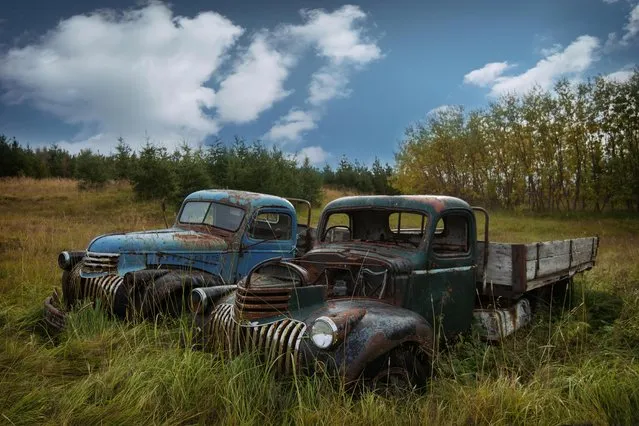
1941 Chevrolet 1.5 tonnes are left to rot in a field. (Photo by Robert Kahl/Mediadrumworld)

Feast your eyes on Europe’s most spectacular car graveyards as discovered by one auto-obsessed explorer who has dedicated over ten years to finding the best cars left to rot in the European wilderness. The beautiful set of images were taken in Germany, Sweden and Belgium by German Civil Servant Robert Kahl (30) using a Nikon D7100. He describes his photographs as showcasing “the beauty of transience and decayed charm”. Here: 1941 Chevrolet 1.5 tonnes are left to rot in a field. (Photo by Robert Kahl/Mediadrumworld)
Details
01 Mar 2017 00:04:00
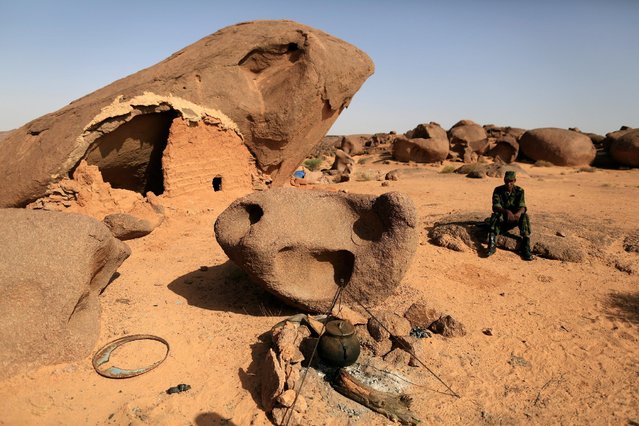
A Polisario fighter sits on a rock at a forward base on the outskirts of Tifariti, Western Sahara, September 9, 2016. At a rocky outpost in Western Sahara, a new generation of soldiers who have never known war are mobilising as tensions resurface in one of Africa's oldest disputes after a quarter century of uneasy peace. Young Sahrawi troops man new desert posts for the Polisario Front, which for more than 40 years has sought independence for the vast desert region - first in a guerrilla war against Morocco and then politically since a ceasefire deal in 1991. Now a standoff with Morocco, which controls the majority of Western Sahara, is renewing pressure for a diplomatic solution to ensure foot soldiers don't return to fighting as the last generation of commanders once did. The standoff since August has brought Moroccan and Polisario forces within 200 metres of each other in a narrow strip of land near the Mauritanian border. Rich in phosphate, Western Sahara has been contested since 1975 when Spanish colonial powers left. Morocco claimed the territory and fought the 16-year war with Polisario. (Photo by Zohra Bensemra/Reuters)

A Polisario fighter sits on a rock at a forward base on the outskirts of Tifariti, Western Sahara, September 9, 2016. At a rocky outpost in Western Sahara, a new generation of soldiers who have never known war are mobilising as tensions resurface in one of Africa's oldest disputes after a quarter century of uneasy peace. (Photo by Zohra Bensemra/Reuters)
Details
04 Nov 2016 12:09:00
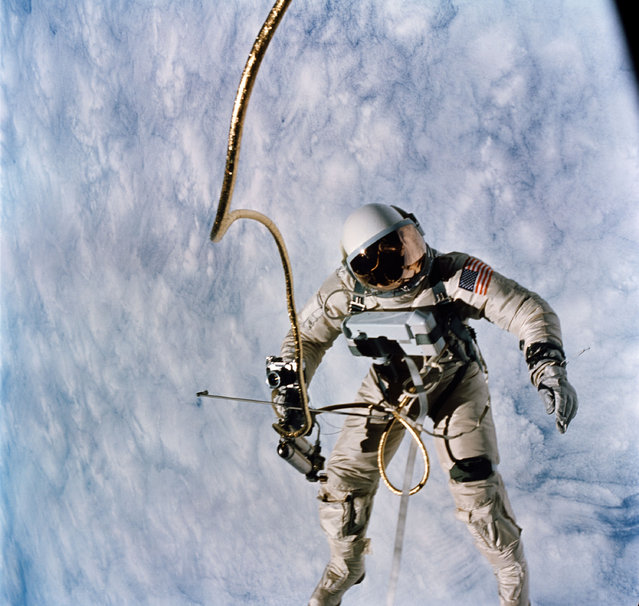
Astronaut Edward H. White II, pilot for the Gemini-Titan 4 (GT-4) spaceflight, floats in the zero-gravity of space during the third revolution of the GT-4 spacecraft on June 3, 1965. White wears a specially designed spacesuit. His face is shaded by a gold-plated visor to protect him from unfiltered rays of the sun. (Photo by NASA)

Astronaut Edward H. White II, pilot for the Gemini-Titan 4 (GT-4) spaceflight, floats in the zero-gravity of space during the third revolution of the GT-4 spacecraft on June 3, 1965. White wears a specially designed spacesuit. His face is shaded by a gold-plated visor to protect him from unfiltered rays of the sun. In his right hand he carries a Hand-Held Self-Maneuvering Unit (HHSMU) that gives him control over his movements in space. White also wears an emergency oxygen chest pack; and he carries a camera mounted on the HHSMU for taking pictures of the sky, Earth and the GT-4 spacecraft. He is secured to the spacecraft by a 25-feet umbilical line and a 23-feet tether line. Both lines are wrapped together in gold tape to form one cord. Astronaut James A. McDivitt, command pilot, remained inside the spacecraft during the extravehicular activity (EVA). Astronaut White died in the Apollo/Saturn 204 fire at Cape Kennedy on January 27, 1967. (Photo by NASA)
Details
22 Jul 2014 12:05:00