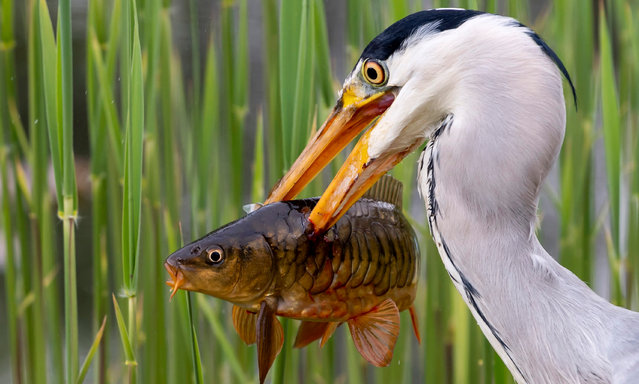
A gray heron (Ardea cinerea) that fished a common carp (Cyprinus carpio) in Geneva, Switzerland, 21 April 2019. (Photo by Martial Trezzini/EPA/EFE/Rex Features/Shutterstock)
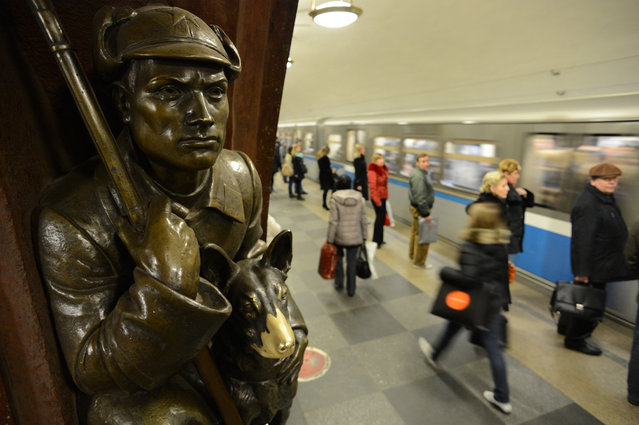
Subway passengers walk past bronze sculptures representing the Soviet people at the Ploshchad Revolyutsii metro station in Moscow, on November 14, 2012. The station was opened in 1938. (Photo by Kirill Kudryavtsev/AFP Photo)
Tourists pose for a selfie in an old American car in front of a wall bearing a graffiti of the Committees for the Defense of the Revolution (CDR) in Havana, on September 27, 2023. September 28 marks the 63th anniversary of the Committees for the Defense of the Revolution (CDR), the so-called “eyes and ears of the Revolution” created by the late Cuban leader Fidel Castro. (Photo by Yamil Lage/AFP Photo)
A sales assistant poses for photographs with a mealworm cookie in Seoul, South Korea, August 8, 2016. Insect-eating, or entomophagy, has long been common in much of the world, including South Korea, where boiled silky worm pupae, or beondegi, are a popular snack. Now, South Korea is looking to expand its insect industry as a source of agricultural income. (Photo by Kim Hong-Ji/Reuters)
Syrian refugees sit behind barbed wire as they wait to cross into Macedonia at the Greek-Macedonian border, near the village of Idomeni, August 21, 2015. (Photo by Yannis Behrakis/Reuters)
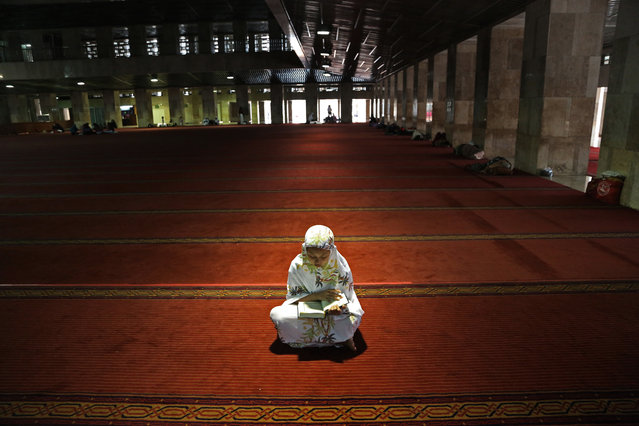
A Muslim woman reads the Quran following noon prayers on the first day of the holy fasting month of Ramadan at Istiqlal Mosque in Jakarta, Indonesia, Monday, June 6, 2016. Devout Muslims began to celebrate Ramadan, the holiest month in the Islamic calendar, refraining from eating, drinking, smoking and sеx from sunrise to sunset. (Photo by Tatan Syuflana/AP Photo)
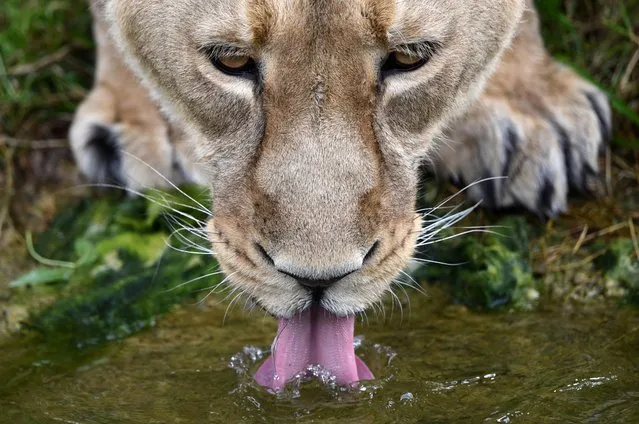
A lioness drinks after being fed by senior keeper Glynn Hennessy at ZSL London Zoo on August 10, 2016 in London, England. Today marks World Lion Day which highlights the first global campaign to celebrate the importance and plight of lions worldwide. (Photo by Carl Court/Getty Images)
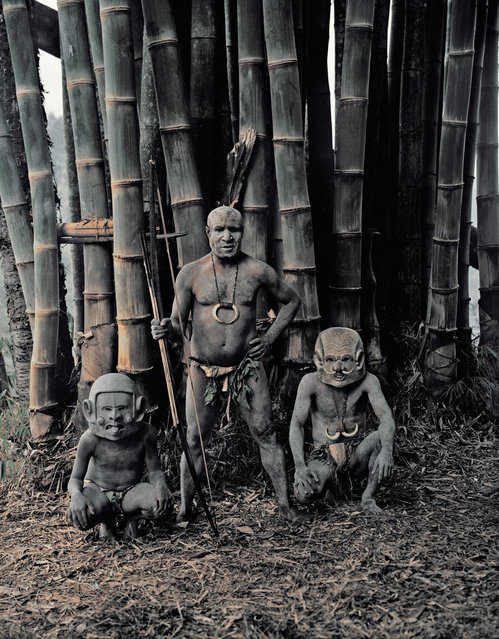
“Asaro from the Eastern Highlands”. The mudmen could not cover their faces with mud because the people of Papua New Guinea thought that the mud from the Asaro river was poisonous. So instead of covering their faces with this alleged poison, they made masks from pebbles that they heated and water from the waterfall, with unusual designs such as long or very short ears either going down to the chin or sticking up at the top, long joined eyebrows attached to the top of the ears, horns and sideways mouths. (Photo and caption by Jimmy Nelson)