Loading...
Done
Creative Animal Hair Style Collections

Her website calls theses ‘hair hats’ which are styled into the form of various kind of animals such as a lion, rabbit, elephant, rhino and many others using hand crafted hair weaves that are made using a mold or mesh of wire.
Details
10 Jun 2015 08:17:00
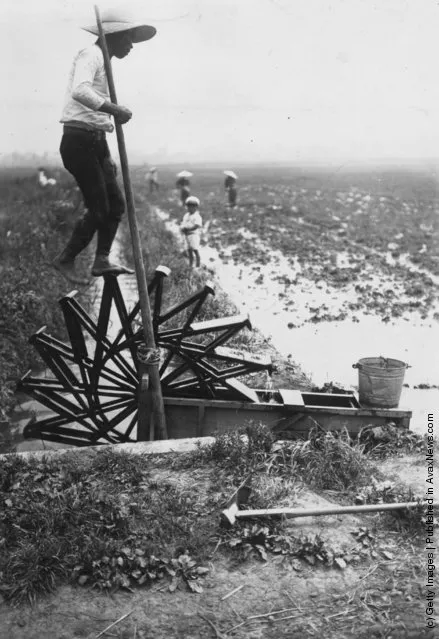
1938: A man irrigating a rice paddy field using a traditional method

A man irrigating a rice paddy field using a traditional method. (Photo by Fox Photos/Getty Images). Japan, circa 1938
Details
09 Oct 2011 14:58:00
An ambulance with emergency lights on makes its way through snowfall in Iowa, US on December 21, 2022. (Photo by Joseph Cress/AP Photo)

An ambulance with emergency lights on makes its way through snowfall in Iowa, US on December 21, 2022. (Photo by Joseph Cress/AP Photo)
Details
26 Dec 2022 23:12:00
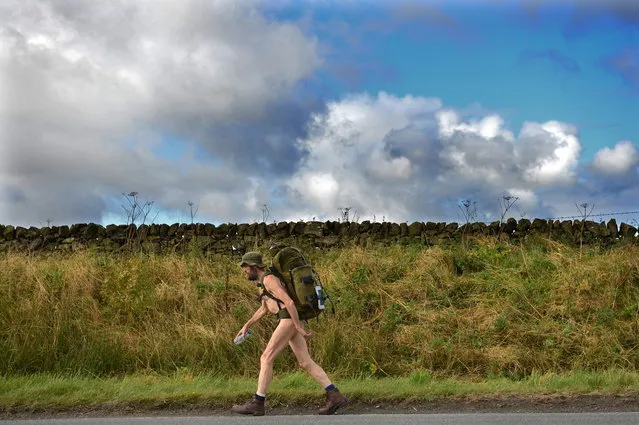
Stephen Gough the naked rambler makes his way south through Peebles in the Scottish Borders, following his release from Saughton Prison yesterday after serving his latest sentence on October 6, 2012 in Peebles, Scotland. The rambler has 18 convictions and has been in prison on and off since 2006 with offences ranging from not wearing clothes in front of the sheriff, breach of the peace and contempt of court. (Photo by Jeff J. Mitchell)

“Stephen Gough (born c. 1959), also known as Steve Gough and the Naked Rambler, is an activist, and a British former Royal Marine. In 2003-2004, he walked the length of Great Britain naked. He did it again in 2005-2006, but was arrested in England and in Scotland. He subsequently spent six years in prison, having been repeatedly rearrested for public nudity within a short period, each time he was released. He has spent most of his sentences in Saughton and Perth prisons, in Scotland”. – Wikipedia

Photo: Stephen Gough the naked rambler makes his way south through Peebles in the Scottish Borders, following his release from Saughton Prison yesterday after serving his latest sentence on October 6, 2012 in Peebles, Scotland. (Photo by Jeff J. Mitchell)

Details
07 Oct 2012 08:18:00
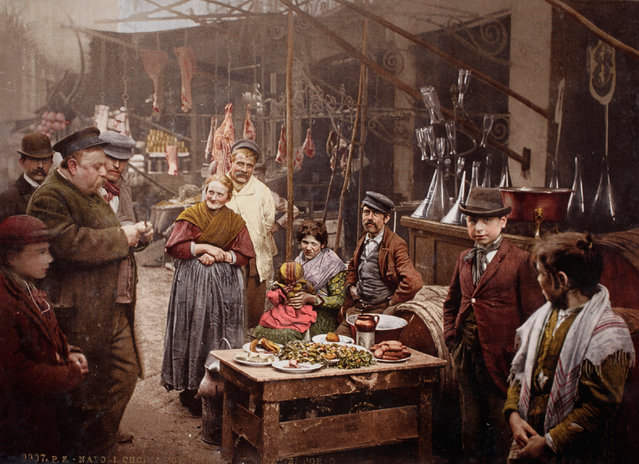
The finished photochromes were produced using at least six different tint stones, although many more were often used. Here: Street food in the Strada del Porto in Naples, Italy, 1899. (Photo by Swiss Camera Museum/The Guardian)

Photochromes are vibrant and nuanced prints hand-coloured from black-and-white negatives. Created using a process pioneered in the 1880s, these images offer a fascinating insight into the world when colour photography was still in its infancy. A Tour of the World in Photochromes is at the Swiss Camera Museum, Vevey, until 21 August. Here: Street food in the Strada del Porto in Naples, Italy, 1899. (Photo by Swiss Camera Museum/The Guardian)
Details
07 Jul 2016 10:56:00
Drawing By Andrew Ferez

Andrew Ferez, born and raised in Russia is an artist who inherited his creativity and interest in the arts early on and trained his artistic skills and knowledge ever since, in a never-ending process.
Andrew’s genre is a mix between macabre and horror with a poetic hint. His illustrations transports us into the deepest recesses of our mind, showing us impossible worlds that are both scary yet surprisingly familiar or enticing. Most of his artworks are two dimensional but in some of his latest artworks he used the help of some 3D software as well.
Details
28 May 2014 18:26:00
Luling, Louisiana US. New evidence contradicts previous claims of the relative safety of glyphosate, the world’s most widely used herbicide, which is manufactured here. It is often used in conjunction with seeds that have been genetically modified to tolerate its application, meaning that anyone consuming these crops is eating a genetically modified plant, and whatever residue of the pesticide that remains. (Photo by J. Henry Fair/Industrial Scars/Papadakis Publisher)

Luling, Louisiana, US. New evidence contradicts previous claims of the relative safety of glyphosate, the world’s most widely used herbicide, which is manufactured here. It is often used in conjunction with seeds that have been genetically modified to tolerate its application, meaning that anyone consuming these crops is eating a genetically modified plant, and whatever residue of the pesticide that remains. (Photo by J. Henry Fair/Industrial Scars/Papadakis Publisher)
Details
25 Oct 2016 10:40:00
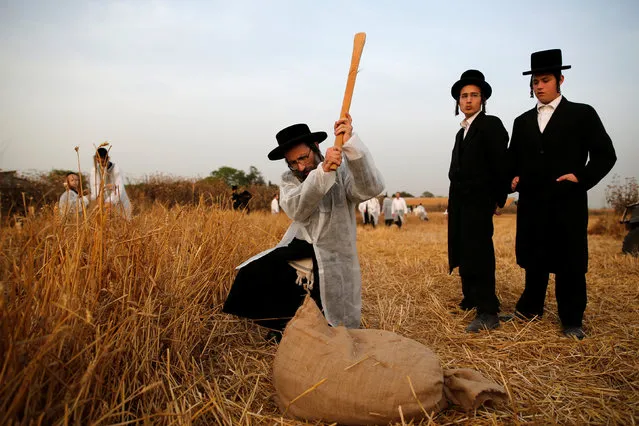
An Ultra-Orthodox Jewish man uses a stick to to separate the wheat grains in the Ultra-orthodox moshav of Komemiyut May 3, 2016. (Photo by Amir Cohen/Reuters)

An Ultra-Orthodox Jewish man uses a stick to to separate the wheat grains in the Ultra-orthodox moshav of Komemiyut May 3, 2016. The harvested wheat will later be used to make the traditional unleavened bread eaten during the Jewish holiday of Passover. (Photo by Amir Cohen/Reuters)
Details
04 May 2016 11:35:00