Riot police help an injured anti-government protester after scuffles broke out with women police officers on a road leading to the parliament building, during a protest in Beirut on November 19, 2019. Thousands of protesters rallying against the Lebanese political elite blocked roads in central Beirut on Tuesday, preventing lawmakers from reaching the parliament and forcing the postponement of a legislative session. (Photo by Bilal Hussein/AP Photo)
Cast members Chase Sui Wonders, Sarah Pidgeon, Gabriella Bechtel, also known as Gabbriette, and Madelyn Cline attend the premiere of the film “I Know What You Did Last Summer”, in Los Angeles on July 15, 2025. (Photo by Mario Anzuoni/Reuters)
Model Heidi Klum and TV personality Nick Cannon speak onstage during Nickelodeon's 24th Annual Kids' Choice Awards at Galen Center on April 2, 2011 in Los Angeles, California. (Photo by Kevork Djansezian/Getty Images)
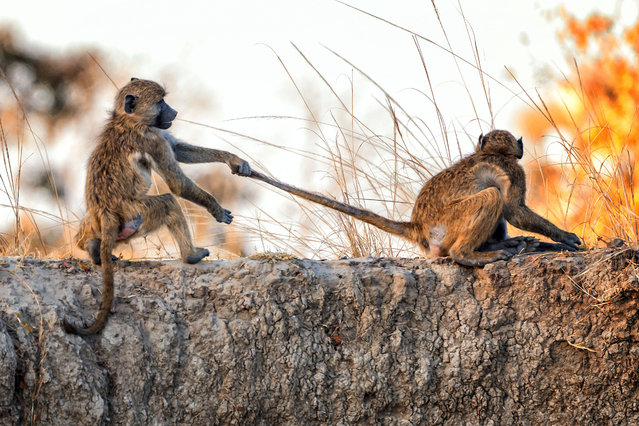
Going toe-to-toe, these fighting primates could give Floyd Mayweather a run for his money. The amazing images – captured by Australian tourist Julie Rathbone on the banks of the Zambezi river in Africa – show the pair engaging in a few fisticuffs. The Chacma baboons appeared to settle a disagreement by fighting – before a senior baboon plays referee and steps in to break it up. Nurse unit manager Julie Rathbone, 59, from New South Wales, was on a cruise down the river when she spotted the fracas unfolding. (Photo by Julie Rathbone/Caters News)
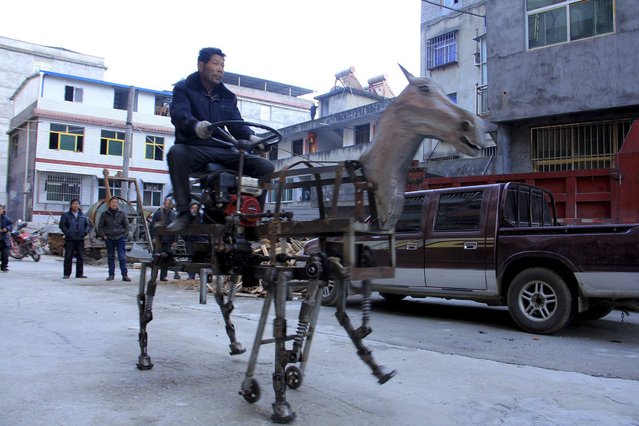
Su Daocheng rides his home-made mechanical horse vehicle on a street in Shiyan, Hubei province January 18, 2015. Su spent 2 months making this 1.5 metre high and 2 metre long horse, which weighed 250 kilograms with 4 legs and 2 supportive wheels, local media reported. (Photo by Reuters/Stringer)
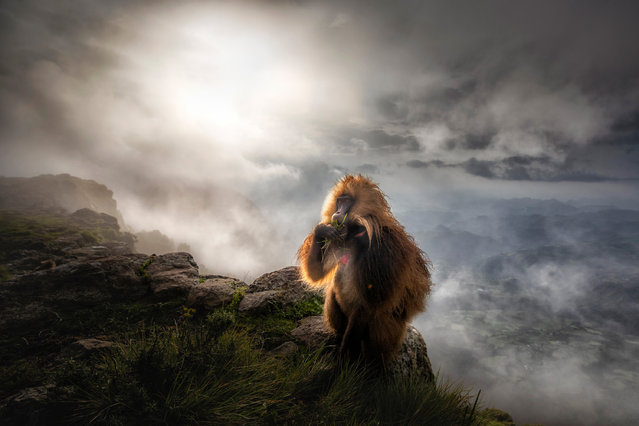
Highly commended, mammals: Gelada after the storm – Marco Gaiotti (Italy). “Gelada baboons are the only monkey species in the world that feed on grasses. They are native to the tableland of Ethiopia. Every morning large family groups wander from their sleeping places in the steep rock face, up to 1,000 metres high, to the feeding grounds at the tablelands. This image clearly depicts their feeding strategy: they pull out bunches of grass, sort the stalks and then lift them to their mouth. This shot was taken towards the end of the rainy season after a heavy storm”. (Photo by Marco Gaiotti/2019 GDT European Wildlife Photographer of the Year)
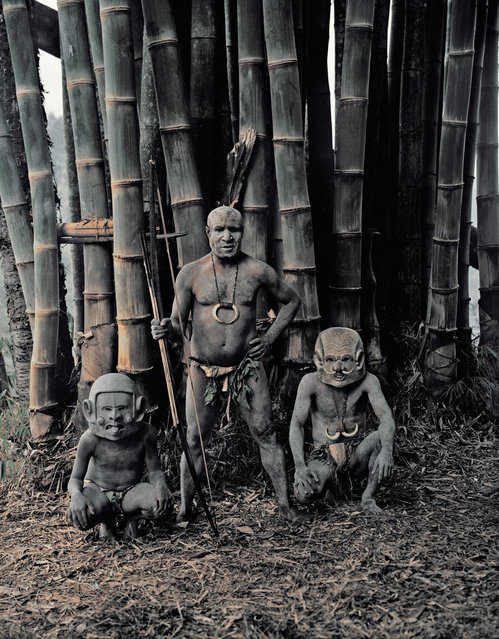
“Asaro from the Eastern Highlands”. The mudmen could not cover their faces with mud because the people of Papua New Guinea thought that the mud from the Asaro river was poisonous. So instead of covering their faces with this alleged poison, they made masks from pebbles that they heated and water from the waterfall, with unusual designs such as long or very short ears either going down to the chin or sticking up at the top, long joined eyebrows attached to the top of the ears, horns and sideways mouths. (Photo and caption by Jimmy Nelson)