Loading...
Done
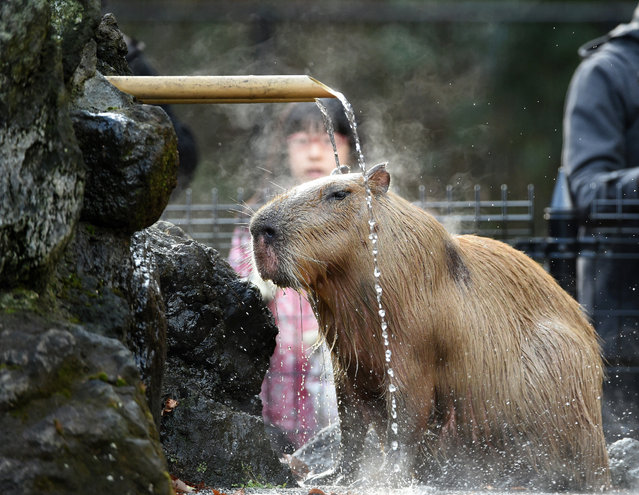
A Capybara bathes in the hot spring water at the Saitama Children's zoo in Higashi Matsuyama city, Saitama prefecture on December 21, 2014. Seven capybaras in the zoo, originally from South America, enjoyed the hot spring water on the chilly winter day in Japan. (Photo by Toshifumi Kitamura/AFP Photo)

A Capybara bathes in the hot spring water at the Saitama Children's zoo in Higashi Matsuyama city, Saitama prefecture on December 21, 2014. Seven capybaras in the zoo, originally from South America, enjoyed the hot spring water on the chilly winter day in Japan. (Photo by Toshifumi Kitamura/AFP Photo)
Details
27 Dec 2014 12:59:00
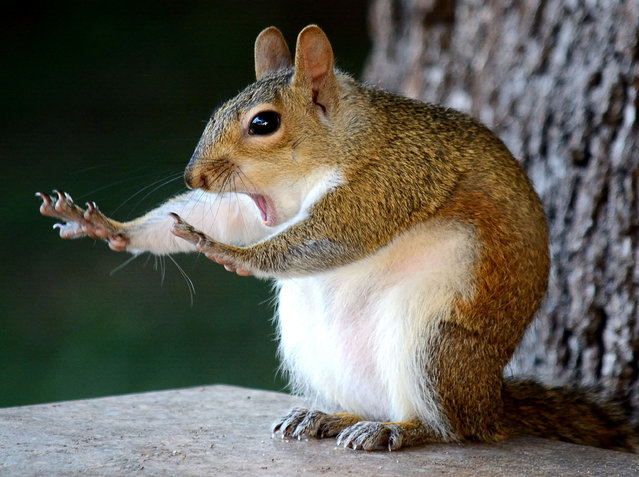
An alarmed squirrel. (Photo by Mary McGowan/Barcroft Images/Comedy Wildlife Photography Awards)

An alarmed squirrel. (Photo by Mary McGowan/Barcroft Images/Comedy Wildlife Photography Awards)
Details
17 Sep 2018 00:03:00
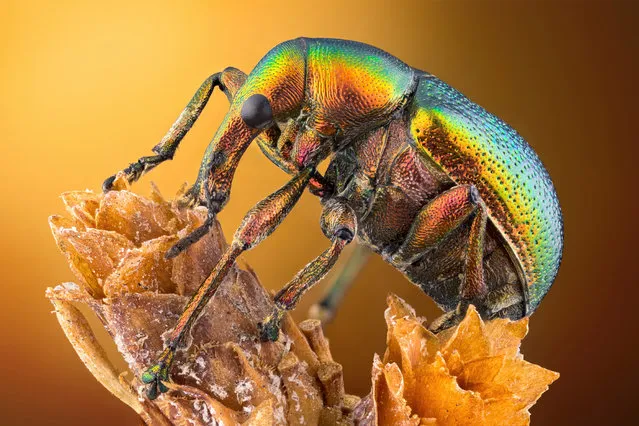
14th Place. Leaf roller weevil (Byctiscus betulae) lateral view. Image Stacking, Reflected Light 3.7X (objective lens magnification). (Photo by Özgür Kerem Bulur/Nikon Small World Photomicrography 2020)

14th Place. Leaf roller weevil (Byctiscus betulae) lateral view. Image Stacking, Reflected Light 3.7X (objective lens magnification). (Photo by Özgür Kerem Bulur/Nikon Small World Photomicrography 2020)
Details
15 Oct 2020 00:03:00
“Cassowaries are large, flightless birds related to emus and (more distantly) to ostriches, rheas, and kiwis”, writes Olivia Judson in the September issue of National Geographic magazine. (Photo by Christian Ziegler/National Geographic)

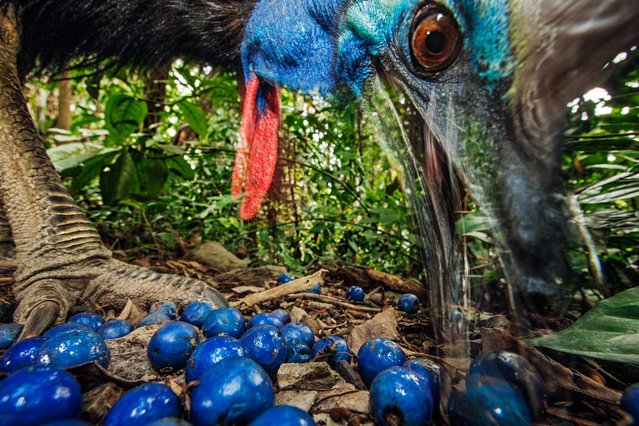
“Cassowaries are large, flightless birds related to emus and (more distantly) to ostriches, rheas, and kiwis”, writes Olivia Judson in the September issue of National Geographic magazine. How large? People-size: Adult males stand well over five foot five and top 110 pounds. Females are even taller, and can weigh more than 160 pounds. Dangerous when roused, they’re shy and peaceable when left alone. But even birds this big and tough are prey to habitat loss. The dense New Guinea and Australia rain forests where they live have dwindled. Today cassowaries might number 1,500 to 2,000. And because they help shape those same forests – by moving seeds from one place to another – “if they vanish”, Judson writes, “the structure of the forest would gradually change” too. (Photo by Christian Ziegler/National Geographic)

Details
06 Jan 2014 12:21:00
Jil Belen Teichmann of Switzerland in action against Victoria Azarenka of Belarus in her third round match on Day 6 at Roland Garros on May 27, 2022 in Paris, France. (Photo by Dylan Martinez/Reuters)

Jil Belen Teichmann of Switzerland in action against Victoria Azarenka of Belarus in her third round match on Day 6 at Roland Garros on May 27, 2022 in Paris, France. (Photo by Dylan Martinez/Reuters)
Details
25 Jul 2023 03:22:00
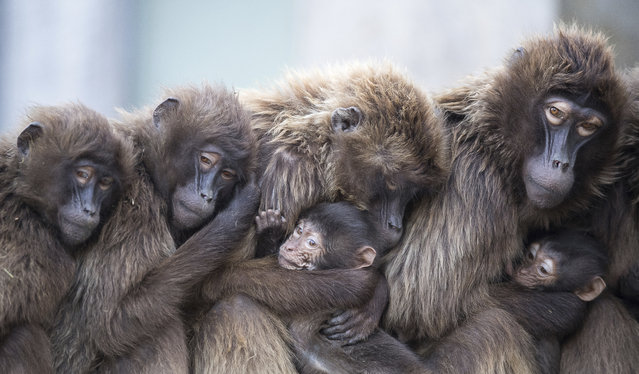
In this January 3, 2018 photo several female Gelada baboons, also known as bleeding-heart baboons, cuddle with their youngs in order to keep warm at the Wilhelma zoo in Stuttgart, Germany. (Photo by Sebastian Gollnow/DPA via AP Photo)

In this January 3, 2018 photo several female Gelada baboons, also known as bleeding-heart baboons, cuddle with their youngs in order to keep warm at the Wilhelma zoo in Stuttgart, Germany. (Photo by Sebastian Gollnow/DPA via AP Photo)
Details
07 Jan 2018 08:08:00
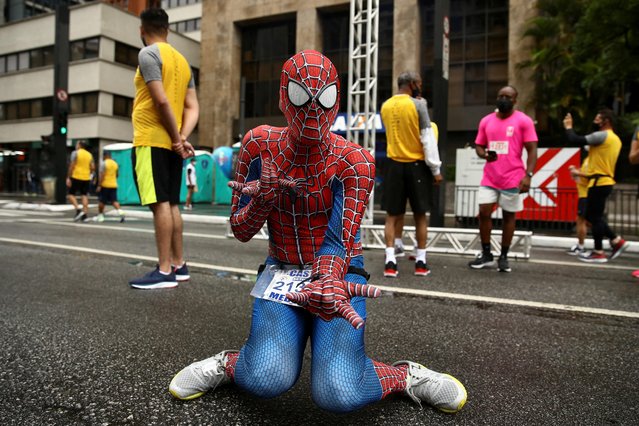
A runner dressed as Spiderman poses before the annual “Sao Silvestre Run”, an international race through the streets of Sao Paulo, Brazil on December 31, 2021. (Photo by Carla Carniel/Reuters)

A runner dressed as Spiderman poses before the annual “Sao Silvestre Run”, an international race through the streets of Sao Paulo, Brazil on December 31, 2021. (Photo by Carla Carniel/Reuters)
Details
09 Jan 2022 05:23:00
Alfred the frog looks almost as scary as the pumpkin he is perched on at London Zoo 26 October 2011. Keepers at the zoo have joined in the Halloween tradition by supplying pumpkin lunches to some of their animals, including the giant waxy monkey frog.  However Alfred is not quite the giant figure his species name suggests. (Photo by EPA/Zoological Society of London)

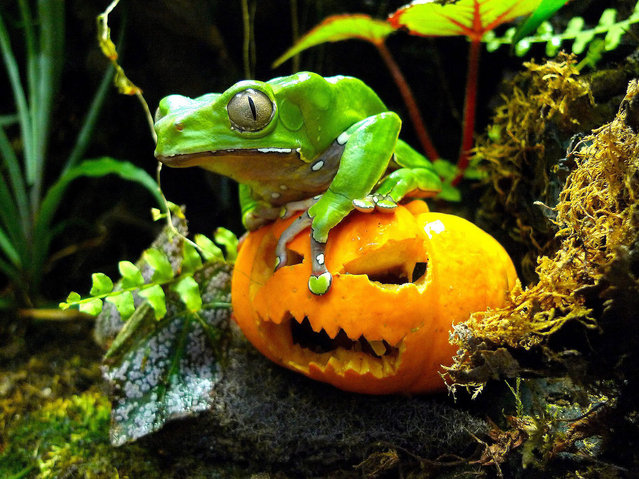
Alfred the frog looks almost as scary as the pumpkin he is perched on at London Zoo 26 October 2011. Keepers at the zoo have joined in the Halloween tradition by supplying pumpkin lunches to some of their animals, including the giant waxy monkey frog. However Alfred is not quite the giant figure his species name suggests – he actually measures up at around 4 inches (10 centimeters). (Photo by EPA/Zoological Society of London)
Details
31 Oct 2014 11:54:00