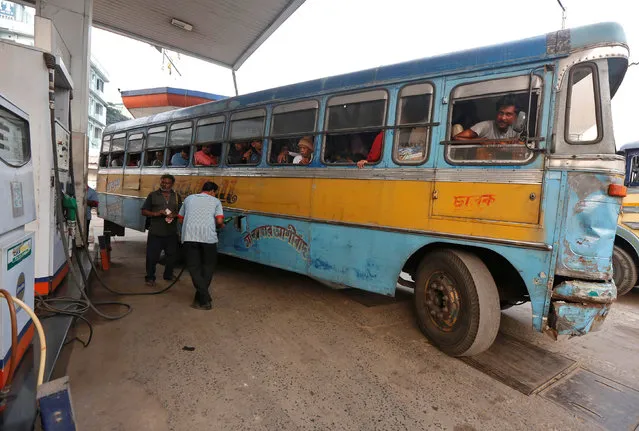
A worker fills a public bus with diesel as the bus driver and passengers look on, at a fuel station in Kolkata, India, February 1, 2017. (Photo by Rupak De Chowdhuri/Reuters)
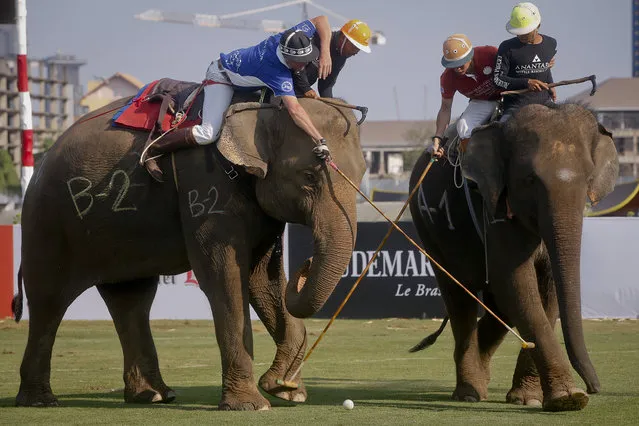
Elephant polo players in action during the King's Cup Elephant Polo event 2016 final between teams King Power (blue) and The Elephant Story, in Bangkok, Thailand, March 13, 2016. Team King Power won the annual charity event, which is now in its 14th edition. This year's edition involved 18 elephants brought from tourist trekking camps in Pattaya as well as some unemployed in Surin, and a total of 10 teams encompassing over 40 players, in this event directed at raising funds to improve the lives of elephants and elephant conservation. (Photo by Diego Azubel/EPA)
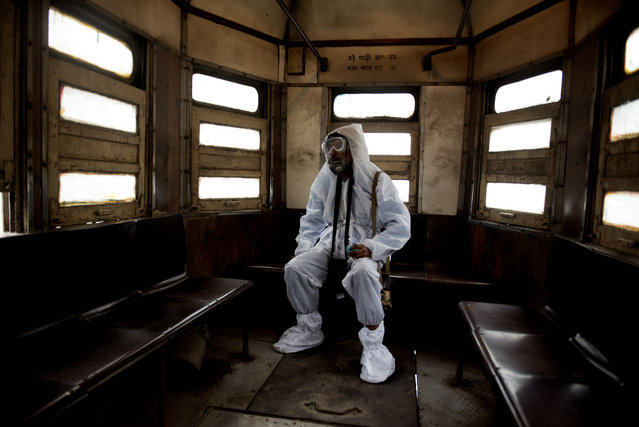
Fighting Infections (single image) | Fighting Pandemic by Sudipto Das. “It’s exhausting. A tram conductor in Kolkata, India, wears protective clothing from head to toe even in the heat of a summer afternoon. This was when restrictions were easing after India’s first Covid-19 lockdown – public transport was running, but staff were advised to suit up like this. We’ve all grown used to saluting the efforts of healthcare workers, but plenty of other people in public-facing jobs have performed gruelling duties too to keep people safe”. (Photo by Sudipto Das/Wellcome Photography Prize 2021)
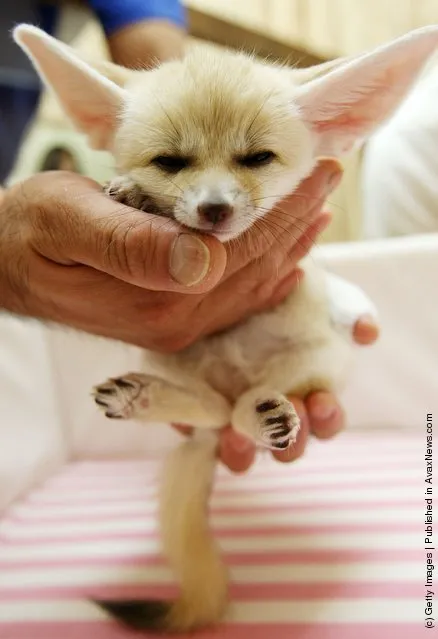
“The fennec fox is a small nocturnal fox found in the Sahara of North Africa. Its most distinctive feature is unusually large ears. The name “fennec” comes from the Arabic word for fox, and the species name zerda has a Greek origin that refers to its habitat. The fennec is the smallest species of canid in the world; coat, ears and kidney functions have adapted to a high-temperature, low-water, desert environment. In addition, its hearing is sensitive enough to hear prey moving underground”. – Wikipedia
Photo: A Baby Fennec is seen at Sunshine International Aquarium on June 24, 2009 in Tokyo, Japan. The small nocturnal fox babies were born on May 17 2009. (Photo by Junko Kimura/Getty Images)
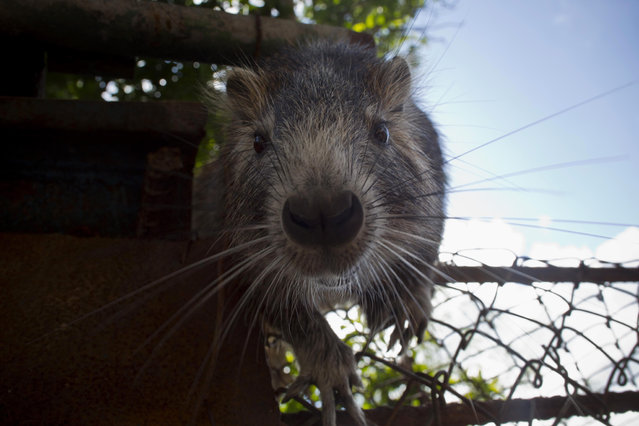
In this November 17, 2014 photo, Pancho, a domesticated huitia, confronts a camera, in Bainoa, Cuba. With their rope-like, dark tails, long front teeth, and whiskers that appear to be vibrating, huitias look like giant rats. They measure nearly a foot long (about 30 centimeters), with the largest ones weighing in bigger than a small dog. (Photo by Ramon Espinosa/AP Photo)
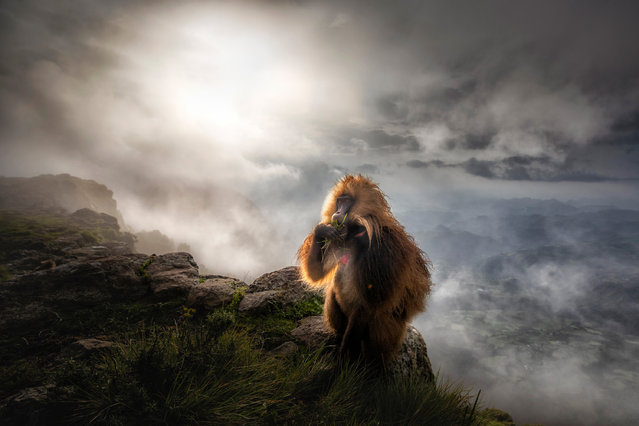
Highly commended, mammals: Gelada after the storm – Marco Gaiotti (Italy). “Gelada baboons are the only monkey species in the world that feed on grasses. They are native to the tableland of Ethiopia. Every morning large family groups wander from their sleeping places in the steep rock face, up to 1,000 metres high, to the feeding grounds at the tablelands. This image clearly depicts their feeding strategy: they pull out bunches of grass, sort the stalks and then lift them to their mouth. This shot was taken towards the end of the rainy season after a heavy storm”. (Photo by Marco Gaiotti/2019 GDT European Wildlife Photographer of the Year)
Men dressed as soldiers pose with models before the opening of the Gamescom 2013 fair in Cologne,Germany, on August 23, 2013. The Gamescom convention is Europe's largest video games trade fair. (Photo by Ina Fassbender/Reuters)