Loading...
Done
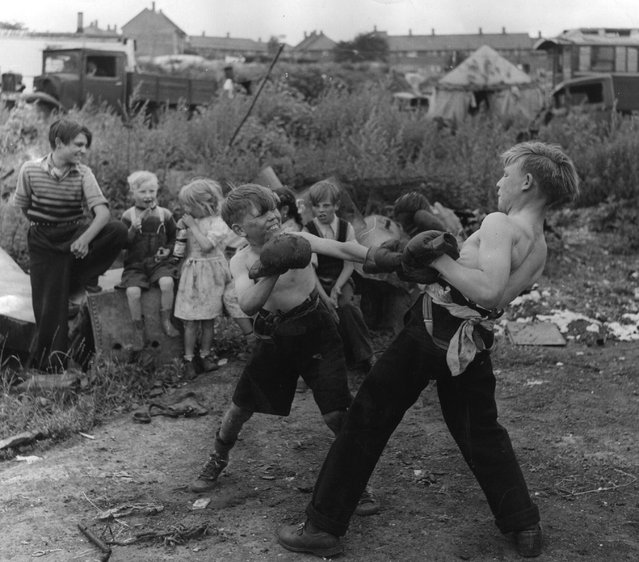
Children are engulfed by foam during the Bubble Show event in Beijing, China, Sunday, June 26, 2016. Thousands of residents enjoy colored foam churned out by machines along a running track at the event designed for children and parents'  interaction. (Photo by Ng Han Guan/AP Photo)

Children are engulfed by foam during the Bubble Show event in Beijing, China, Sunday, June 26, 2016. Thousands of residents enjoy colored foam churned out by machines along a running track at the event designed for children and parents' interaction. (Photo by Ng Han Guan/AP Photo)
Details
27 Jun 2016 12:40:00
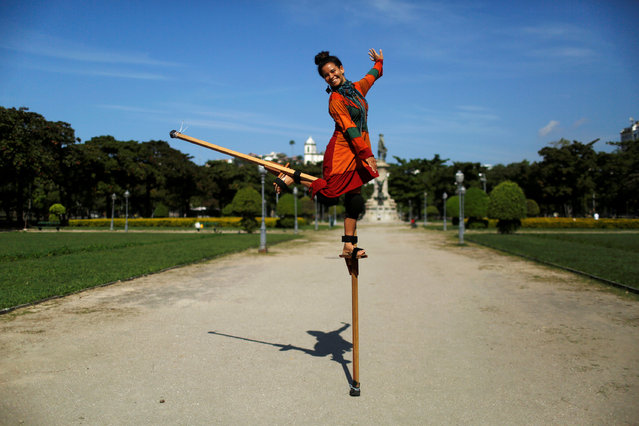
Raquel Poti, a 32-year-old street artist, poses at a park in Rio de Janeiro, Brazil, June 25, 2016. Raquel thinks the Olympics promotes a lifestyle that combines sports, culture and education. She is concerned about the large investment for the event while the population needs improvements in basic services. (Photo by Pilar Olivares/Reuters)

Just a week before Rio de Janeiro hosts South America's first Olympics, city residents expressed mixed feelings about the cost and security of the Games, while holding out hope they will bring joy to a nation facing economic and political crises. The conflicted thoughts mirror a recent survey by the Datafolha polling group showing that half of Brazilians were opposed to holding the Games, while 63 percent think the costs of hosting the event will outweigh benefits. (Photo by Pilar Olivares/Reuters)
Details
03 Aug 2016 11:51:00
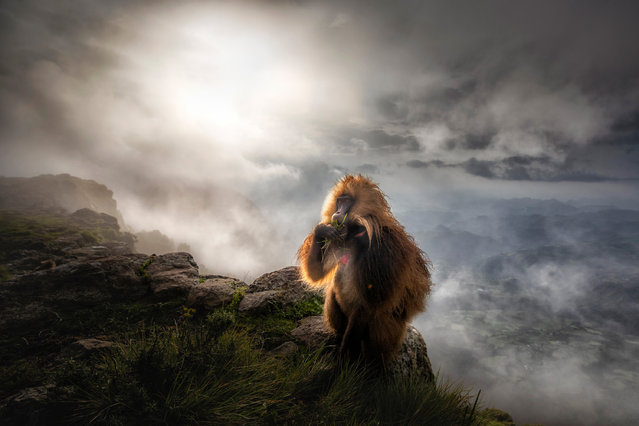
Highly commended, mammals: Gelada after the storm – Marco Gaiotti (Italy). “Gelada baboons are the only monkey species in the world that feed on grasses. They are native to the tableland of Ethiopia. Every morning large family groups wander from their sleeping places in the steep rock face, up to 1,000 metres high, to the feeding grounds at the tablelands. This image clearly depicts their feeding strategy: they pull out bunches of grass, sort the stalks and then lift them to their mouth. This shot was taken towards the end of the rainy season after a heavy storm”. (Photo by Marco Gaiotti/2019 GDT European Wildlife Photographer of the Year)

Highly commended, mammals: Gelada after the storm – Marco Gaiotti (Italy). “Gelada baboons are the only monkey species in the world that feed on grasses. They are native to the tableland of Ethiopia. Every morning large family groups wander from their sleeping places in the steep rock face, up to 1,000 metres high, to the feeding grounds at the tablelands. This image clearly depicts their feeding strategy: they pull out bunches of grass, sort the stalks and then lift them to their mouth. This shot was taken towards the end of the rainy season after a heavy storm”. (Photo by Marco Gaiotti/2019 GDT European Wildlife Photographer of the Year)
Details
31 Oct 2019 00:03:00
Russia's Maria Stavitskaia performs during the ladies short program at the Rostelecom Cup ISU Grand Prix of Figure Skating in Moscow November 14, 2014. (Photo by Grigory Dukor/Reuters)

Russia's Maria Stavitskaia performs during the ladies short program at the Rostelecom Cup ISU Grand Prix of Figure Skating in Moscow November 14, 2014. (Photo by Grigory Dukor/Reuters)
Details
15 Nov 2014 12:53:00
The unromantic gypsies. Children boxing in a gypsy camp in Kent, England on July 1, 1951. Like all boys these gypsy lads like to try their hand at boxing. Encouraged by their friends they fight it out on Corke's Meadow. Few Romanies now live a life of wandering romance. Most are like the three hundred squatters of Corke's Meadow, Kent, which is part of a “gypsy problem” that involves about 100,000 today. Of those about 25,000 can be rightly called gypsies, the rest are Mumpers and Posh-rats and Hobos. Corke's Meadow has both kinds. “Picture Post” cameraman Bert Hardy photographs the Corke's Meadow gypsies in their encampment. (Photo by Hulton-Deutsch Collection/Corbis via Getty Images)

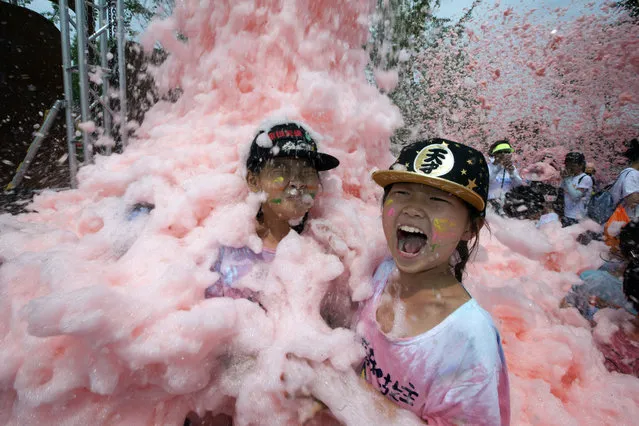
The unromantic gypsies. Children boxing in a gypsy camp in Kent, England on July 1, 1951. Like all boys these gypsy lads like to try their hand at boxing. Encouraged by their friends they fight it out on Corke's Meadow. Few Romanies now live a life of wandering romance. Most are like the three hundred squatters of Corke's Meadow, Kent, which is part of a “gypsy problem” that involves about 100,000 today. Of those about 25,000 can be rightly called gypsies, the rest are Mumpers and Posh-rats and Hobos. Corke's Meadow has both kinds. “Picture Post” cameraman Bert Hardy photographs the Corke's Meadow gypsies in their encampment. (Photo by Hulton-Deutsch Collection/Corbis via Getty Images)
Details
12 Mar 2017 00:01:00
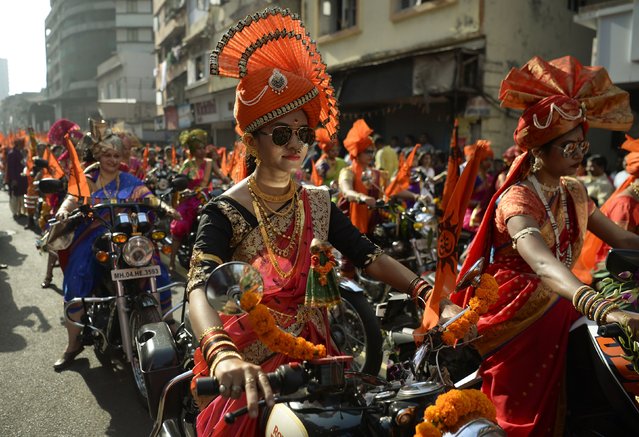
Indian women dressed in traditional attire drive motorcycles as they take part in a procession celebrating “Gudhi Padwa” or the Maharashtrian New Year in Mumbai on March 28, 2017. Gudhi Padwa is the Hindu New Year for people in India's Maharashtra state and marks the end of a harvest and the beginning of a new one. (Photo by Punit Paranjpe/AFP Photo)

Indian women dressed in traditional attire drive motorcycles as they take part in a procession celebrating “Gudhi Padwa” or the Maharashtrian New Year in Mumbai on March 28, 2017. Gudhi Padwa is the Hindu New Year for people in India's Maharashtra state and marks the end of a harvest and the beginning of a new one. (Photo by Punit Paranjpe/AFP Photo)
Details
29 Mar 2017 09:39:00
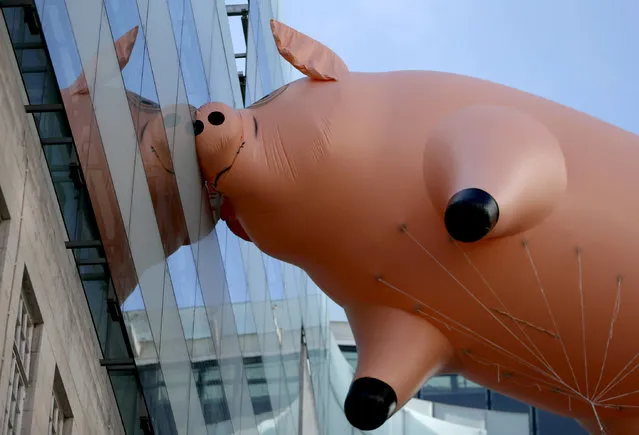
The Pink Floyd inflatable pig floats next to Broadcasting House to promote their new exhibition at the V&A museum, in London, Britain May 10, 2017. (Photo by Neil Hall/Reuters)

The Pink Floyd inflatable pig floats next to Broadcasting House to promote their new exhibition at the V&A museum, in London, Britain May 10, 2017. (Photo by Neil Hall/Reuters)
Details
11 May 2017 07:33:00
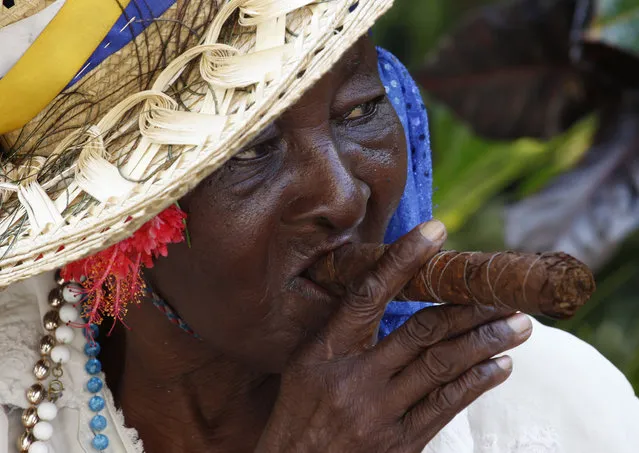
A street entertainer waits for tourists in Havana, October 2009. (Photo by Desmond Boylan/Reuters)

A street entertainer waits for tourists in Havana, Cuba on October 2009. (Photo by Desmond Boylan/Reuters)
Details
12 Jan 2019 00:05:00