Loading...
Done
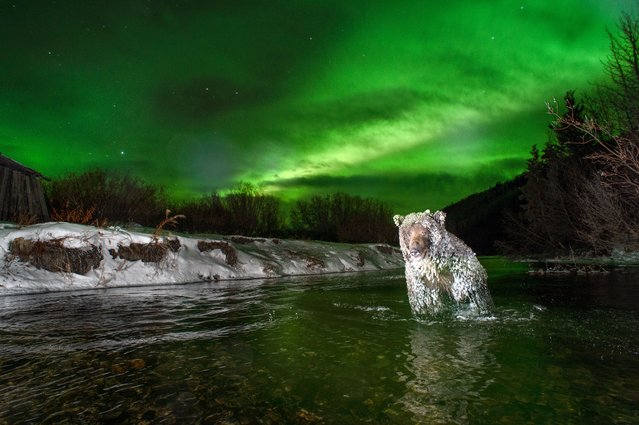
A grizzly bear fishes for salmon under the Northern Lights in Klukshu, Yukon, in the north of Canada on March 3, 2025. The bear makes use of the darkness because the salmon can't see well enough to swim away. (Photo by Peter Mather/Solent News & Photo Agency)

A grizzly bear fishes for salmon under the Northern Lights in Klukshu, Yukon, in the north of Canada on March 3, 2025. The bear makes use of the darkness because the salmon can't see well enough to swim away. (Photo by Peter Mather/Solent News & Photo Agency)
Details
19 Nov 2025 04:56:00
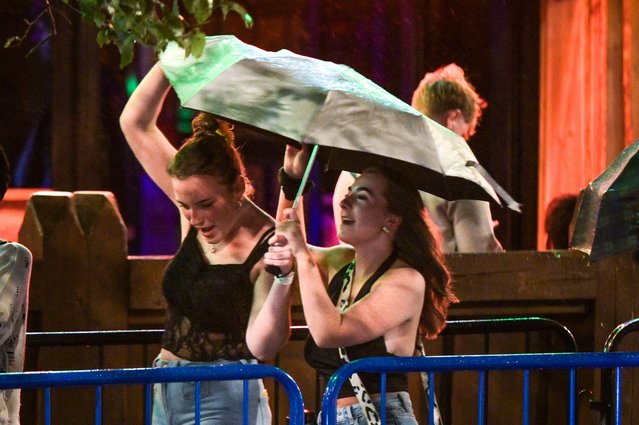
Revellers battled against 40mph winds and driving rain to get to nightclubs in Birmingham city centre on September 21, 2025. The Met Office released a yellow weather warning for strong wind and heavy rain overnight across much of England and Wales. The partygoers used their coats and umbrellas to shelter from the barmy conditions. (Photo by British News and Media/Alamy Live News)

Revellers battled against 40mph winds and driving rain to get to nightclubs in Birmingham city centre on September 21, 2025. The Met Office released a yellow weather warning for strong wind and heavy rain overnight across much of England and Wales. The partygoers used their coats and umbrellas to shelter from the barmy conditions. (Photo by British News and Media/Alamy Live News)
Details
22 Nov 2025 06:03:00
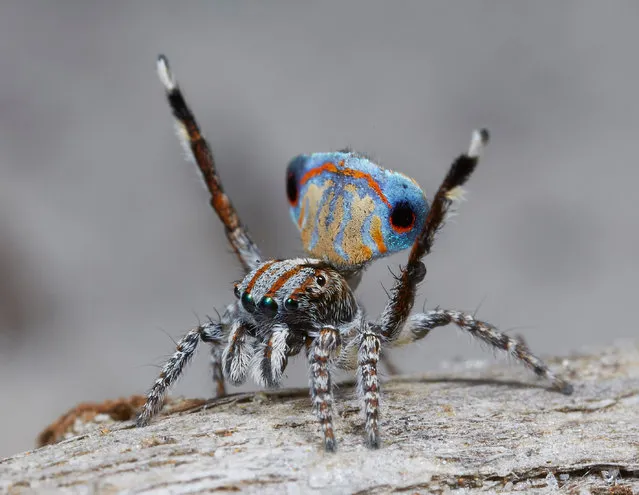
Several new species of peacock spider – just a few millimetres long and featuring extraordinary colours – have been discovered in Western Australia and South Australia. Jürgen Otto, a biologist from Sydney, has been researching the arachnids since 2005, and has gained a significant following online with his footage. He believes there are now 48 confirmed species of peacock spider within the Maratus genus, found across Australia but particularly in Western Australia – and many more awaiting confirmation. Here: Maratus Tasmanicus, one of seven new species of peacock spiders studied by the Sydney biologist Jürgen Otto. (Photo by Jürgen Otto)

Several new species of peacock spider – just a few millimetres long and featuring extraordinary colours – have been discovered in Western Australia and South Australia. Jürgen Otto, a biologist from Sydney, has been researching the arachnids since 2005, and has gained a significant following online with his footage. He believes there are now 48 confirmed species of peacock spider within the Maratus genus, found across Australia but particularly in Western Australia – and many more awaiting confirmation. Here: Maratus Tasmanicus, one of seven new species of peacock spiders studied by the Sydney biologist Jürgen Otto. (Photo by Jürgen Otto)
Details
30 May 2016 08:40:00
Residents ride on top of an overcrowded “Jeepney”, a locally manufactured public transport, along a highway in Mogpog town on Marinduque island in central Philippines April 8, 2015. (Photo by Erik De Castro/Reuters)

Residents ride on top of an overcrowded “Jeepney”, a locally manufactured public transport, along a highway in Mogpog town on Marinduque island in central Philippines April 8, 2015. (Photo by Erik De Castro/Reuters)
Details
03 Sep 2016 09:47:00
Students of the Krasnoyarsk choreographic college Anastasia Shevtsova (R) and Yulia Lyakhovykh do leg-splits as they study for an exam and a performance by the graduates at the State Theatre of Opera and Ballet, at the college's campus in the Siberian city of Krasnoyarsk, Russia, May 4, 2017. (Photo by Ilya Naymushin/Reuters)

Students of the Krasnoyarsk choreographic college Anastasia Shevtsova (R) and Yulia Lyakhovykh do leg-splits as they study for an exam and a performance by the graduates at the State Theatre of Opera and Ballet, at the college's campus in the Siberian city of Krasnoyarsk, Russia, May 4, 2017. (Photo by Ilya Naymushin/Reuters)
Details
28 Dec 2017 07:48:00
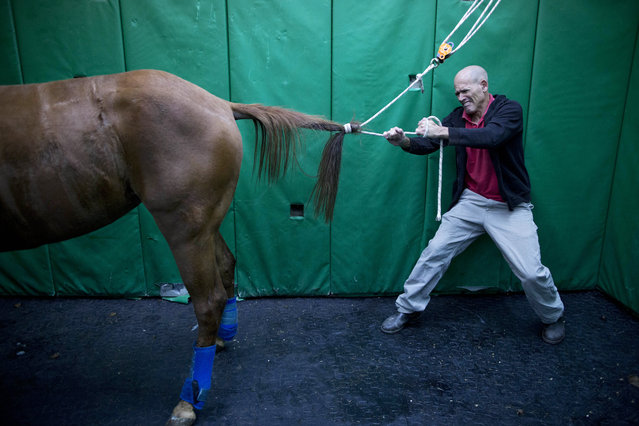
In this Wednesday, December 2, 2015 photo, Dr. Gal Kelmer, head of the department of large animals, unties a horse after its operation at the University's Koret School of Veterinary Medicine in Rishon Lezion, Israel. “Horses have an instinctive response of flight from danger”, Kelmer said. “The minute they wake up they start trying to stand and run, even if they don't have control of their limbs. So then they fall”. (Photo by Oded Balilty/AP Photo)

In this Wednesday, December 2, 2015 photo, Dr. Gal Kelmer, head of the department of large animals, unties a horse after its operation at the University's Koret School of Veterinary Medicine in Rishon Lezion, Israel. “Horses have an instinctive response of flight from danger”, Kelmer said. “The minute they wake up they start trying to stand and run, even if they don't have control of their limbs. So then they fall”. (Photo by Oded Balilty/AP Photo)
Details
15 Dec 2015 08:04:00
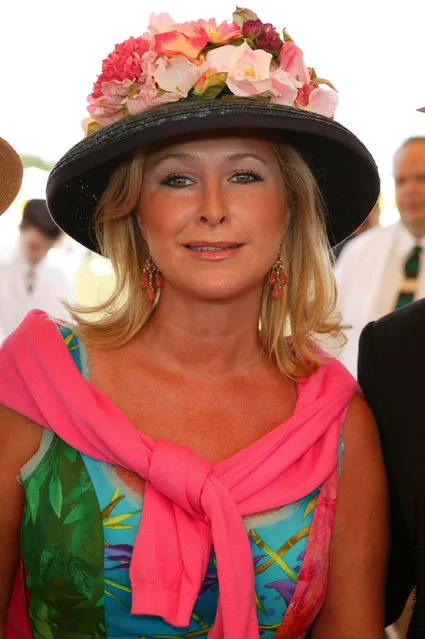
Kathy Hilton

Socialite Kathy Hilton attends the Prudential Financial Grand Prix Hamptons Classic Horse Show August 31, 2003 in Bridgehampton, New York.
Details
12 Mar 2011 19:15:00
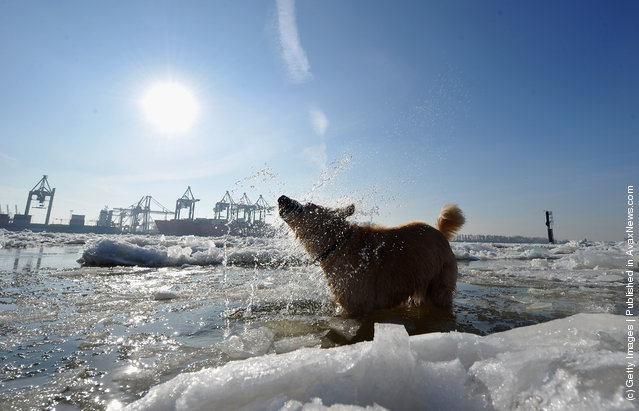
A dog takes a dip in the river Elbe

A dog takes a dip in the river Elbe on February 6, 2012 in Hamburg, Germany.The current cold front that has claimed over 200 lives in eastern Europe makes its way west. (Photo by Stuart Franklin/Getty Images)
Details
07 Feb 2012 10:03:00