Loading...
Done
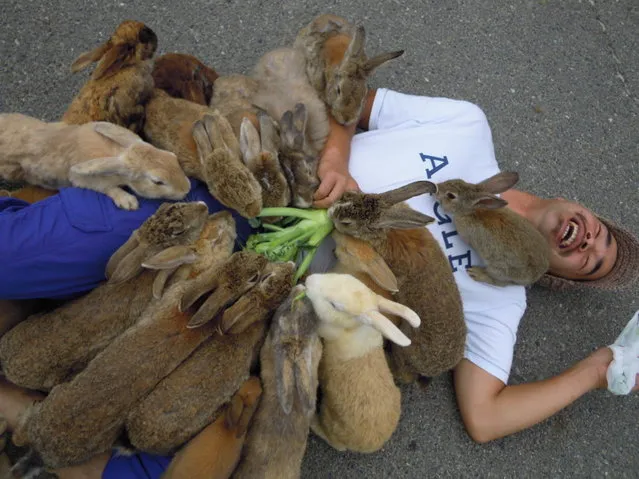
Rabbit Island in Japan

Only after World War II did the secret spill: Ōkunoshima, located in the Inland Sea of Japan between Hiroshima and Shikoku, was the top-secret site for manufacturing chemical warfare. When the factories were closed down, a number of exotic wild rabbits were seen freely roaming the island. They were assumed to have been the test subjects for the chemical weapons, which the military failed to eradicate when the factory was demolished.
Details
17 Feb 2014 12:23:00


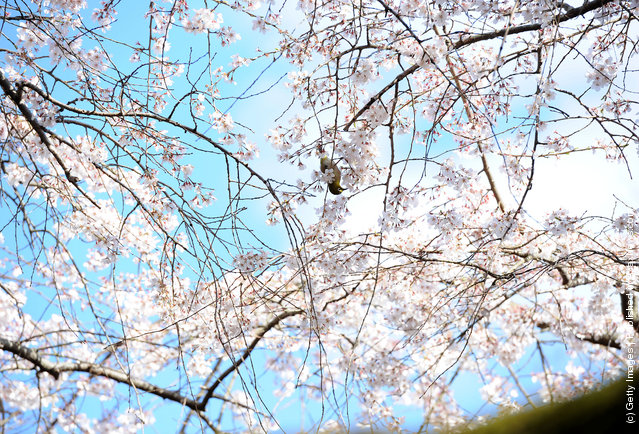
A Japanese white-eye is seen on a branch of cherry blossoms at Kyoto Imperial Palace on March 26, 2010 in Kyoto, Japan. (Photo by Akihiro I/Getty Images)
Details
26 Mar 2011 11:11:00
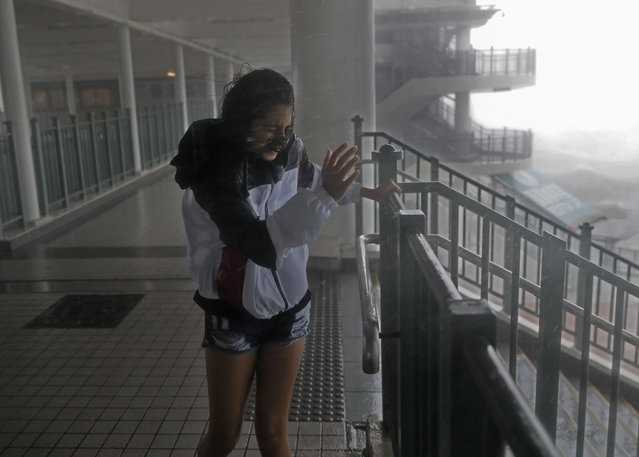
A girl stands against strong wind caused by Typhoon Mangkhut at a pier on the waterfront of Victoria Habour Hong Kong, Sunday, September 16, 2018. Hong Kong and southern China hunkered down as strong winds and heavy rain from Typhoon Mangkhut lash the densely populated coast. The biggest storm of the year left at least 28 dead from landslides and drownings as it sliced through the northern Philippines. (Photo by Vincent Yu/AP Photo)

A girl stands against strong wind caused by Typhoon Mangkhut at a pier on the waterfront of Victoria Habour Hong Kong, Sunday, September 16, 2018. Hong Kong and southern China hunkered down as strong winds and heavy rain from Typhoon Mangkhut lash the densely populated coast. The biggest storm of the year left at least 28 dead from landslides and drownings as it sliced through the northern Philippines. (Photo by Vincent Yu/AP Photo)
Details
18 Sep 2018 00:05:00
Russian servicewomen march during the Victory Day Parade in Red Square in Moscow, Russia, June 24, 2020. The military parade, marking the 75th anniversary of the victory over Nazi Germany in World War Two, was scheduled for May 9 but postponed due to the outbreak of the coronavirus disease (COVID-19). (Photo by Sergey Pyatakov/Host Photo Agency/AFP Photo)

Russian servicewomen march during the Victory Day Parade in Red Square in Moscow, Russia, June 24, 2020. The military parade, marking the 75th anniversary of the victory over Nazi Germany in World War Two, was scheduled for May 9 but postponed due to the outbreak of the coronavirus disease (COVID-19). (Photo by Sergey Pyatakov/Host Photo Agency/AFP Photo)
Details
26 Jun 2020 00:03:00
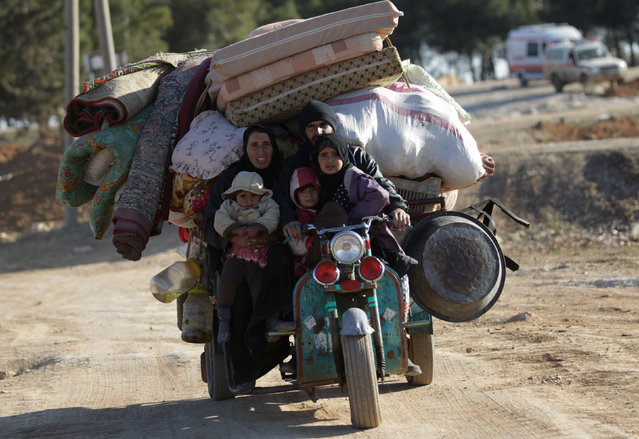
People who fled the violence from Islamic State-controlled northern Syrian town of al-Bab arrive in the rebel-held outskirts of the town, Syria February 3, 2017. (Photo by Khalil Ashawi/Reuters)

People who fled the violence from Islamic State-controlled northern Syrian town of al-Bab arrive in the rebel-held outskirts of the town, Syria February 3, 2017. (Photo by Khalil Ashawi/Reuters)
Details
05 Feb 2017 01:00:00
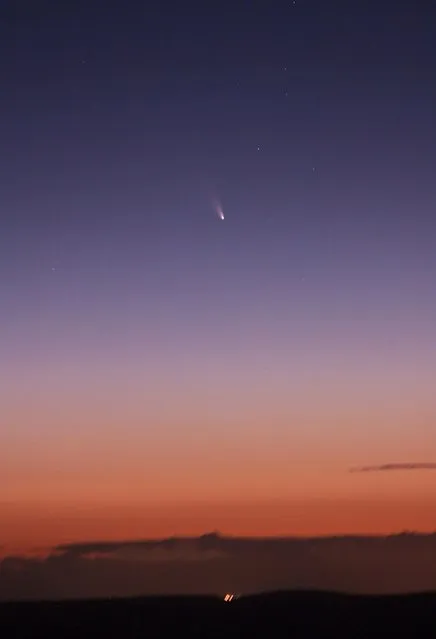
This image provided by NASA shoaws the comet PANSTARRS as seen from Mount Dale, Western Australia on March 5, 2013. According to NASA on March 10, it will make its closest approach to the sun about 28 million miles (45 million kilometers) away. As it continues its nightly trek across the sky, the comet may get lost in the sun's glare but should return and be visible to the naked eye by March 12. (Photo by AP Photo/NASA)

It’s time to start watching for Comet PANSTARRS, one of two comets to get excited about in 2013. Photo: This image provided by NASA shoaws the comet PANSTARRS as seen from Mount Dale, Western Australia on March 5, 2013. According to NASA on March 10, it will make its closest approach to the sun about 28 million miles (45 million kilometers) away. As it continues its nightly trek across the sky, the comet may get lost in the sun's glare but should return and be visible to the naked eye by March 12. (Photo by AP Photo/NASA)
Details
13 Mar 2013 08:03:00
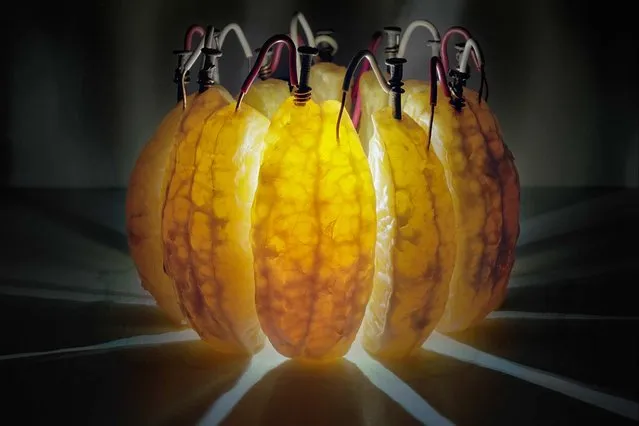
Wedges of an orange generate enough current and electrical juice – 3.5 volts – to power an LED. The fruit’s citric acid helps electrons flow from galvanized nails to copper wire in this 14-hour exposure. This image was published in September’s Visions of Earth, a trio of photos that appear in each issue of National Geographic. (Photo by Caleb Charland/National Geographic)

Wedges of an orange generate enough current and electrical juice – 3.5 volts – to power an LED. The fruit’s citric acid helps electrons flow from galvanized nails to copper wire in this 14-hour exposure. This image was published in September’s Visions of Earth, a trio of photos that appear in each issue of National Geographic. (Photo by Caleb Charland/National Geographic)
Details
06 Jan 2014 12:09:00
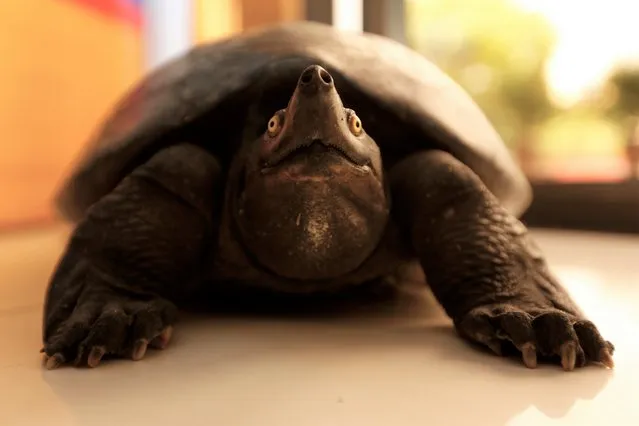
A view of a turtle during an event at the Ministry of Environment in Phnom Penh, Cambodia, 24 June 2020. A Cambodian woman recently bought endangered Royal Turtles from local villagers and gave them to Ministry of Environment. (Photo by Kith Serey/EPA/EFE)

A view of a turtle during an event at the Ministry of Environment in Phnom Penh, Cambodia, 24 June 2020. A Cambodian woman recently bought endangered Royal Turtles from local villagers and gave them to Ministry of Environment. (Photo by Kith Serey/EPA/EFE)
Details
28 Jun 2020 00:01:00