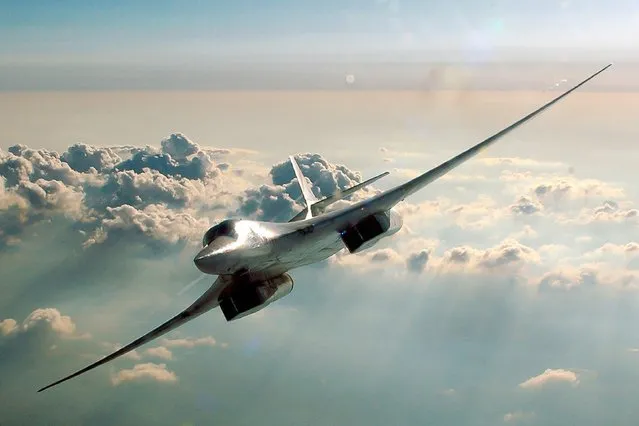
In this undated photo released Tuesday April 13, 2021, by Russian Defense Ministry Press Service, A Tu-160 strategic bomber of the Russian air force is shown on a training mission somewhere in Russia. Russian Defense Minister Sergei Shoigu on Tuesday described a massive military buildup in western Russia as part of drills intended to check the armed forces' readiness amid the threats posed by NATO. (Photo by Vadim Savitsky/Russian Defense Ministry Press Service via AP Photo)
These stunning photos act as postcards for one photographer, who has traveled all over the globe, braving freezing temperatures to create the ultimate time lapse video. Photographer Dustin Farrell, 36, spent four years perfecting his technique and traveling all over the world in his quest to capture the most beautiful time lapses of nature. (Photo by Dustin Farrell/Caters News)
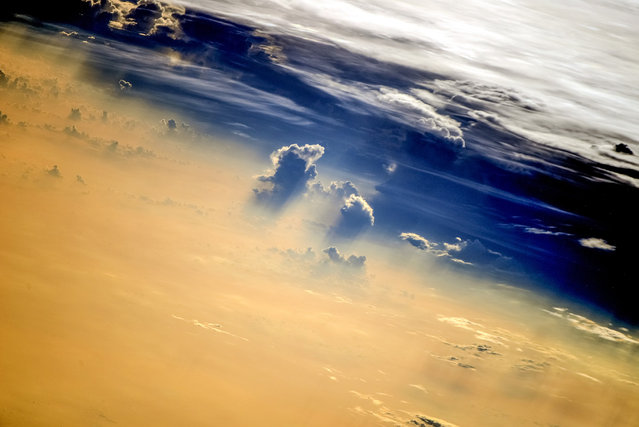
Image of the Clouds taken in August 2014 by astronauts on board the International Space Station (ISS). A year from space photographs of hurricanes, typhoons and meteorite craters show an astronauts-eye view of our planet from hundreds of miles above the earth. The illuminating images were taken by astronauts onboard the International Space Station (ISS) over the course of 2014. (Photo by NASA/SPL/Barcroft Media)
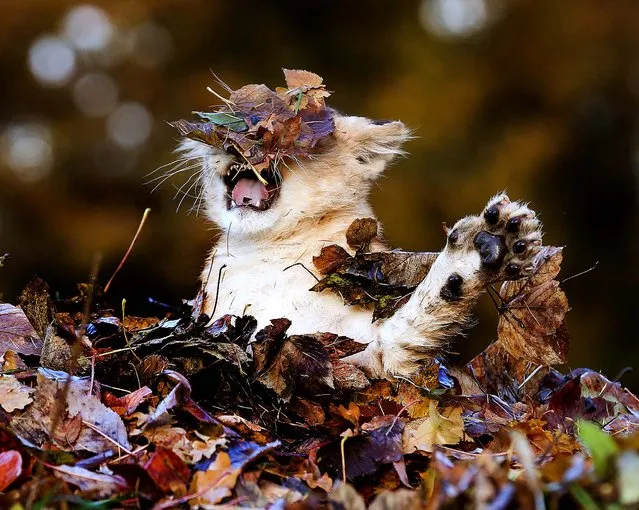
Karis, an eleven week old lion cub, plays in fallen leaves brushed up by keepers in her enclosure at Blair Drummond Safari Park, near Stirling, Scotland, on November 20, 2013. (Photo by Andrew Milligan/PA Wire)
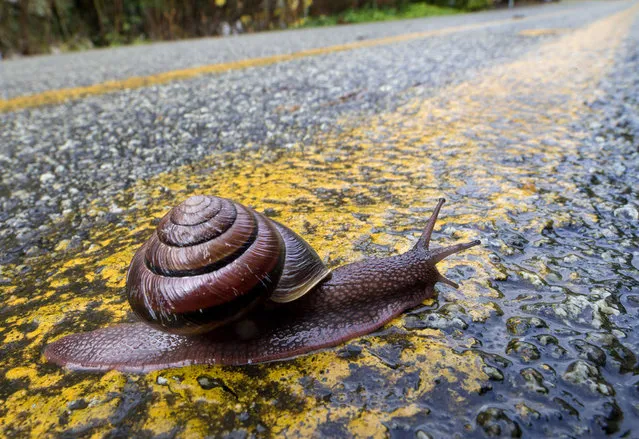
A large Pacific sideband snail slowly crosses a rain wet road in rural Douglas County, Oregon near Elkton on Sunday, December 2, 2012. The moisture loving snail should be very content with the recent heavy rains in southwestern Oregon and northern California. (Photo by Robin Loznak)
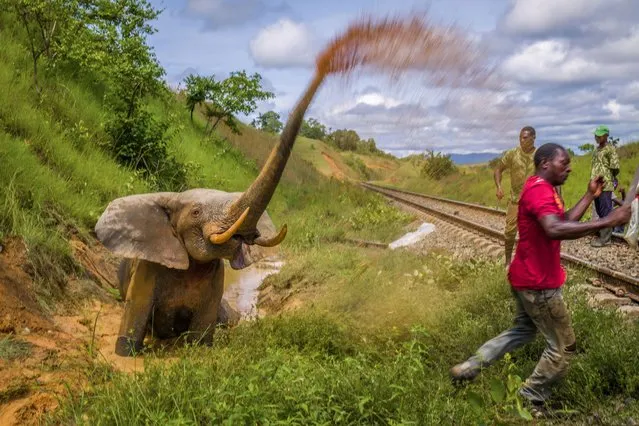
Grand prize winner: environmental photographer of the year 2023; also 1st place in the humanity v nature category; and winner of the 2023 public award. Lopé national park, Gabon, 2021. An angry elephant tries to defend itself after it was hit by a train that crosses paths the animals use within Lopé national park. Park officials decided the elephant was too severely injured to be saved. After it was killed, the park director distributed the meat to local people. As the forest loses its carrying capacity to sustain its megafauna, this kind of human-wildlife conflict is increasing. (Photo by Jasper Doest/Environmental Photography Award)