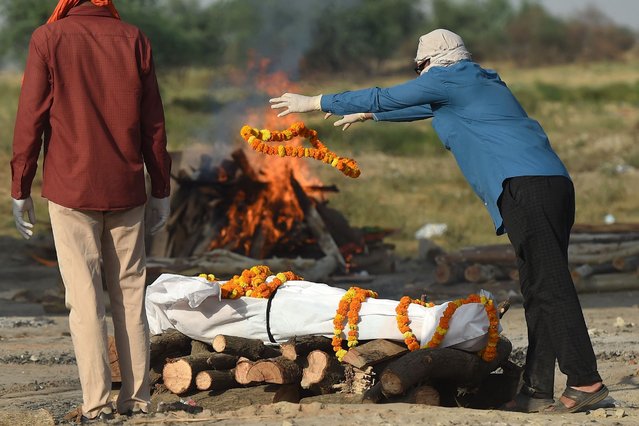
Relatives perform the last rites before the cremation of their loved one who died due to the Covid-19 coronavirus at a cremation ground in Allahabad on May 4, 2021. (Photo by Sanjay Kanojia/AFP Photo)
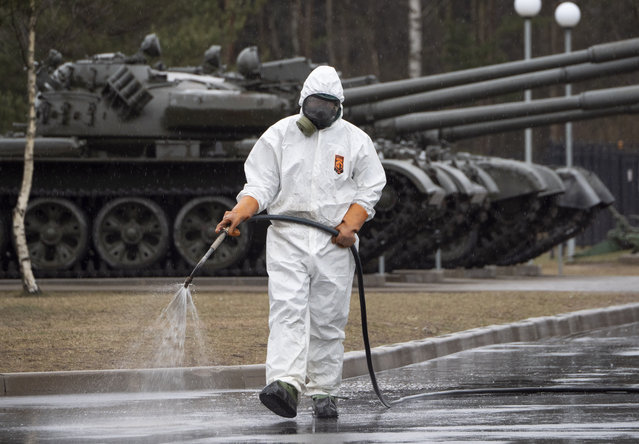
A specialist from a local veterinary service wears a protective suit as sprays disinfectant near Russian tanks displayed at area near Proryv (The Breakthrough) museum dedicated to the breakthrough of the Siege of Leningrad during World WarII near Kirovsk, about 30 kilometres (19 miles) east of St.Petersburg, Russia, Thursday, April 2, 2020. (Photo by Dmitri Lovetsky/AP Photo)
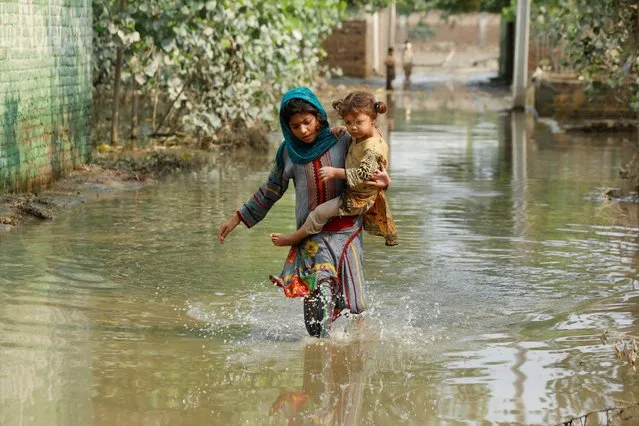
A girl carries her sibling as she walks through stranded flood water, following rains and floods during the monsoon season in Nowshera, Pakistan on September 4, 2022. (Photo by Fayaz Aziz/Reuters)
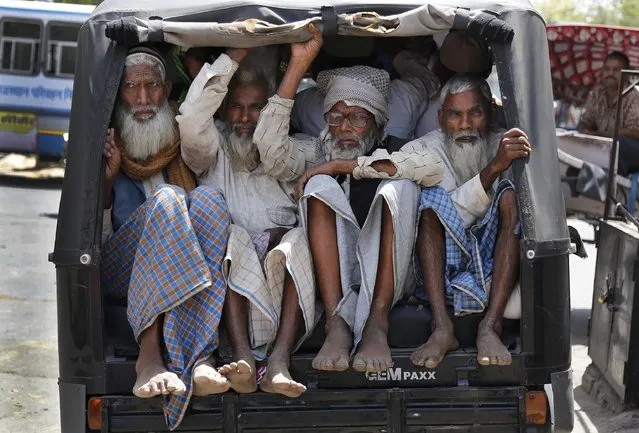
Indian Muslim devotees travel in an auto rickshaw during the Urs festival in Ajmer, India, Thursday, April 23, 2015. Thousands of devotees from different parts of India travel to the shrine of Sufi saint Khwaja Moinuddin Chisht for the annual festival marking the saint's death anniversary. (Photo by Deepak Sharma/AP Photo)
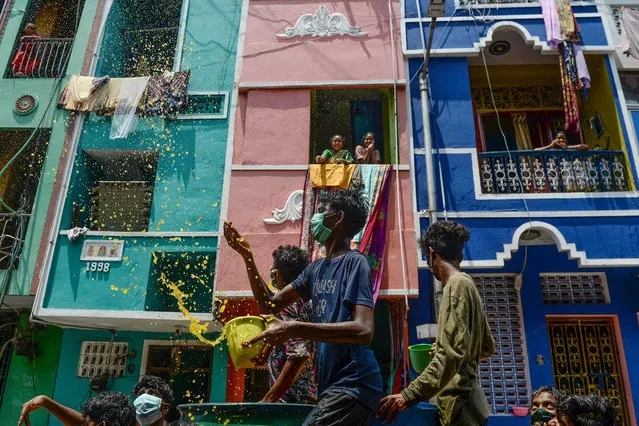
Volunteers throw a mixture of water, neem herb and turmeric as an alleged natural disinfectant on a street in a residential area during a government-imposed nationwide lockdown as a preventive measure against the COVID-19 coronavirus, in Chennai on April 7, 2020. (Photo by Arun Sankar/AFP Photo)
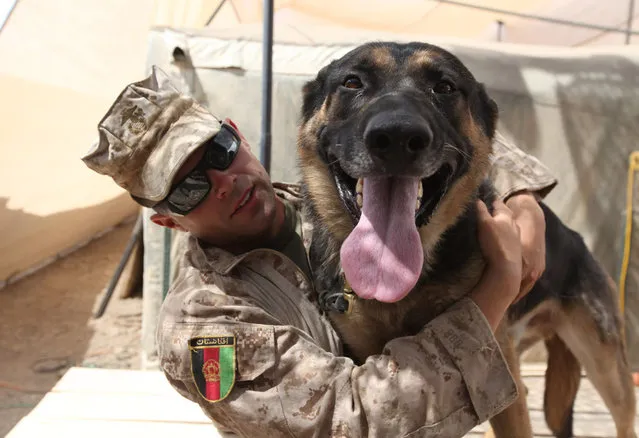
Throughout the course of the long war in Afghanistan, Coalition troops have relied on thousands of military working dogs to help keep them safe, and make their jobs easier. The dogs are trained to detect explosives, to find illegal drugs, to search for missing comrades, or target enemy combatants. Not only are they active on the front lines, but behind the lines they serve as therapy dogs, service dogs, and loyal companions. They also share the same risks as the ground troops, suffering injuries and sometimes death on the battlefields. Gathered here are images of these dogs and their handlers in Afghanistan and back home, from over the past several years, part of the ongoing series here on Afghanistan.
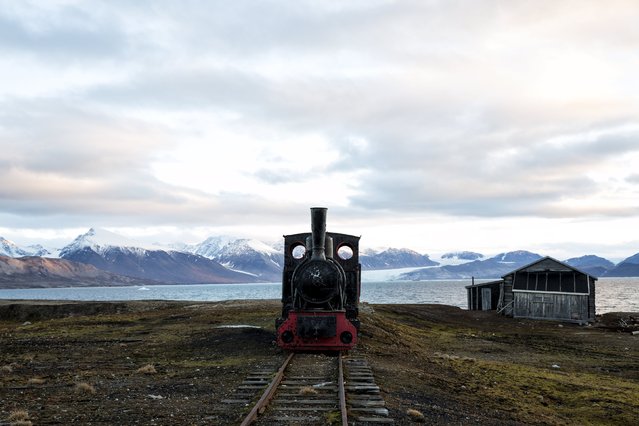
An old locomotive train that was used for transporting coal is preserved as a monument at Ny-Alesund, in Svalbard, Norway, October 11, 2015. A Norwegian chain of islands just 1,200 km (750 miles) from the North Pole is trying to promote new technologies, tourism and scientific research in a shift from high-polluting coal mining that has been a backbone of the remote economy for decades. (Photo by Anna Filipova/Reuters)
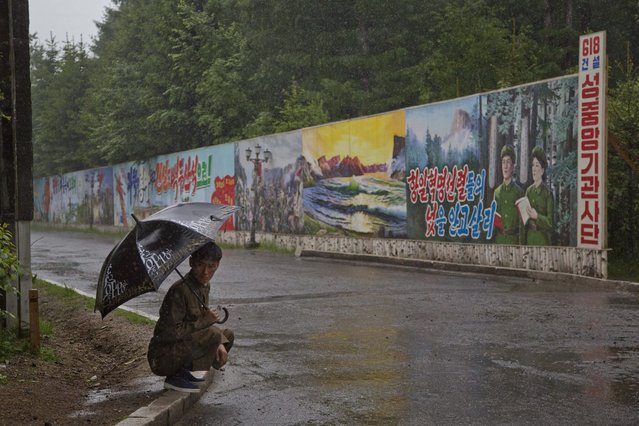
In this June 17, 2014 photo, a North Korean man takes shelter in the rain next to long propaganda billboards in the town of Samjiyon in North Korea's Ryanggang province. The Associated Press was granted to embark on a weeklong road trip across North Korea to the country’s spiritual summit Mount Paektu. The trip was on North Korea's terms. An AP reporter and photographer couldn't interview ordinary people or wander off course, and government “minders” accompanied them the entire way. (Photo by David Guttenfelder/AP Photo)