Loading...
Done
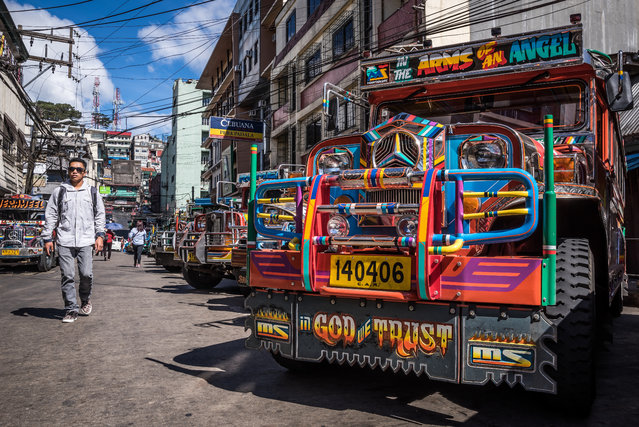
A jeepney waits for departure at Baguio (North Luzon). (Photo by Claudio Sieber/Barcroft Media)

These Filipino icons of ingenuity were originally re-crafted from abandoned US army jeeps after the second world war, and helped to establish a new system of urban transportation. Jeepneys are being phased to help ease city congestion, but the move will also cause unemployment for experienced drivers – and higher fares for commuters. (Photo by Claudio Sieber/Barcroft Media)
Details
30 May 2019 00:01:00
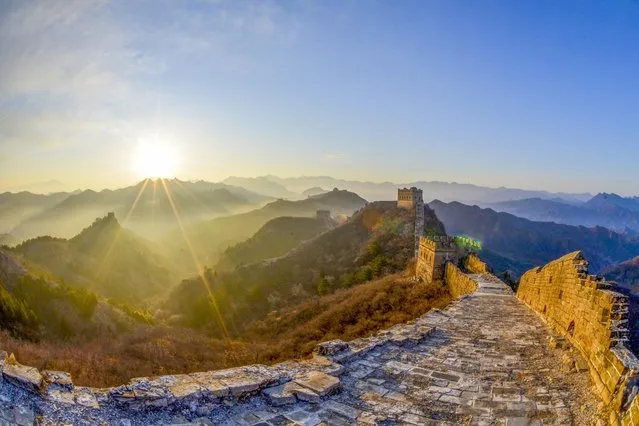
The Jinshanling Great Wall is seen after a rainfall on March 31, 2022 in Chengde, Hebei Province of China. (Photo by Zhou Wanping/VCG via Getty Images)

The Jinshanling Great Wall is seen after a rainfall on March 31, 2022 in Chengde, Hebei Province of China. (Photo by Zhou Wanping/VCG via Getty Images)
Details
20 May 2022 05:08:00
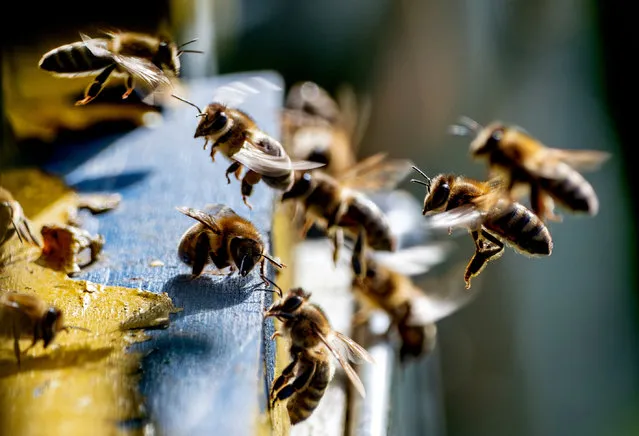
Bees fly in front of a beehive in the outskirts of Frankfurt, Germany, Monday, April 8, 2024. (Photo by Michael Probst/AP Photo)

Bees fly in front of a beehive in the outskirts of Frankfurt, Germany, Monday, April 8, 2024. (Photo by Michael Probst/AP Photo)
Details
22 Apr 2024 04:16:00
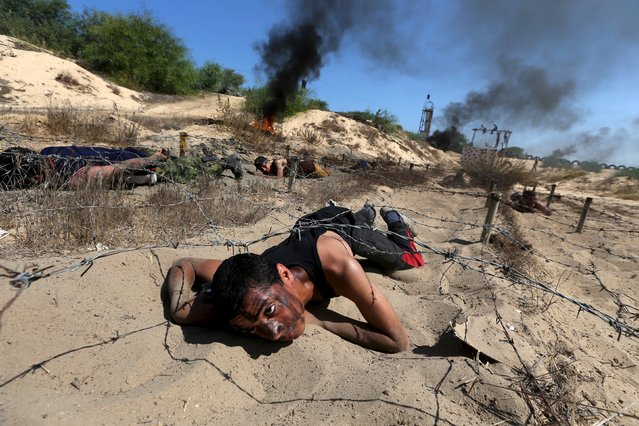
A young Palestinian crawls under a barbed wire during a military-style exercise at a summer camp organized by Islamic Jihad movement, in Khan Younis in the southern Gaza Strip, August 13, 2015. (Photo by Ibraheem Abu Mustafa/Reuters)

A young Palestinian crawls under a barbed wire during a military-style exercise at a summer camp organized by Islamic Jihad movement, in Khan Younis in the southern Gaza Strip, August 13, 2015. (Photo by Ibraheem Abu Mustafa/Reuters)
Details
14 Aug 2015 14:07:00
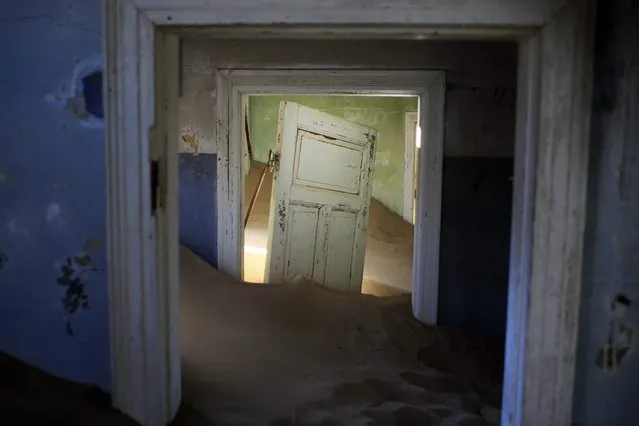
In this July 23, 2013 photo, sand fills an abandoned house in Kolmanskop, Namibia. Kolmanskop, was a diamond mining town south of Namibia, build in 1908 and deserted in 1956. SInce then, the desert slowly reclaims its territory, with sand invading the buildings where 350 German colonists and more than 800 local workers lived during its hay-days of the 1920s. (Photo by Jerome Delay/AP Photo)

In this July 23, 2013 photo, sand fills an abandoned house in Kolmanskop, Namibia. Kolmanskop, was a diamond mining town south of Namibia, build in 1908 and deserted in 1956. SInce then, the desert slowly reclaims its territory, with sand invading the buildings where 350 German colonists and more than 800 local workers lived during its hay-days of the 1920s. (Photo by Jerome Delay/AP Photo)
Details
14 Nov 2014 14:34:00
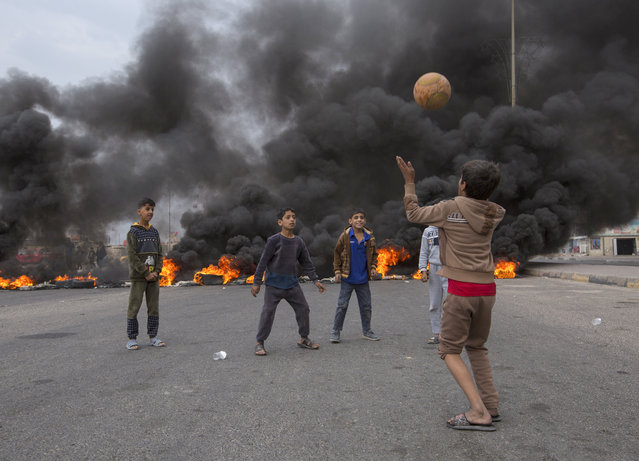
Iraqi children play with a ball on a street blocked with burning tyres, amid a general strike in the southern city of Basra, on November 25, 2019. The demonstrations rocking the capital and Shiite-majority south since October 1 are the biggest grassroots movement the country has seen in decades. Sparked by outrage over rampant government corruption, poor services and lack of jobs, they have since gone straight to the source: calling out the ruling system as inherently flawed and in need of a total overhaul. (Photo by Hussein Faleh/AFP Photo)

Iraqi children play with a ball on a street blocked with burning tyres, amid a general strike in the southern city of Basra, on November 25, 2019. The demonstrations rocking the capital and Shiite-majority south since October 1 are the biggest grassroots movement the country has seen in decades. Sparked by outrage over rampant government corruption, poor services and lack of jobs, they have since gone straight to the source: calling out the ruling system as inherently flawed and in need of a total overhaul. (Photo by Hussein Faleh/AFP Photo)
Details
03 Jan 2020 00:01:00
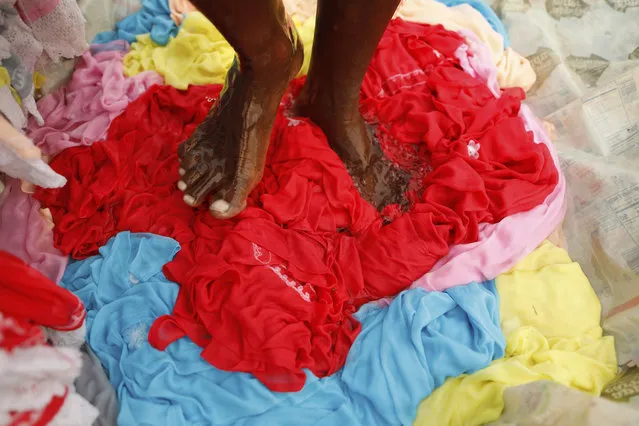
A dhobi, or a washerman washes cloths on the banks of the River Gomti in Lucknow, India, Saturday, September 12, 2020. Dhobis are traditional laundry workers who wash clothes by hand and dry them in the sun, an occupation which has been in existence for generations. Most cities in India have a Dhobi Ghat, or washermen's area, where the city's pile of clothes is laundered. This practice is still popular in India, despite of modern technology. Around 1,000 families work in Lucknow's Dhobi Ghat. However, in light of the novel coronavirus, their wages have decreased drastically. With each family earning around US$100-200 per month. (Photo by Rajesh Kumar Singh/AP Photo)

A dhobi, or a washerman washes cloths on the banks of the River Gomti in Lucknow, India, Saturday, September 12, 2020. Dhobis are traditional laundry workers who wash clothes by hand and dry them in the sun, an occupation which has been in existence for generations. Most cities in India have a Dhobi Ghat, or washermen's area, where the city's pile of clothes is laundered. This practice is still popular in India, despite of modern technology. Around 1,000 families work in Lucknow's Dhobi Ghat. However, in light of the novel coronavirus, their wages have decreased drastically. With each family earning around US$100-200 per month. (Photo by Rajesh Kumar Singh/AP Photo)
Details
25 Sep 2020 00:03:00
A child is seen with persimmons in Denizli, Turkiye on October 24, 2022. (Photo by Ummu Nisan Kandilcioglu/Anadolu Agency via Getty Images)

A child is seen with persimmons in Denizli, Turkiye on October 24, 2022. (Photo by Ummu Nisan Kandilcioglu/Anadolu Agency via Getty Images)
Details
09 Nov 2022 05:32:00