Loading...
Done
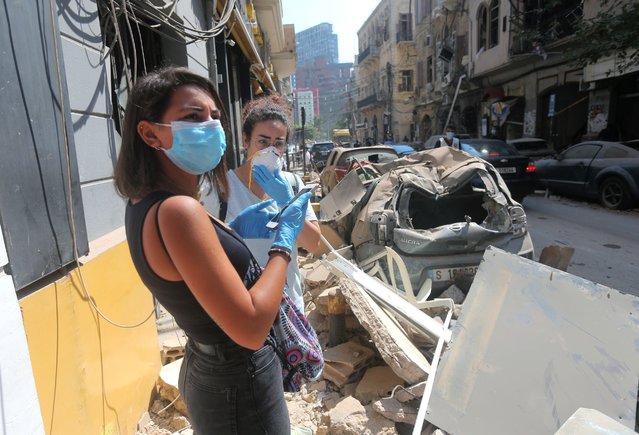
A Maori soldier runs as New Zealand's soldiers march down the Champs Elysees in Paris during a rehearsal of the annual Bastille Day military parade on July 12, 2016. (Photo by Thomas Samson/AFP Photo)

A Maori soldier runs as New Zealand's soldiers march down the Champs Elysees in Paris during a rehearsal of the annual Bastille Day military parade on July 12, 2016. (Photo by Thomas Samson/AFP Photo)
Details
13 Jul 2016 14:11:00
Female winner Ane Guro Moen at Hardangervidda Marathon on September 2, 2017 in Eidfjord, Norway. Hardangervidda Marathon goes through parts of the National Park of Hardangervidda, passing through glaciers and waterfalls. (Photo by Kai-Otto Melau/Getty Images)

Female winner Ane Guro Moen at Hardangervidda Marathon on September 2, 2017 in Eidfjord, Norway. Hardangervidda Marathon goes through parts of the National Park of Hardangervidda, passing through glaciers and waterfalls. (Photo by Kai-Otto Melau/Getty Images)
Details
04 Sep 2017 08:01:00
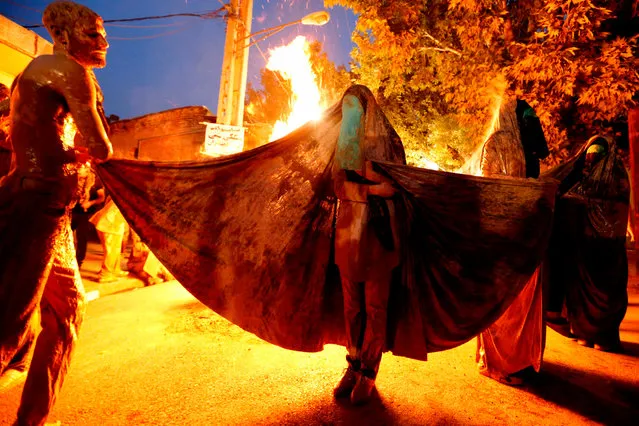
Iranian Shiite Muslim women gather around a bonfire after rubbing mud on their body during the “Kharrah Mali” (Mud Rubbing) ritual to mark the Ashura religious ceremony in the city of Khorramabad, some 470 kms southwest of Tehran, early in the morning on October 1, 2017. “Khrreh Mali” or “Mud Rubbing” is a ritual that is held in the city of Khorramabad every year to commemorate the seventh century slaying of Prophet Mohammed' s grandson Imam Hussein, in which Iranian men roll over in mud and dry themselves by gathering around the bonfires before flagellating themselves. (Photo by Atta Kenare/AFP Photo)

Iranian Shiite Muslim women gather around a bonfire after rubbing mud on their body during the “Kharrah Mali” (Mud Rubbing) ritual to mark the Ashura religious ceremony in the city of Khorramabad, some 470 kms southwest of Tehran, early in the morning on October 1, 2017. “Khrreh Mali” or “Mud Rubbing” is a ritual that is held in the city of Khorramabad every year to commemorate the seventh century slaying of Prophet Mohammed' s grandson Imam Hussein, in which Iranian men roll over in mud and dry themselves by gathering around the bonfires before flagellating themselves. (Photo by Atta Kenare/AFP Photo)
Details
02 Oct 2017 08:38:00
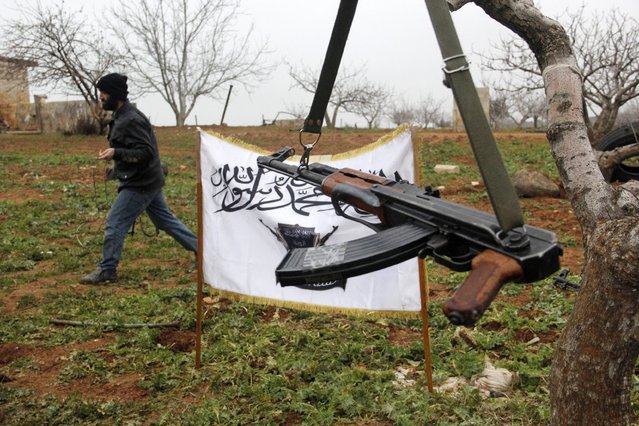
A Free Syrian Army fighter walks past a flag of al-Furqan brigade as a rifle hangs from a branch in the orchards of Kafar Zita in Hama countryside January 22, 2015. (Photo by Mohamad Bayoush/Reuters)

A Free Syrian Army fighter walks past a flag of al-Furqan brigade as a rifle hangs from a branch in the orchards of Kafar Zita in Hama countryside January 22, 2015. (Photo by Mohamad Bayoush/Reuters)
Details
07 Feb 2016 06:43:00
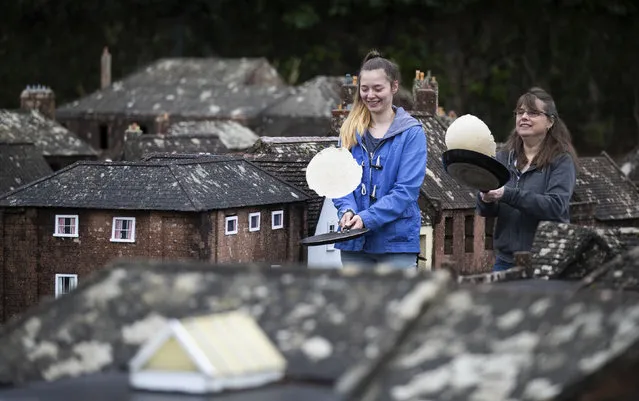
Mother and daughter volunteers Niki, right, and Rachel practice their pancake tossing technique in the streets of Wimborne model town and gardens before taking part in the Wimborne Minster virtual pancake race, in Wimborne, England, Tuesday February 16, 2021.  Although a physical race cannot take place this year due to the coronavirus restrictions, Wimborne Minster has invited people to film themselves tossing a pancake for 30 seconds and posting it to Facebook. (Photo by Andrew Matthews/PA Wire via AP Photo)

Mother and daughter volunteers Niki, right, and Rachel practice their pancake tossing technique in the streets of Wimborne model town and gardens before taking part in the Wimborne Minster virtual pancake race, in Wimborne, England, Tuesday February 16, 2021. Although a physical race cannot take place this year due to the coronavirus restrictions, Wimborne Minster has invited people to film themselves tossing a pancake for 30 seconds and posting it to Facebook. (Photo by Andrew Matthews/PA Wire via AP Photo)
Details
17 Feb 2021 10:01:00
Young Lebanese women wearing protective masks and gloves against the coronavirus pandemic, stand on August 5, 2020 amid the rubble in Beirut's Gimmayzeh commercial district which was heavily damaged by the previous day's powerful explosion that tore through Lebanon's capital, resulting from the ignition of a huge depot of ammonium nitrate at the city's main port. Rescuers searched for survivors in Beirut after a cataclysmic explosion at the port sowed devastation across entire neighbourhoods, killing more than 100 people, wounding thousands and plunging Lebanon deeper into crisis. The blast, which appeared to have been caused by a fire igniting 2,750 tonnes of ammonium nitrate left unsecured in a warehouse, was felt as far away as Cyprus, some 150 miles (240 kilometres) to the northwest. (Photo by AFP Photo/Stringer)
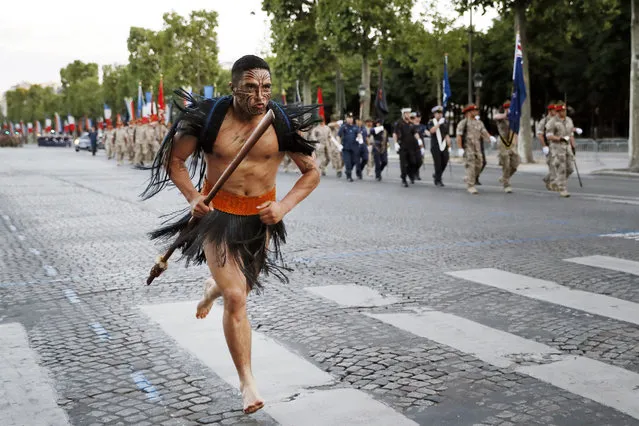

Young Lebanese women wearing protective masks and gloves against the coronavirus pandemic, stand on August 5, 2020 amid the rubble in Beirut's Gimmayzeh commercial district which was heavily damaged by the previous day's powerful explosion that tore through Lebanon's capital, resulting from the ignition of a huge depot of ammonium nitrate at the city's main port. Rescuers searched for survivors in Beirut after a cataclysmic explosion at the port sowed devastation across entire neighbourhoods, killing more than 100 people, wounding thousands and plunging Lebanon deeper into crisis. The blast, which appeared to have been caused by a fire igniting 2,750 tonnes of ammonium nitrate left unsecured in a warehouse, was felt as far away as Cyprus, some 150 miles (240 kilometres) to the northwest. (Photo by AFP Photo/Stringer)

Details
10 Aug 2020 00:05:00
Revellers kiss under a rainbow flag during the Gay Pride parade along Paulista Avenue in Sao Paulo, Brazil on June 3, 2018. (Photo by Nacho Doce/Reuters)

Revellers kiss under a rainbow flag during the Gay Pride parade along Paulista Avenue in Sao Paulo, Brazil on June 3, 2018. (Photo by Nacho Doce/Reuters)
Details
04 Jun 2018 08:30:00
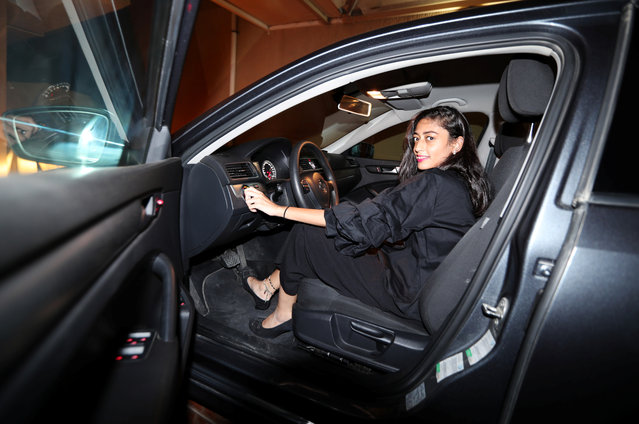
Hannan Iskandar gets ready before she starts to drive her car in her neighborhood, in Al Khobar, Saudi Arabia on June 24, 2018. Saudi Arabia ended its longstanding ban on women driving on June 24, 2018 – and the second the clock struck midnight, women across the country started their engines. (Photo by Hamad I Mohammed/Reuters)

Hannan Iskandar gets ready before she starts to drive her car in her neighborhood, in Al Khobar, Saudi Arabia on June 24, 2018. Saudi Arabia ended its longstanding ban on women driving on June 24, 2018 – and the second the clock struck midnight, women across the country started their engines. (Photo by Hamad I Mohammed/Reuters)
Details
25 Jun 2018 09:50:00