Loading...
Done
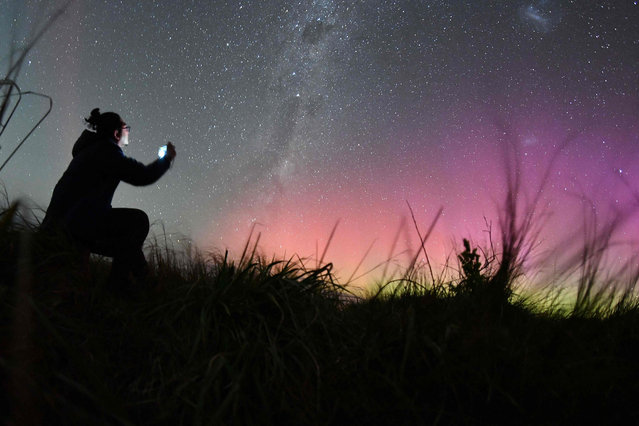
A man takes pictures of the Aurora Australis, also known as the Southern Lights, as it glows on the horizon over waters of Lake Ellesmere on the outskirts of Christchurch on April 24, 2023. (Photo by Sanka Vidanagama/AFP Photo)

A man takes pictures of the Aurora Australis, also known as the Southern Lights, as it glows on the horizon over waters of Lake Ellesmere on the outskirts of Christchurch on April 24, 2023. (Photo by Sanka Vidanagama/AFP Photo)
Details
01 May 2023 03:55:00
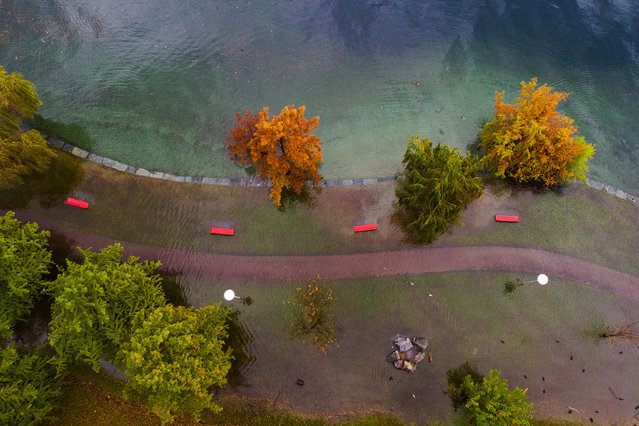
The pedestrian zone on the banks of the “Parco della Pace” at Lake Maggiore is flooded due to flooding, on Thursday, October 24, 2019 in Locarno, Switzerland. (Photo by Samuel Golay/Ti-Press/Keystoen)

The pedestrian zone on the banks of the “Parco della Pace” at Lake Maggiore is flooded due to flooding, on Thursday, October 24, 2019 in Locarno, Switzerland. (Photo by Samuel Golay/Ti-Press/Keystoen)
Details
27 Nov 2019 00:05:00
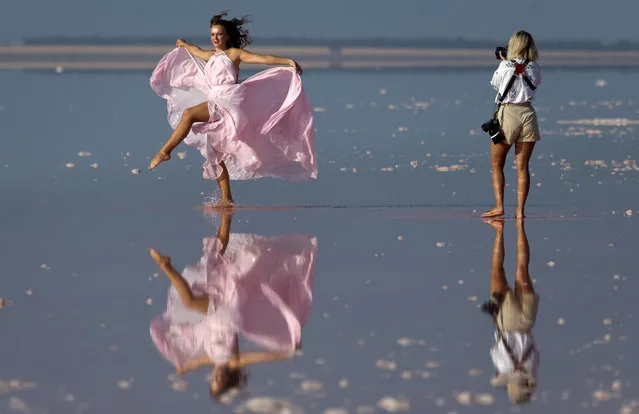
A model showcases a creation during a runway show for the collection by the Crimean designers at the 2020 Crimean Fashion Week on Lake Sasyk in Crimea, Russia on August 22, 2020. (Photo by Sergei Malgavko/TASS)

A model showcases a creation during a runway show for the collection by the Crimean designers at the 2020 Crimean Fashion Week on Lake Sasyk in Crimea, Russia on August 22, 2020. (Photo by Sergei Malgavko/TASS)
Details
03 Sep 2020 00:05:00
Women take a selfie with a giant dragon lantern decorated near the frozen Houhai Lake in Beijing, Thursday, February 8, 2024. (Photo by Andy Wong/AP Photo)

Women take a selfie with a giant dragon lantern decorated near the frozen Houhai Lake in Beijing, Thursday, February 8, 2024. (Photo by Andy Wong/AP Photo)
Details
15 Feb 2024 08:57:00
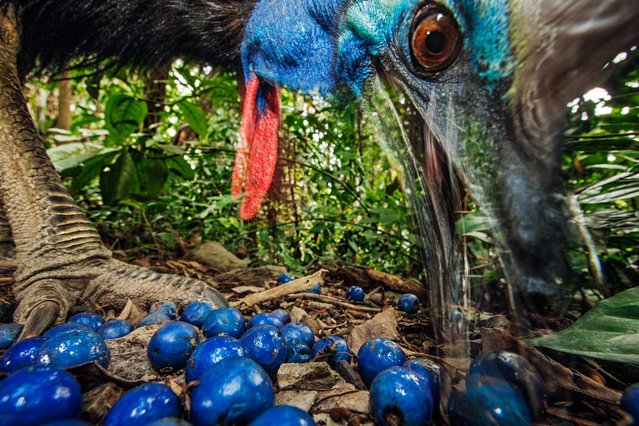
“Cassowaries are large, flightless birds related to emus and (more distantly) to ostriches, rheas, and kiwis”, writes Olivia Judson in the September issue of National Geographic magazine. (Photo by Christian Ziegler/National Geographic)

“Cassowaries are large, flightless birds related to emus and (more distantly) to ostriches, rheas, and kiwis”, writes Olivia Judson in the September issue of National Geographic magazine. How large? People-size: Adult males stand well over five foot five and top 110 pounds. Females are even taller, and can weigh more than 160 pounds. Dangerous when roused, they’re shy and peaceable when left alone. But even birds this big and tough are prey to habitat loss. The dense New Guinea and Australia rain forests where they live have dwindled. Today cassowaries might number 1,500 to 2,000. And because they help shape those same forests – by moving seeds from one place to another – “if they vanish”, Judson writes, “the structure of the forest would gradually change” too. (Photo by Christian Ziegler/National Geographic)
Details
06 Jan 2014 12:21:00
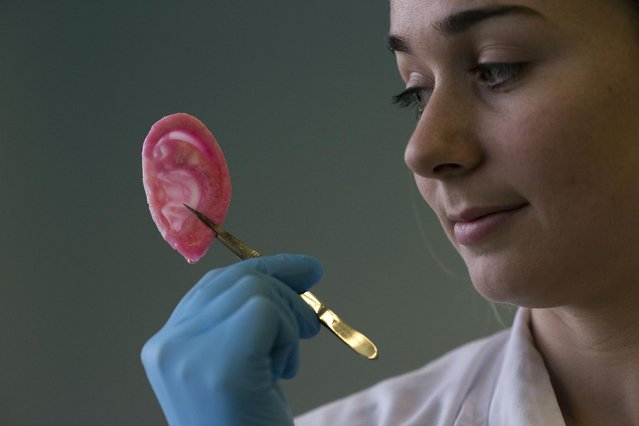
Dr Michelle Griffin, a plastic research fellow, poses for photographs with a synthetic polymer ear at her research facility in the Royal Free Hospital in London, Monday, March 31, 2014. (Photo by Matt Dunham/AP Photo)

In a north London hospital, scientists are growing noses, ears and blood vessels in the laboratory in a bold attempt to make body parts using stem cells. It is among several labs around the world, including in the U.S., that are working on the futuristic idea of growing custom-made organs in the lab. (Photo by Matt Dunham/AP Photo)
Details
10 Apr 2014 09:21:00
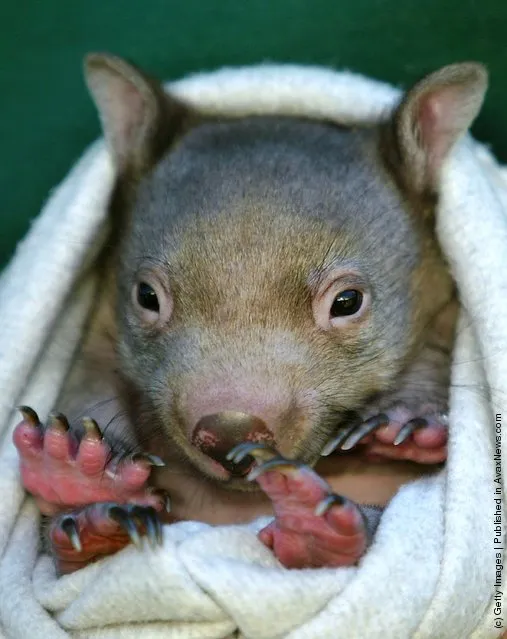
A baby Common Wombat

“Wombats are Australian marsupials; they are short-legged, muscular quadrupeds, approximately 1 metre (39 in) in length with a short, stubby tail. They are adaptable in their habitat tolerances, and are found in forested, mountainous, and heathland areas of south-eastern Australia, including Tasmania, as well as an isolated patch of about 300 ha in Epping Forest National Park in central Queensland”. – Wikipedia

Photo: “Abdul”, a baby Common Wombat, is one of the marsupials on show during the spring baby boom at Taronga Zoo September 1, 2005 in Sydney, Australia. “Abdul” was orphaned when his mother was killed by a car. (Photo by Mark Nolan/Getty Images)

Details
20 Aug 2011 11:23:00
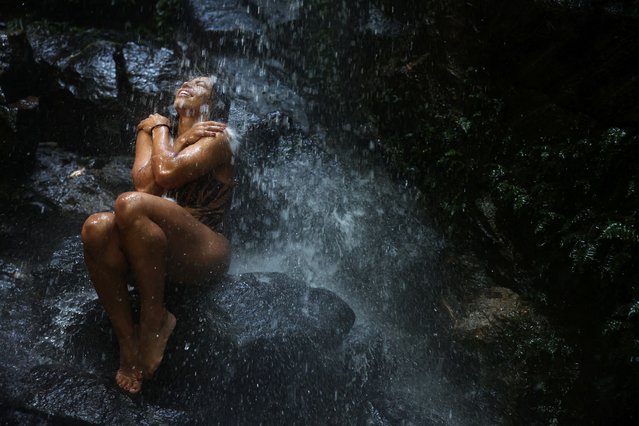
Anda Oliveira, 34, enjoys a waterfall in the Tijuca National Park, one of the world's biggest urban forests, marking the World Water Day in Rio de Janeiro, Brazil on March 15, 2024. (Photo by Pilar Olivares/Reuters)

Anda Oliveira, 34, enjoys a waterfall in the Tijuca National Park, one of the world's biggest urban forests, marking the World Water Day in Rio de Janeiro, Brazil on March 15, 2024. (Photo by Pilar Olivares/Reuters)
Details
01 Jul 2025 02:56:00