Loading...
Done
An actor dressed as a zombie performs during a drive-in haunted house show by Kowagarasetai (Scare Squad), for people inside a car in order to maintain social distancing amid the spread of the coronavirus disease (COVID-19), at a garage in Tokyo, Japan on July 3, 2020. (Photo by Issei Kato/Reuters)

An actor dressed as a zombie performs during a drive-in haunted house show by Kowagarasetai (Scare Squad), for people inside a car in order to maintain social distancing amid the spread of the coronavirus disease (COVID-19), at a garage in Tokyo, Japan on July 3, 2020. A Japanese performance group is starting a run of drive-in horror shows for people who are scared of catching the coronavirus but still want to get close-up frights from ghouls and zombies. Audience members will drive into a garage in Tokyo, one car at a time, and listen to a murder story and sound effects blared out of speakers, as actors dressed as monsters bang on the side of the vehicle and spray fake blood over the windows. (Photo by Issei Kato/Reuters)
Details
05 Jul 2020 00:05:00


“The Trabant is a car that was produced by former East German auto maker VEB Sachsenring Automobilwerke Zwickau in Zwickau, Sachsen. It was the most common vehicle in East Germany, and was also exported to countries both inside and outside the communist bloc. The main selling points was that it had room for four adults and luggage in a compact, light and durable shell and that it was fast (when introduced) and durable. With its mediocre performance, smoky two-stroke engine, and production shortages, the Trabant is often cited as an example of the disadvantages of centralized planning; on the other hand, it is regarded with derisive affection as a symbol of the failed former East Germany and of the fall of communism (in former West Germany, as many East Germans streamed into West Berlin and West Germany in their Trabants after the opening of the Berlin Wall in 1989). It was in production without any significant changes for nearly 30 years with 3,096,099 Trabants produced in total”. – Wikipedia

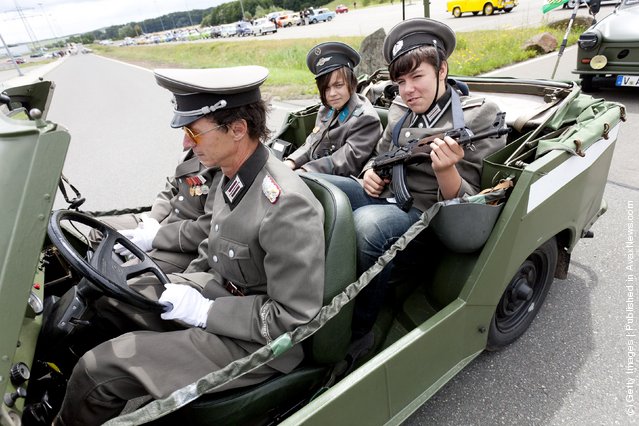
Photo: Enthusiasts weared in uniforms of the former eastern german army trive in a military Trabant car as fans and owners of East German-era Trabant cars gather at the 2011 International Trabantfahrer Treffen (International Trabant Drivers Meeting) on June 26, 2011 in Zwickau, Germany. The Trabant, also known as the Trabi, was among the main cars produced in communist East Germany and built by VEB Sachsenring Automobilwerke in Zwickau for 30 years until 1989. Today the car has cult status for many followers and one company, IndiKar, is even seeking to revive the brand in a modern, electric version. (Photo by Carsten Koall/Getty Images)

Details
27 Jun 2011 12:21:00


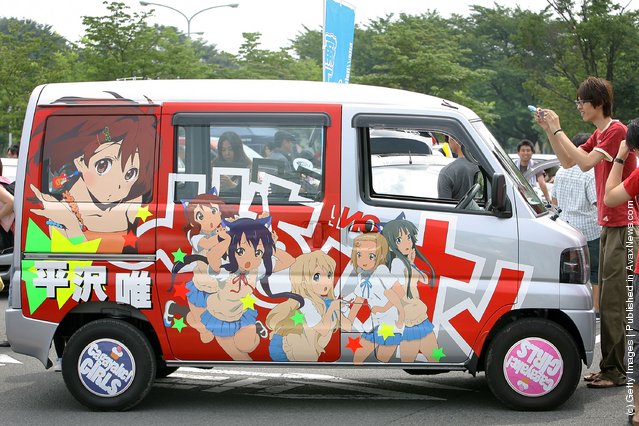
“Itasha (痛車), literally “painmobile”, is a Japanese term for an otaku fad of individuals decorating the bodies of their cars with fictional characters of anime, manga, or video games (especially bishōjo game or eroge). These characters are predominately “cute” female. The decorations usually involve paint schemes and stickers. Automobiles are called Itasha, while similar motorcycles and bicycles are called itansha (痛単車) and itachari (痛チャリ), respectively”. – Wikipedia


Photo: A visitor takes pictures of an anime-decorated «Itasha» car displayed during the “Moe Fes in Washimiya” at Washimiya Town Hall on July 18, 2009 in Washimiya, Saitama, Japan. Itasha, a word derived from “itai” (painful) and “sha” (car), are vehicles decorated with mostly female characters from Japanese manga, anime and video games. (Photo by Kiyoshi Ota/Getty Images)
Details
02 May 2011 08:38:00
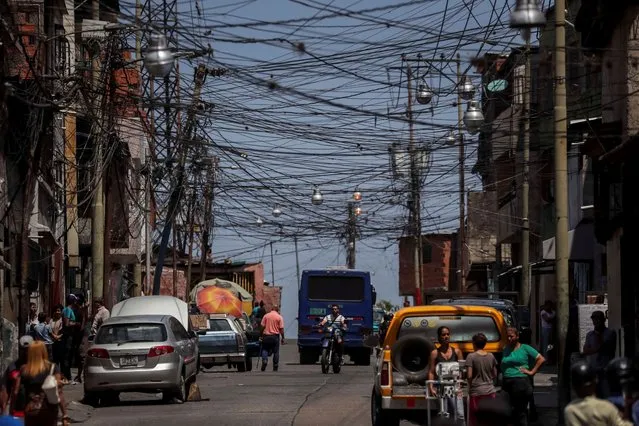
A view of electricity wires, in Caracas, Venezuela, 03 April 2019. West Venezuela started receiving electricity intermittently in the states of Zulia, Falcon, Merida and Trujillo after 100 hours without power. (Photo by Miguel Gutierrez/EPA/EFE/Rex Features/Shutterstock)

A view of electricity wires, in Caracas, Venezuela, 03 April 2019. West Venezuela started receiving electricity intermittently in the states of Zulia, Falcon, Merida and Trujillo after 100 hours without power. (Photo by Miguel Gutierrez/EPA/EFE/Rex Features/Shutterstock)
Details
02 May 2019 00:03:00
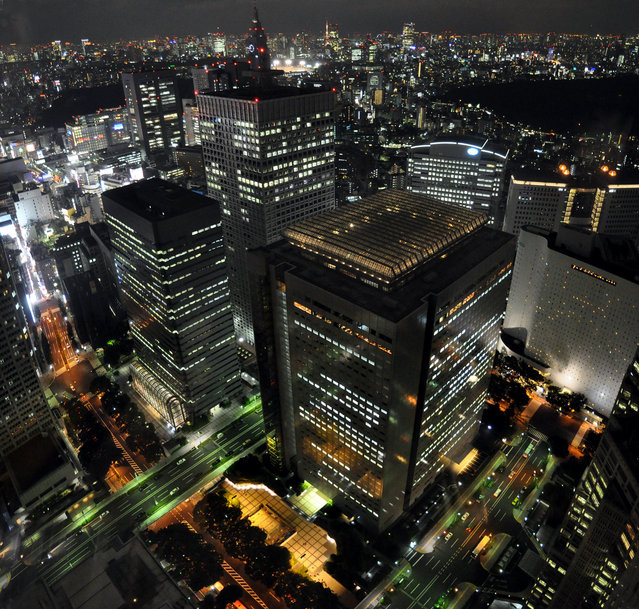
Tokyo, “Electric City”

Tokyo, “Electric City”. August 24, 2009. (Photo by Caribb; Source: Flickr)
Details
01 May 2012 11:15:00
Two men using an electric power saw to fell a tree circa 1940's

Two men using an electric power saw to fell a tree circa 1940's. (Photo by Keystone View/FPG/Getty Images)
Details
18 Sep 2011 11:53:00
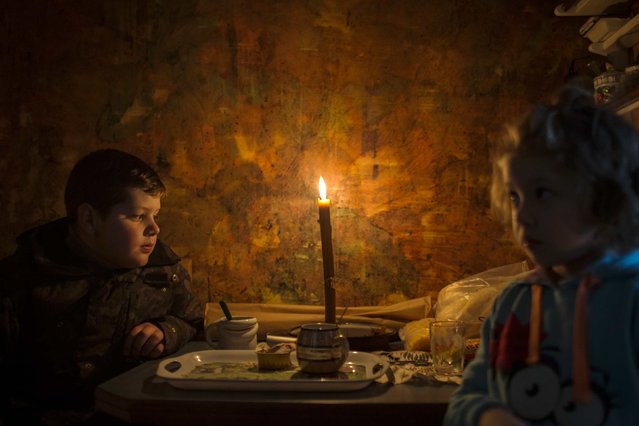
Lazar and his sister Andjelka sit by a candle in their home in the eastern Serbian town of Majdanpek, December 4, 2014. Electricity workers in Serbia struggled through snow, ice and treacherous terrain on Thursday to restore electricity to an eastern town left shivering without power, heating or running water for a fourth day. (Photo by Marko Djurica/Reuters)

Lazar and his sister Andjelka sit by a candle in their home in the eastern Serbian town of Majdanpek, December 4, 2014. Electricity workers in Serbia struggled through snow, ice and treacherous terrain on Thursday to restore electricity to an eastern town left shivering without power, heating or running water for a fourth day. (Photo by Marko Djurica/Reuters)
Details
08 Dec 2014 12:20:00
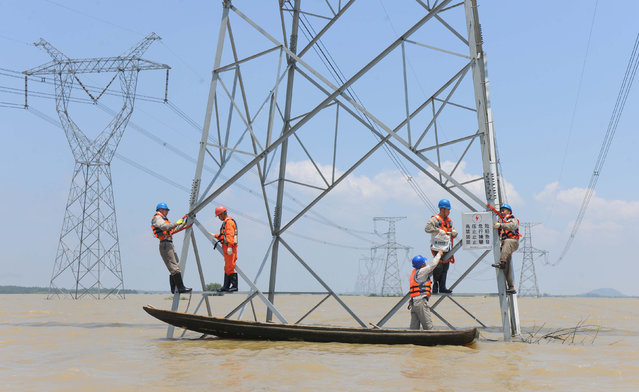
Workers reinforce the electric pylons at a flooded area as Typhoon Nepartak approaches in Xuancheng, Anhui Province, China, July 9, 2016. (Photo by Reuters/Stringer)

Workers reinforce the electric pylons at a flooded area as Typhoon Nepartak approaches in Xuancheng, Anhui Province, China, July 9, 2016. (Photo by Reuters/Stringer)
Details
12 Jul 2016 12:28:00