Loading...
Done
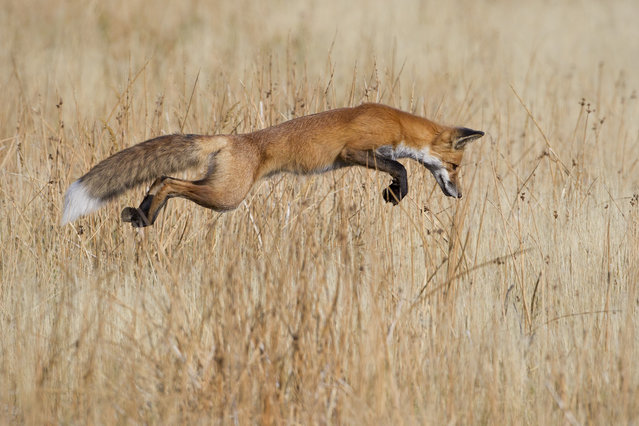
Canada: “Lucky pounce”. (Photo by Connor Stefanison/Wildlife Photographer of the Year 2013)

The winners of The London’s Natural History Museum's prestigious Wildlife Photographer of the Year for 2013 have finally been unveiled. Selected from almost 43,000 entries from 96 countries, the winners offer a glimpse of the stunning array of natural beauty on our planet. Photo: Canada: “Lucky pounce”. “Anticipating the pounce – that was the hardest part”, says Connor, who had come to Yellowstone National Park, Wyoming, USA, in search of wildlife as much as the spectacular landscape. He had found this fox, his first ever, on his last day in the park. It was so absorbed in hunting that Connor had plenty of time to get out of the car and settle behind a rock. It quartered the grassland, back and forth, and then started staring intently at a patch of ground, giving Connor just enough warning of the action to come. When it sprung up, Connor got his shot. And when it landed, the fox got his mouse. (Photo by Connor Stefanison/Wildlife Photographer of the Year 2013)
Details
17 Oct 2013 08:12:00
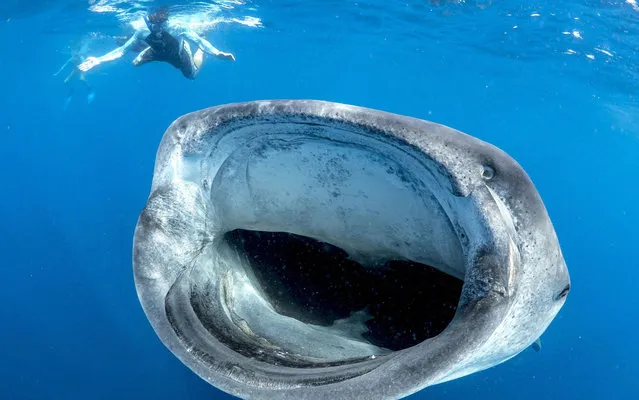
Marine biologist Simon Pierce, who studies whale sharks, happened to be in the right place at the right time to capture amazing photo off Cancun, Mexico. (Photo by Simon Pierce/Mercury Press/Caters News)

Marine biologist Simon Pierce, who studies whale sharks, happened to be in the right place at the right time to capture amazing photo off Cancun, Mexico. (Photo by Simon Pierce/Mercury Press/Caters News)
Details
09 Feb 2014 12:45:00
Models showcase Valentine's Day underwear celebrating the results of a recent survey revealing that men find the lingerie

Models showcase Valentine's Day underwear celebrating the results of a recent survey revealing that men find the lingerie, boxer shorts and vests, the biggest turn on ahead of February 14 Valentine celebrations, at Waterloo on February 2, 2006 in London, England. (Photo by Gareth Cattermole/Getty Images)
Details
19 Sep 2011 14:32:00
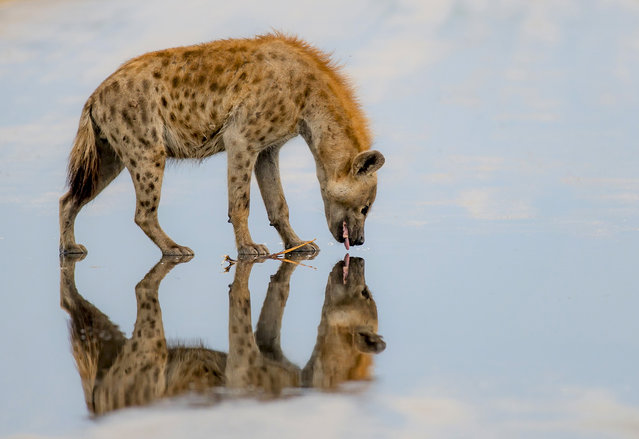
A hyena kisses his own reflection while appearing to walk on water. (Photo by Jake De Wet/Caters News Agency)

A hyena kisses his own reflection while appearing to walk on water. (Photo by Jake De Wet/Caters News Agency)
Details
07 Oct 2018 00:03:00
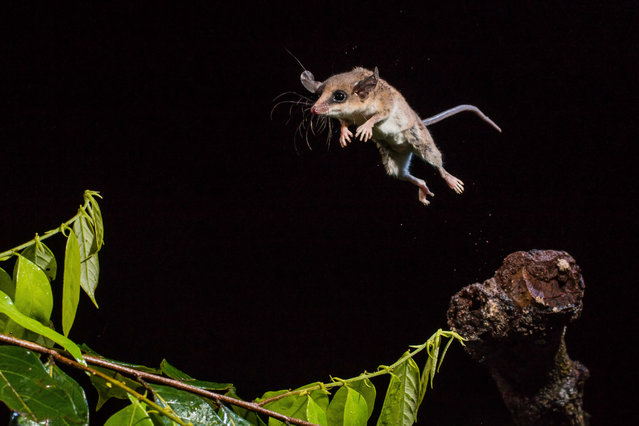
Tropical acrobatics by Adrià López Baucells in Manaus, Brazil. An unidentified South American marsupial, although the characteristic black markings on its face indicate it may be a mouse opossum. These small creatures are nocturnal and feed on bugs, fruit and bird eggs. (Photo by Adrià López Baucells/2019 Royal Society of Biology Photography Competition)

Tropical acrobatics by Adrià López Baucells in Manaus, Brazil. An unidentified South American marsupial, although the characteristic black markings on its face indicate it may be a mouse opossum. These small creatures are nocturnal and feed on bugs, fruit and bird eggs. (Photo by Adrià López Baucells/2019 Royal Society of Biology Photography Competition)
Details
10 Oct 2019 00:03:00
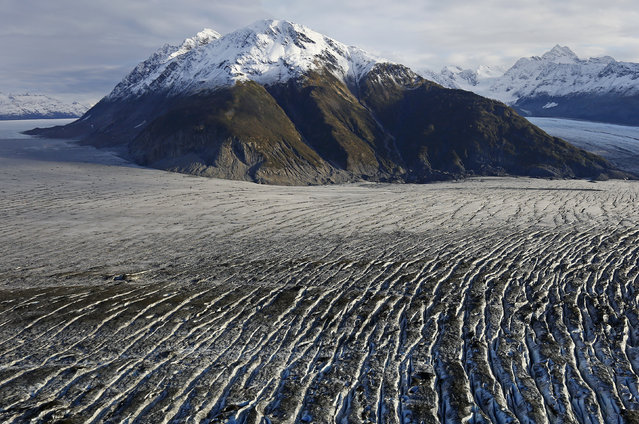
The Yakutat Glacier is seen during a flight over southeastern Alaska near the town of Yakutat, October 7, 2014. (Photo by Bob Strong/Reuters)

The Yakutat Glacier is seen during a flight over southeastern Alaska near the town of Yakutat, October 7, 2014. (Photo by Bob Strong/Reuters)
Details
29 Oct 2014 12:26:00
Artist Joe Hill poses on his 3D artwork, from the “Joe and Max” project as part of an advertising campaign, during its presentation at a park in Moscow, Russia, July 4, 2015. (Photo by Sergei Karpukhin/Reuters)

Artist Joe Hill poses on his 3D artwork, from the “Joe and Max” project as part of an advertising campaign, during its presentation at a park in Moscow, Russia, July 4, 2015. (Photo by Sergei Karpukhin/Reuters)
Details
05 Jul 2015 11:12:00
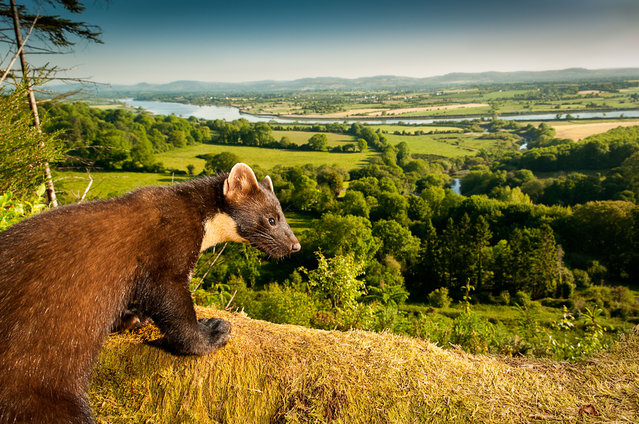
A pine marten – one of a few wild mammals doing well in Britain (although they number just 3,700). A fifth of the country’s wild mammals are at high risk of extinction, research shows. (Photo by Maurice Flynn/The Mammal Society)

A pine marten – one of a few wild mammals doing well in Britain (although they number just 3,700). A fifth of the country’s wild mammals are at high risk of extinction, research shows. (Photo by Maurice Flynn/The Mammal Society)
Details
08 Jul 2018 00:01:00