Loading...
Done
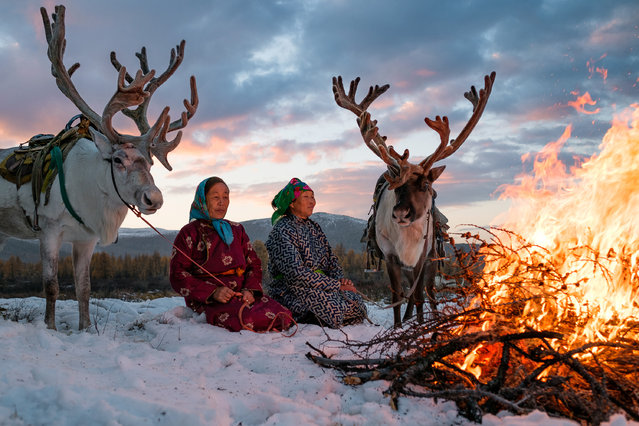
Purev and Buyantogtokh enjoy the warmth of the fire in the snow in Altai Mountains, Mongolia, September 2016. (Photo by Joel Santos/Barcroft Images)

Purev and Buyantogtokh enjoy the warmth of the fire in the snow in Altai Mountains, Mongolia, September 2016. Navigate the snowy wilds of Mongolia with this nomadic reindeer herding family. Photographer Joel Santos dived 1000km into the depths of Northern Mongolia to visit the Ganbaa family near Khovsgol Lake. (Photo by Joel Santos/Barcroft Images)
Details
17 Dec 2016 08:05:00
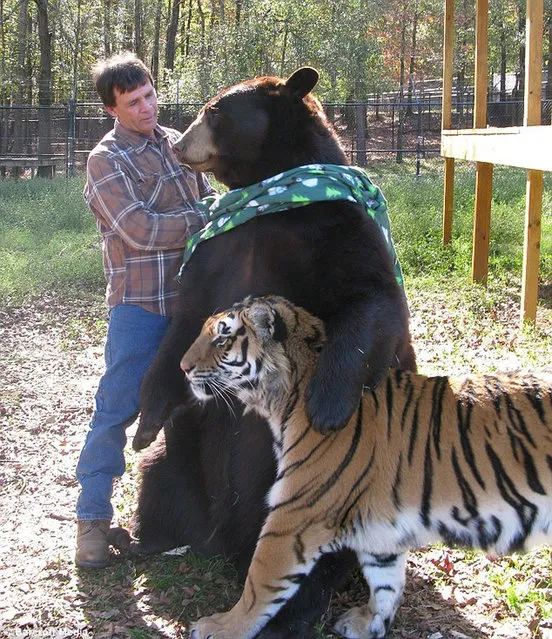
Lion, Tiger, Bear

They make an unlikely trio, but Baloo the bear, Leo the lion and Shere Khan the tiger have forged an unusually strong bond.
Considering that they would be mortal enemies if they ever were to meet in the wild, it is stunning to see their unique and genuine friendship in these intimate pictures.
Rescued eight years ago during a police drugs raid in Atlanta, Georgia, the three friends were only cubs at the time at barely two months old.
Details
01 Dec 2012 12:45:00


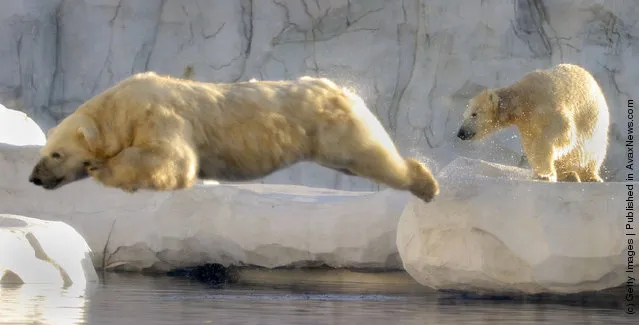
Talini (R), a 9-month old 160-pound polar bear cub, swims with her mother Barle at the Detroit Zoo's Artic Ring of Life exhibit August 25, 2005 in Royal Oak, Michigan. Talini's birth was the first polar bear birth at the Detroit Zoo in fifteen years. Her mother Barle was wild born and was rescued by the Detroit Zoo from a circus in Puerto Rico in 2002. (Photo by Bill Pugliano/Getty Images)
Details
22 May 2011 13:38:00
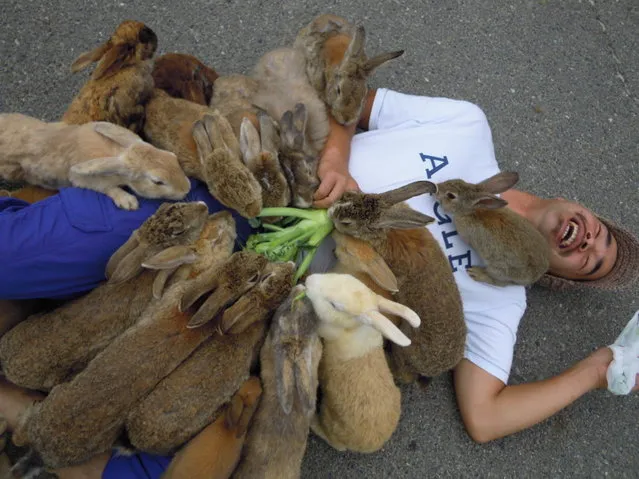
Rabbit Island in Japan

Only after World War II did the secret spill: Ōkunoshima, located in the Inland Sea of Japan between Hiroshima and Shikoku, was the top-secret site for manufacturing chemical warfare. When the factories were closed down, a number of exotic wild rabbits were seen freely roaming the island. They were assumed to have been the test subjects for the chemical weapons, which the military failed to eradicate when the factory was demolished.
Details
17 Feb 2014 12:23:00
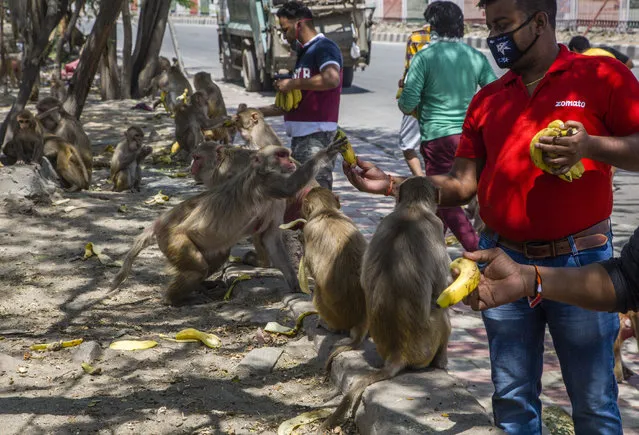
Men give bananas to monkeys gathered on the side of the road as India remains under an unprecedented lockdown over the highly contagious coronavirus (COVID-19) on April 08, 2020 in New Delhi, India. Wild animals, including monkeys, are roaming human settlements in India as people are staying indoors due to the 21-day lockdown. With India's 1.3 billion population and tens of millions of cars off the roads, wildlife is moving towards areas inhabited by humans. Wild animals in many countries have been seen roaming streets. A study says some 60 percent of the new diseases found around the globe every year are zoonotic, meaning they originate in animals and are passed on to humans. COVID-19 is a zoonotic disease that is suspected to have come from the wet markets of Wuhan, China. (Photo by Yawar Nazir/Getty Images)

Men give bananas to monkeys gathered on the side of the road as India remains under an unprecedented lockdown over the highly contagious coronavirus (COVID-19) on April 08, 2020 in New Delhi, India. Wild animals, including monkeys, are roaming human settlements in India as people are staying indoors due to the 21-day lockdown. (Photo by Yawar Nazir/Getty Images)
Details
12 Apr 2020 00:05:00
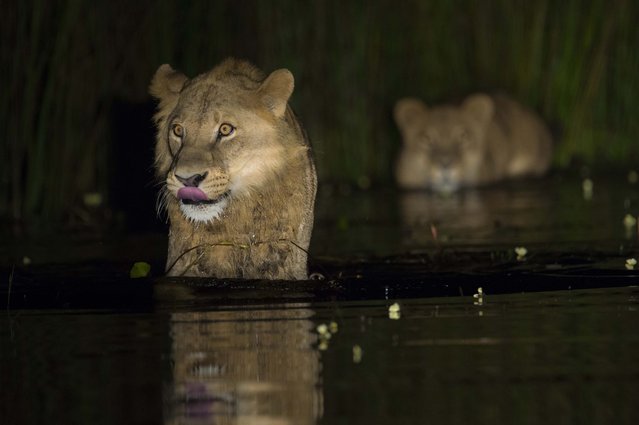
Lions submerged in water. (Photo by Wim van den Heever/Caters News)

These breath-taking photographs reveal the everyday lives of animals living in the wild. The incredible images were taken by wildlife photographer Wim van dan Heever, from Pretoria, South Africa, during trips to locations including Japan, Botswana and Svalbard. The 43-year-old has been photographing wildlife since he was a young boy and turned his passion for animals into a career and set up ODP Safaris. He has travelled across the globe to photograph wild animals – from lions and tigers, to elephants, dolphins and eagles – as they hunt, give birth and graze in their natural habitats. Here: Lions submerged in water. (Photo by Wim van den Heever/Caters News)
Details
07 Aug 2015 11:43:00
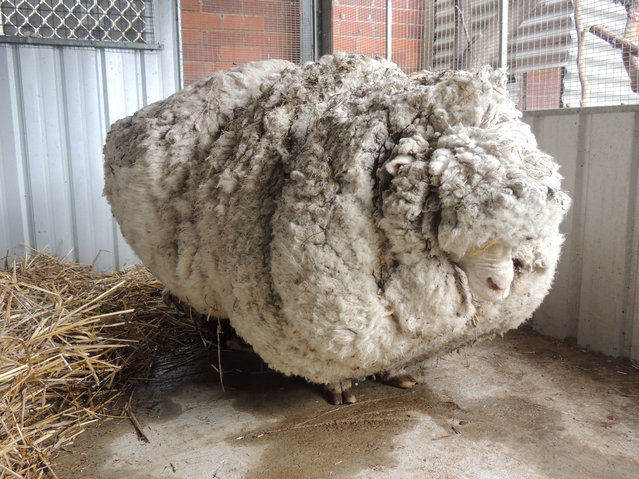
In this photo provided by the RSPCA/Australian Capital Territory, an overgrown sheep found in Australian scrubland is prepared to be shorn in Canberra, Australia, Thursday, September 3, 2015. The wild, castrated merino ram named Chris, yielded 40 kilograms (89 pounds) of wool – the equivalent of 30 sweaters – and sheded almost half his body weight. (Photo by RSPCA ACTvia AP Photo)

In this photo provided by the RSPCA/Australian Capital Territory, an overgrown sheep found in Australian scrubland is prepared to be shorn in Canberra, Australia, Thursday, September 3, 2015. The wild, castrated merino ram named Chris, yielded 40 kilograms (89 pounds) of wool – the equivalent of 30 sweaters – and sheded almost half his body weight. (Photo by RSPCA ACTvia AP Photo)
Details
04 Sep 2015 13:50:00
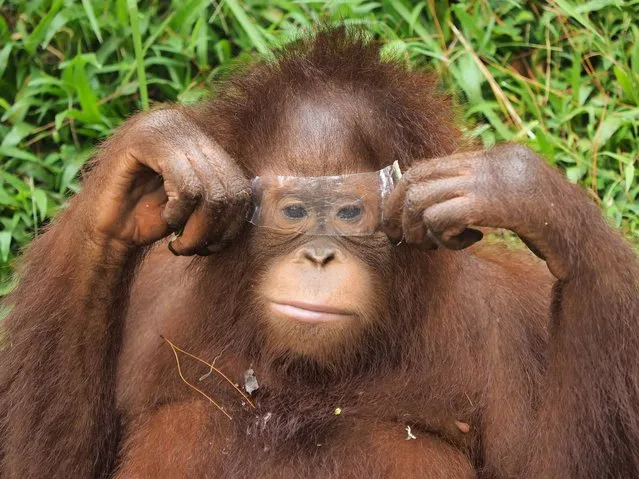
This sumatran orangutan named Kulsum was captured playing with a piece of broken bottle making a pair of makeshift sunglasses to ward off the sun in Jakarta, Indonesia in November 2022. Sumatran orangutans are critically endangered of the three orangutan species and are only found in the north of the Indonesian Island of Sumatra. An orangutan has a long lifespan and can live up to 30 years in the wild with many living up to 50. (Photo by Syahrul Ramadan/Media Drum Images)

This sumatran orangutan named Kulsum was captured playing with a piece of broken bottle making a pair of makeshift sunglasses to ward off the sun in Jakarta, Indonesia in November 2022. Sumatran orangutans are critically endangered of the three orangutan species and are only found in the north of the Indonesian Island of Sumatra. An orangutan has a long lifespan and can live up to 30 years in the wild with many living up to 50. (Photo by Syahrul Ramadan/Media Drum Images)
Details
15 Dec 2022 02:10:00