Loading...
Done
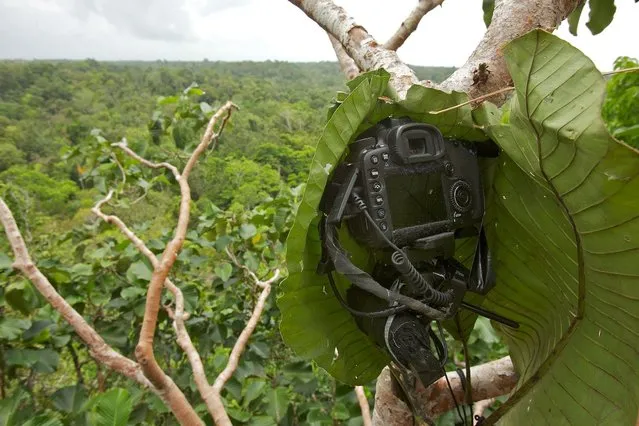
Tim Laman - Wildlife Photojournalist

Tim Laman is a field biologist and wildlife photojournalist. His pioneering research in the rain forest canopy in Borneo led to a PhD from Harvard and his first National Geographic article in 1997. Since then, he has pursued his passion for exploring wild places and documenting little-known and endangered wildlife by becoming a regular contributor to National Geographic. He has eighteen articles to his credit to date, all of which have had a conservation message. Some have focused on endangered species such as Orangutans or Hornbills, while others, such as a series of articles on Conservation International’s Biodiversity Hotspots, have highlighted regions under intense pressure.
Details
14 Sep 2013 10:13:00
Pupils Antonio Marin-Kalisz, 10 (left) and Zofia Krolikwska, 11 (right) from St Mary's Primary School in Leith, UK with local celebrity chef Tony Singh at the unveiling of Edinburgh Community Food's new educational tuk-tuk on Wednesday, October 2, 2024. The tuk-tuk will serve as a mobile educational initiative to teach communities about nutrition by making healthy cooking fun and accessible, and taking it into the heart of the community. (Photo by Jane Barlow/PA Images via Getty Images)

Pupils Antonio Marin-Kalisz, 10 (left) and Zofia Krolikwska, 11 (right) from St Mary's Primary School in Leith, UK with local celebrity chef Tony Singh at the unveiling of Edinburgh Community Food's new educational tuk-tuk on Wednesday, October 2, 2024. The tuk-tuk will serve as a mobile educational initiative to teach communities about nutrition by making healthy cooking fun and accessible, and taking it into the heart of the community. (Photo by Jane Barlow/PA Images via Getty Images)
Details
25 Oct 2024 05:04:00
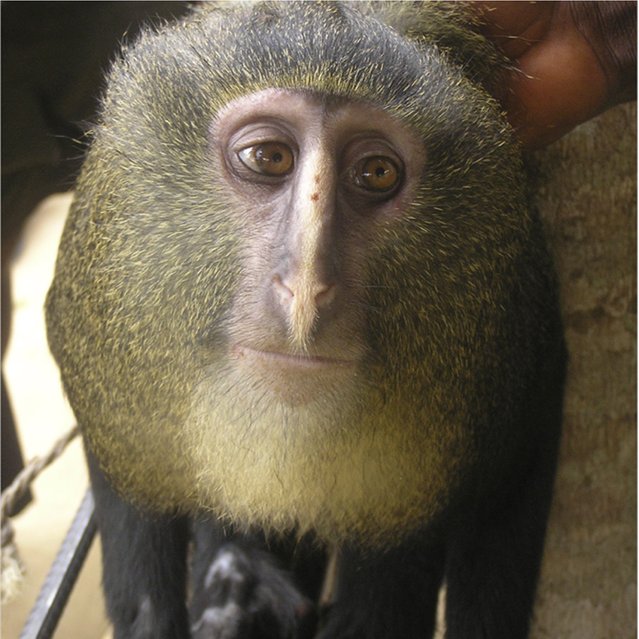
A new species of monkey found in the Democratic Republic of the Congo and identified as Lesula (Cercopithecus lomamiensis) is seen in this undated photograph from an article published September 12, 2012 in the science journal PLOS One. (Photo by Hart J. A., Detwiler K. M., Gilbert C. C./Reuters)

A new species of monkey found in the Democratic Republic of the Congo and identified as Lesula (Cercopithecus lomamiensis) is seen in this undated photograph from an article published September 12, 2012 in the science journal PLOS One. The monkey was first seen in 2007 by researchers John and Terese Hart of the Peabody Museum of Natural History at Yale Research Project. The finding of C. lomamiensis represents only the second new species of African monkey to be discovered in the past 28 years, according to the research article. (Photo by Hart J. A., Detwiler K. M., Gilbert C. C./Reuters)
Details
27 Sep 2012 08:17:00
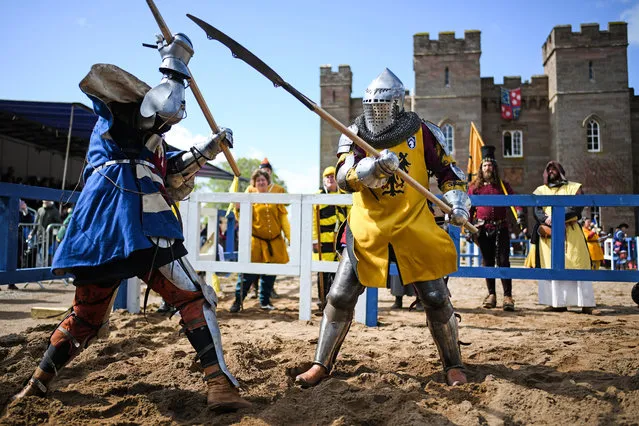
Competitors take part in the International Medieval Combat Federation World Championships at Scone Palace on May 10, 2018 in Perth, Scotland. (Photo by Jeff J. Mitchell/Getty Images)

Competitors take part in the International Medieval Combat Federation World Championships at Scone Palace on May 10, 2018 in Perth, Scotland. Thousands of visitors are expected to attend the crowning place of Scottish Kings, Scone Palace for the IMCF World Championships which has five hundred competitors and officials from all over the world, from the UK to as far afield as Australia, South Africa and Mexico. (Photo by Jeff J. Mitchell/Getty Images)
Details
12 May 2018 00:01:00


A three-week-old chihuahua puppy named Tom Thumb poses in a tea cup on April 7, 2009 in Renton, Scotland. The pup, which measures eight inches long, is thought to be one of the smallest dogs born in the UK and is just two inches short of a world record. (Photo by Jeff J Mitchell/Getty Images)
Details
14 Apr 2011 10:33:00
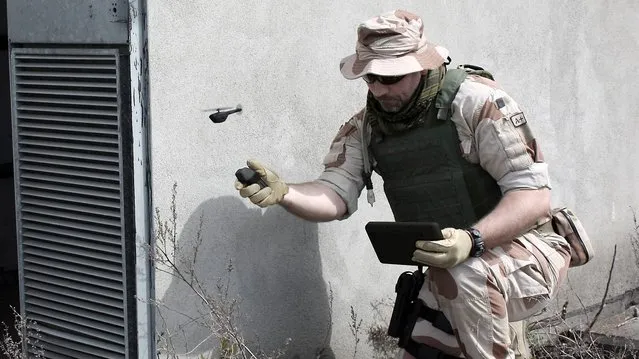
Black Hornet – Hand-Held Helicopter Drones To War Zone

British troops in Afghanistan are now using 10-centimeter-long 16-gram spy helicopters to survey Taliban firing spots. The UK Defense Ministry plans to buy 160 of the drones under a contract worth more than $31 million.
Details
06 Feb 2013 14:59:00
Girls in Leeds, United Kingdom dolled up for a night on the town on December 10, 2021. Brits enjoyed a night on the town as they continued to celebrate Christmas parties and a festive tipple with friends. (Photo by Nb press ltd)

Revellers enjoying the pubs and clubs in Leeds despite concerns over Omicron on December 10, 2021. Festive revellers have hit the pubs and clubs across the UK tonight as Plan B rules come into force and fears grow over the spread of Omicron. (Photo by Nb press ltd)
Details
11 Dec 2021 08:56:00
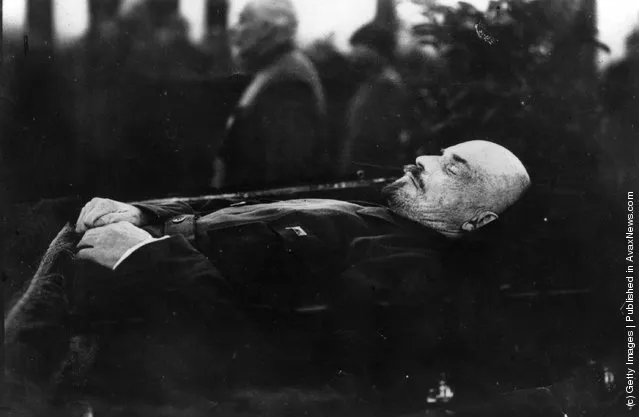
1924:  Vladimir Ilyich Lenin lying in state in the Kremlin

Photo: Vladimir Ilyich Lenin (1870 – 1924) lying in state in the Kremlin. (Photo by Hulton Archive/Getty Images). 1924

Important! For the same article in Russian language click here.

Something quite intriguing is happening within Russian-speaking internet during the last few – should you type a fully academic inquiry (at least, according to Russian academic requirements) in national search engines for "Lenin's mausoleum" – the first thing you get (even in top 10 searches) is website pages talking about black magic and occult. Website authors view this construction differently, but unconditionally agree on one thing: the mausoleum of the "leader of the world proletariat” – the essence of a magical artifact, a sort of “energy vampire”. It was built with a certain purpose: to drain the energy out of miserable Soviet citizens on one hand; and to poison the anthroposphere of one-sixth part of the earth with its vibes (the exact territory that was occupied by the former Soviet Union), depriving the Russian people of will to resist on the other hand. Complete nonsense? No doubt. Nevertheless, an intriguing one. Well, probably because some oddities do exist in mausoleum's history. These oddities are the thing we are going to discuss this time. First, let me refresh you memory on the subject.
Details
16 Oct 2011 11:27:00