Loading...
Done
Afghan Girl (based on photograph by Steve McCurry/National Geographic). (Photo by Jane Perkins/Caters News)

“One artist doesn’t mind if people class her work as rubbish. Thats because all of her pieces are made out of junk found in charity shops, garage sales and in and around her home. Using the likes of buttons, broken jewelry and toy parts, Jane Perkins, from Exeter, UK, has recreated the famous faces of Albert Einstein, Kate Middleton, The Queen, as well as some of the worlds most iconic paintings and photographs”. – Caters News. Photo: Afghan Girl (based on photograph by Steve McCurry/National Geographic). (Photo by Jane Perkins/Caters News)
Details
26 Feb 2014 07:07:00
“This is a shot I have envisioned in my head for a while, and only possible to shoot today with the invention of the GoPro. Shot at a beach break near my home. The board broke on this wave, but the vision made it worthwhile. Shot with the GoPro Hero 3+ and a Gripstick Pro Mount”. (Photo and caption by Mike Coots)

“This is a shot I have envisioned in my head for a while, and only possible to shoot today with the invention of the GoPro. Shot at a beach break near my home. The board broke on this wave, but the vision made it worthwhile. Shot with the GoPro Hero 3+ and a Gripstick Pro Mount”. (Photo and caption by Mike Coots)
Details
06 Aug 2014 11:07:00
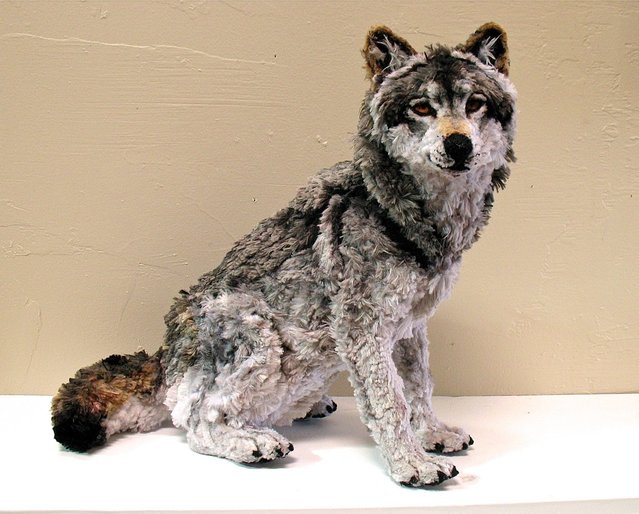
New Pipe Cleaner Wolf. (Photo by Lauren Ryan)

“These are the mind-bending sculptures that take up to 40 hours to create – as they're made entirely from pipe cleaners. The fuzzy flexible figures are made entirely from the tobacco cleaning tools – which are now more commonly found strewn across nurseries and art classrooms – to construct the incredible life-like animals”. – Caters News. Photo: New Pipe Cleaner Wolf. (Photo by Lauren Ryan)
Details
20 Nov 2013 08:17:00
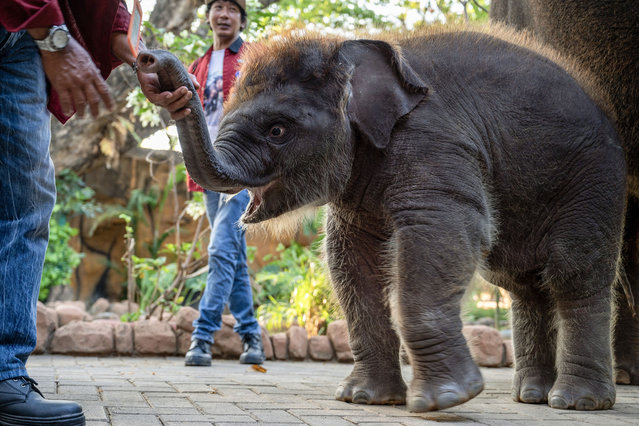
A male Sumatran elephant calf named Rocky Balboa, born on May 25, 2024, stands next to its mother, a 40-year-old elephant named Lembang, at the Surabaya Zoo during the introduction of the 3-month-old calf to the public in Surabaya on August 31, 2024. (Photo by Juni Kriswanto/AFP Photo)

A male Sumatran elephant calf named Rocky Balboa, born on May 25, 2024, stands next to its mother, a 40-year-old elephant named Lembang, at the Surabaya Zoo during the introduction of the 3-month-old calf to the public in Surabaya on August 31, 2024. (Photo by Juni Kriswanto/AFP Photo)
Details
15 Sep 2024 04:20:00
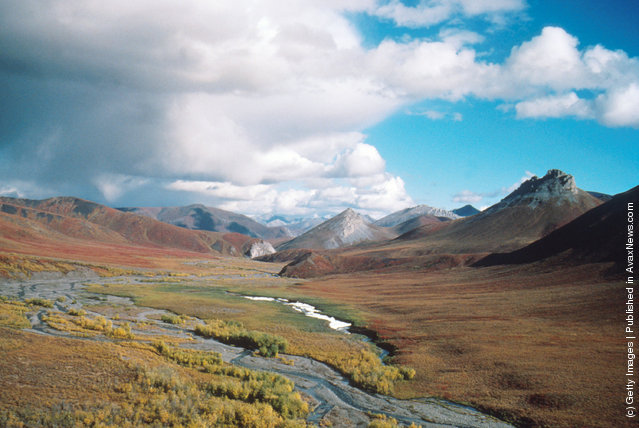
Landscapes Of Alaska

This undated photo shows the Arctic National Wildlife Refuge in Alaska. (Photo by U.S. Fish and Wildlife Service/Getty Images)
Details
20 Sep 2011 11:35:00
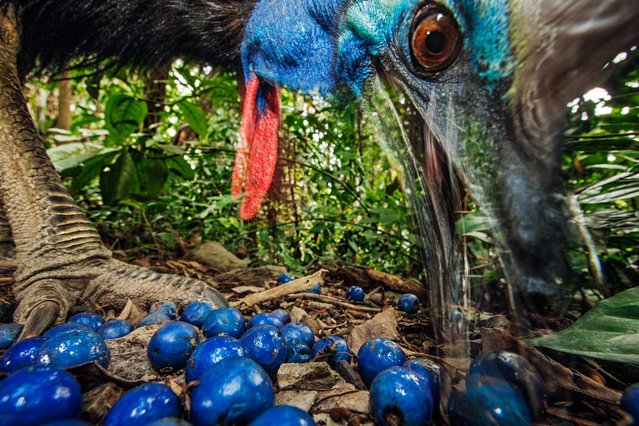
“Cassowaries are large, flightless birds related to emus and (more distantly) to ostriches, rheas, and kiwis”, writes Olivia Judson in the September issue of National Geographic magazine. (Photo by Christian Ziegler/National Geographic)

“Cassowaries are large, flightless birds related to emus and (more distantly) to ostriches, rheas, and kiwis”, writes Olivia Judson in the September issue of National Geographic magazine. How large? People-size: Adult males stand well over five foot five and top 110 pounds. Females are even taller, and can weigh more than 160 pounds. Dangerous when roused, they’re shy and peaceable when left alone. But even birds this big and tough are prey to habitat loss. The dense New Guinea and Australia rain forests where they live have dwindled. Today cassowaries might number 1,500 to 2,000. And because they help shape those same forests – by moving seeds from one place to another – “if they vanish”, Judson writes, “the structure of the forest would gradually change” too. (Photo by Christian Ziegler/National Geographic)
Details
06 Jan 2014 12:21:00
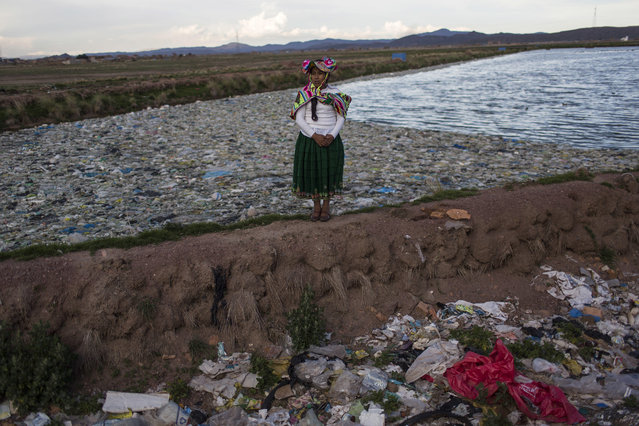
In this February 1, 2017 photo, environmental activist Maruja Inquilla poses for a photo next to a Municipal waste treatment plant with water that flows into Lake Titicaca, in Juliaca, in the Puno region of Peru. “If the frogs could talk they would say, This is killing me”," said Inquilla, who recently showed up at the Puno governor's house carrying plastic bags filled with hundreds of dead frogs in protest. (Photo by Rodrigo Abd/AP Photo)

In this February 1, 2017 photo, environmental activist Maruja Inquilla poses for a photo next to a Municipal waste treatment plant with water that flows into Lake Titicaca, in Juliaca, in the Puno region of Peru. “If the frogs could talk they would say, This is killing me”," said Inquilla, who recently showed up at the Puno governor's house carrying plastic bags filled with hundreds of dead frogs in protest. (Photo by Rodrigo Abd/AP Photo)
Details
04 Mar 2017 00:02:00
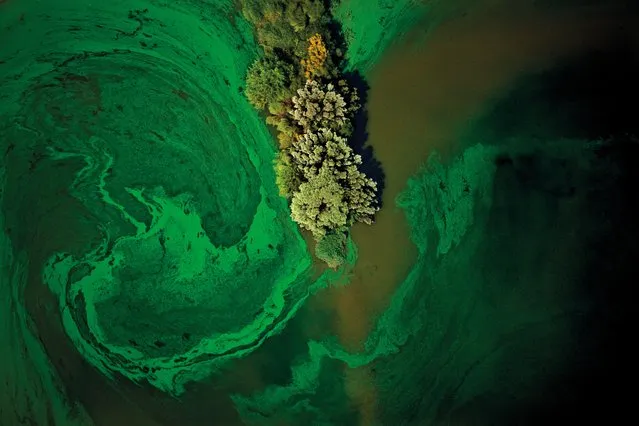
Luling, Louisiana US. New evidence contradicts previous claims of the relative safety of glyphosate, the world’s most widely used herbicide, which is manufactured here. It is often used in conjunction with seeds that have been genetically modified to tolerate its application, meaning that anyone consuming these crops is eating a genetically modified plant, and whatever residue of the pesticide that remains. (Photo by J. Henry Fair/Industrial Scars/Papadakis Publisher)

Luling, Louisiana, US. New evidence contradicts previous claims of the relative safety of glyphosate, the world’s most widely used herbicide, which is manufactured here. It is often used in conjunction with seeds that have been genetically modified to tolerate its application, meaning that anyone consuming these crops is eating a genetically modified plant, and whatever residue of the pesticide that remains. (Photo by J. Henry Fair/Industrial Scars/Papadakis Publisher)
Details
25 Oct 2016 10:40:00