Loading...
Done
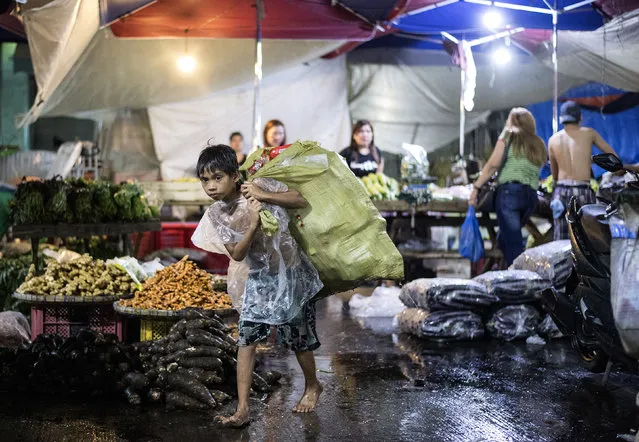
A Philippine boy collects used plastic bottles to be sold at a junk shop at Divisoria market in Manila on November 29, 2017. (Photo by Noel Celis/AFP Photo)

A Philippine boy collects used plastic bottles to be sold at a junk shop at Divisoria market in Manila on November 29, 2017. (Photo by Noel Celis/AFP Photo)
Details
30 Nov 2017 08:22:00
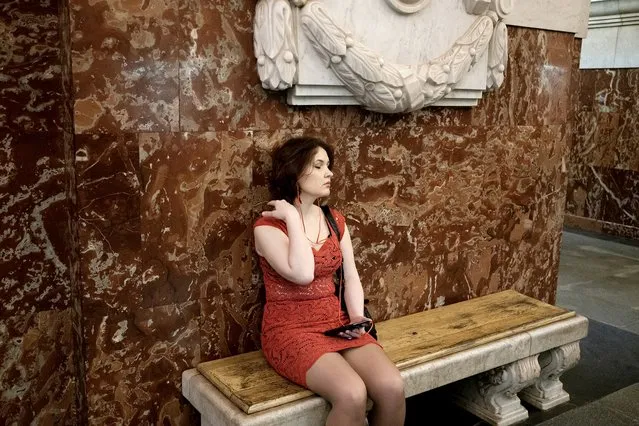
At the Krasnopresnenskaya station, the benches come from the Cathedral of Christ-Sauveur, which was built from 1839 to 1883 in memory of the victory of Russia against the army of Napoleon I. The cathedral was destroyed under Stalin in 1931, but the benches remained intact. Metro architects decided to install them in some stations. (Photo by Didier Bizet/The Washington Post)

At the Krasnopresnenskaya station, the benches come from the Cathedral of Christ-Sauveur, which was built from 1839 to 1883 in memory of the victory of Russia against the army of Napoleon I. The cathedral was destroyed under Stalin in 1931, but the benches remained intact. Metro architects decided to install them in some stations. (Photo by Didier Bizet/The Washington Post)
Details
24 Jan 2018 06:23:00
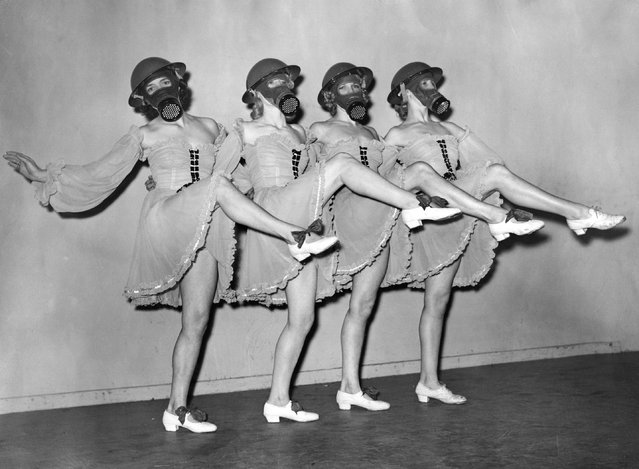
Dancers at the Windmill Theatre in London, practice a routine wearing gas masks and hard-hats with their costumes, 1940. (Photo by Hulton Archive/Getty Images)

Dancers at the Windmill Theatre in London, England practice a routine wearing gas masks and hard-hats with their costumes, 1940. (Photo by Hulton Archive/Getty Images)
Details
29 Jan 2018 06:59:00
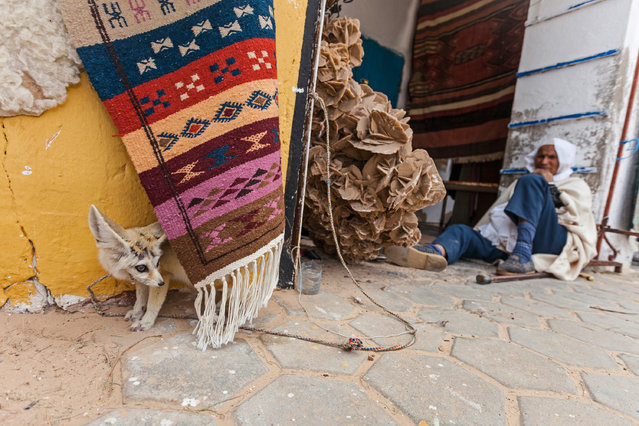
Sultan, a famous captive fennec that is displayed tied on a rope in front of a tourist shop, is the main attraction in the souk of Douz, a desert town in Tunisia. By the display of such a charismatic animal, tourists are often lured to buy things or pay for pictures. On inquiry, although Sultan has been caught as a pup in the wild, the owners of the shop reassure the foreigners stating that the animal is ‘domestic’. (Photo by Bruno D’Amicis/Fritz Pölking Prize/GDT EWPY 2015)

Sultan, a famous captive fennec that is displayed tied on a rope in front of a tourist shop, is the main attraction in the souk of Douz, a desert town in Tunisia. By the display of such a charismatic animal, tourists are often lured to buy things or pay for pictures. On inquiry, although Sultan has been caught as a pup in the wild, the owners of the shop reassure the foreigners stating that the animal is ‘domestic’. (Photo by Bruno D’Amicis/Fritz Pölking Prize/GDT EWPY 2015)
Details
23 Nov 2015 08:02:00
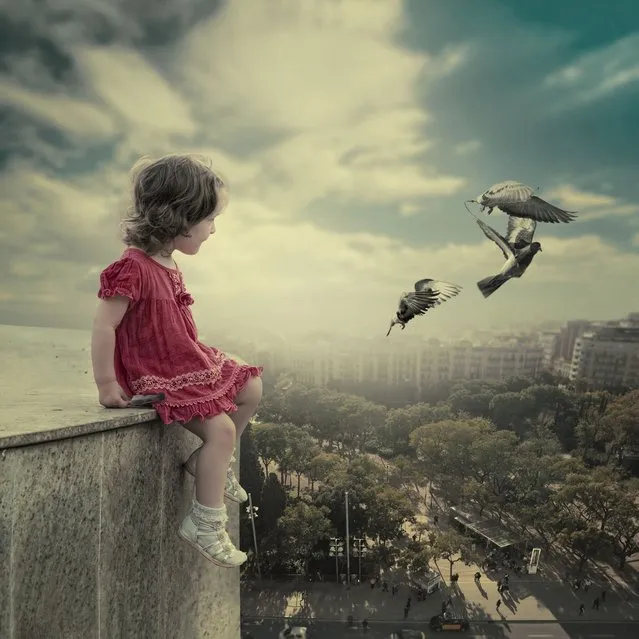
“The observer”. (Photo by Ionut Caras)

“Photo mechanic” and photographer Ionut Caras creates surreal concepts by combining the everyday with the unthinkable. His use of light and tone takes the viewer into a bizarre and beautiful world only seen in storybooks and our dreams. Photo: “The observer”. (Photo by Ionut Caras)
Details
03 Jun 2015 08:49:00
A woman helps another to wade through a waterlogged road during heavy rain following tropical storm Dana, in Kolkata, India, Friday, October 25, 2024. (Photo by Bikas Das/AP Photo)

A woman helps another to wade through a waterlogged road during heavy rain following tropical storm Dana, in Kolkata, India, Friday, October 25, 2024. (Photo by Bikas Das/AP Photo)
Details
30 Jan 2025 05:02:00
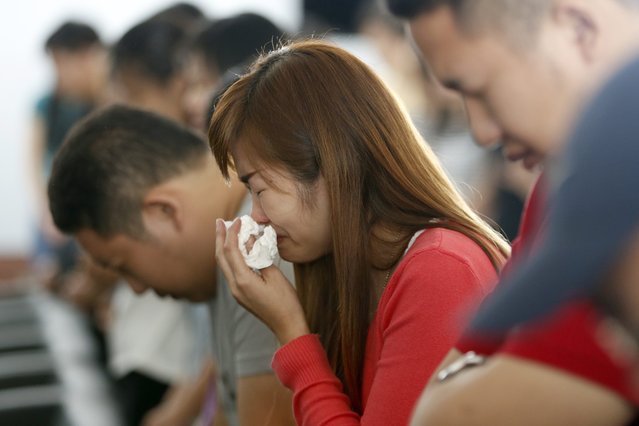
Relatives of the crashed AirAsia plane passengers pray at Juanda Airport, in Surabaya, Indonesia, 31 December 2014. Indonesian rescuers retrieved three more bodies from the sea on 31 December but the search to recover more victims from the AirAsia plane crash was hampered by bad weather, the recue chief said. (Photo by Made Nagi/EPA)

Relatives of the crashed AirAsia plane passengers pray at Juanda Airport, in Surabaya, Indonesia, 31 December 2014. Indonesian rescuers retrieved three more bodies from the sea on 31 December but the search to recover more victims from the AirAsia plane crash was hampered by bad weather, the recue chief said. AirAsia Indonesia flight QZ8501 crashed into the Java Sea on 28 December, about halfway through a two-hour flight between Surabaya, Indonesia's second largest city, and Singapore. (Photo by Made Nagi/EPA)
Details
01 Jan 2015 13:26:00
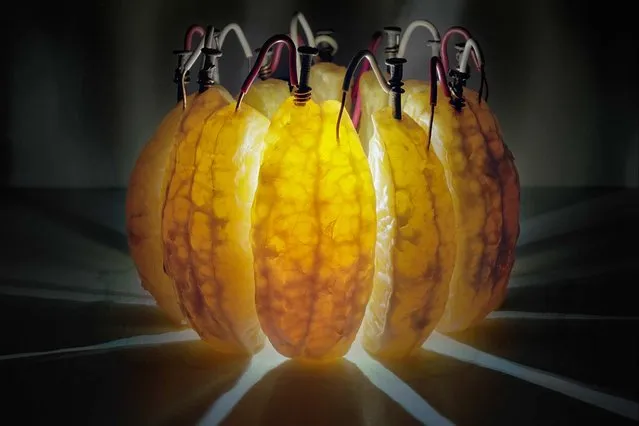
Wedges of an orange generate enough current and electrical juice – 3.5 volts – to power an LED. The fruit’s citric acid helps electrons flow from galvanized nails to copper wire in this 14-hour exposure. This image was published in September’s Visions of Earth, a trio of photos that appear in each issue of National Geographic. (Photo by Caleb Charland/National Geographic)

Wedges of an orange generate enough current and electrical juice – 3.5 volts – to power an LED. The fruit’s citric acid helps electrons flow from galvanized nails to copper wire in this 14-hour exposure. This image was published in September’s Visions of Earth, a trio of photos that appear in each issue of National Geographic. (Photo by Caleb Charland/National Geographic)
Details
06 Jan 2014 12:09:00