Loading...
Done
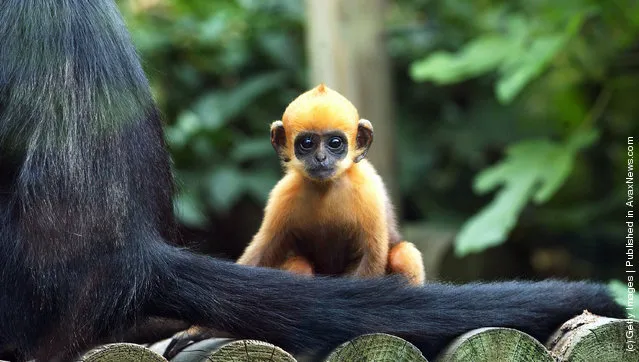
Baby Francois' Langur

“Francois' langur is one of several species of leaf monkeys. Over 50% of its diet is made up of young leaves. It will also consume fruits (17.2%), seeds, flowers, stems, roots, bark and occasionally minerals and insects off of rock surfaces and cliffs. This langur consumes its favorite food, young leaves, at the highest rate during the dry season, April through September, also known as the young leaf-lean period”. – Wikipedia

Photo: An endangered baby Francois' Langur monkey called Laa Laa settles in following her July 6 birth at London Zoo, Regent's Park on August 5, 2004 in London. The bright ginger youngster was born to glossy black parents Max and Shaneka and has the typical orange baby coat which is in stark contrast against the black of her parent's and older brother Grub's fur. (Photo by Steve Finn/Getty Images)
Details
22 Sep 2011 11:28:00
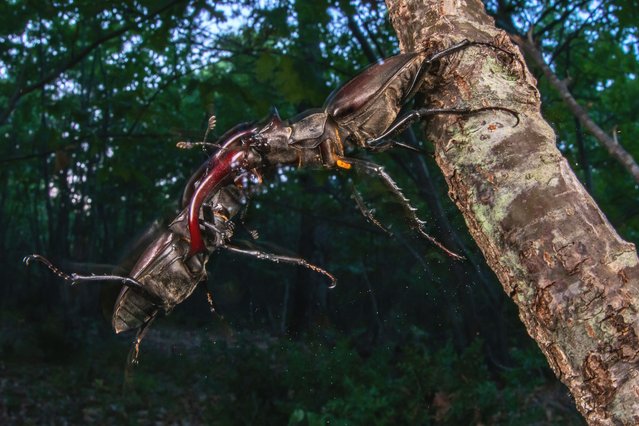
Combat between two male stag beetles, Italy, 2022. During the mating season, male stag beetles (Lucanus cervus) go into a frenzy, with lively but harmless clashes, in which bigger males often have the advantage over smaller ones due to their impressive mandibles. Longer larval development and genetic traits can increase the size of some individuals, but all saproxylic beetles are threatened by poor forest management, logging and dead wood removal to “clean” the forest. (Photo by Iacopo Nerozzi)

Combat between two male stag beetles, Italy, 2022. During the mating season, male stag beetles (Lucanus cervus) go into a frenzy, with lively but harmless clashes, in which bigger males often have the advantage over smaller ones due to their impressive mandibles. Longer larval development and genetic traits can increase the size of some individuals, but all saproxylic beetles are threatened by poor forest management, logging and dead wood removal to “clean” the forest. (Photo by Iacopo Nerozzi)

Details
20 Jul 2025 03:15:00
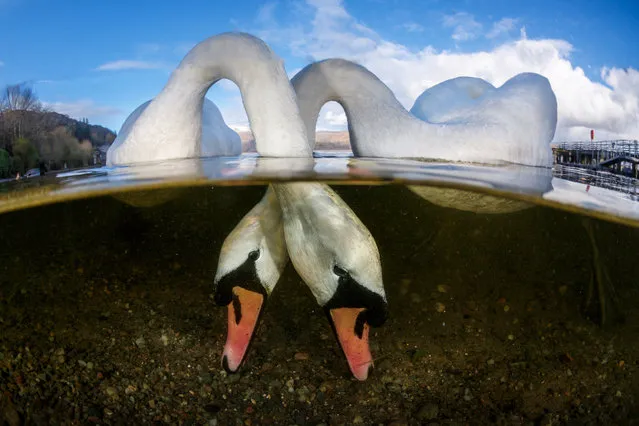
British underwater photographer of the year – winner. “Love Birds” by Grant Thomas (UK). Location: Luss Pier, Loch Lomond, Scotland. Thomas’s initial idea was to frame a split shot of one swan feeding below the surface of the water but when he noticed how comfortable they were around him he was confident, with some patience, he could get that magical shot of the two. (Photo by Grant Thomas/UPY 2018)

British underwater photographer of the year – winner. “Love Birds” by Grant Thomas (UK). Location: Luss Pier, Loch Lomond, Scotland. Thomas’s initial idea was to frame a split shot of one swan feeding below the surface of the water but when he noticed how comfortable they were around him he was confident, with some patience, he could get that magical shot of the two. (Photo by Grant Thomas/UPY 2018)
Details
16 Feb 2018 00:02:00
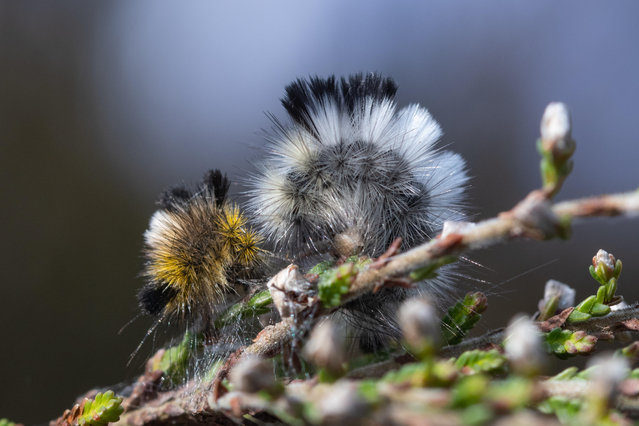
A pale tussock moth (Calliteara pudibunda) larva or caterpillar just after moulting on heather on Hankley Common, Surrey, England on April 30, 2019. (Photo by Gillian Pullinger/Alamy Stock Photo)

A pale tussock moth (Calliteara pudibunda) larva or caterpillar just after moulting on heather on Hankley Common, Surrey, England on April 30, 2019. (Photo by Gillian Pullinger/Alamy Stock Photo)
Details
08 Dec 2019 00:03:00
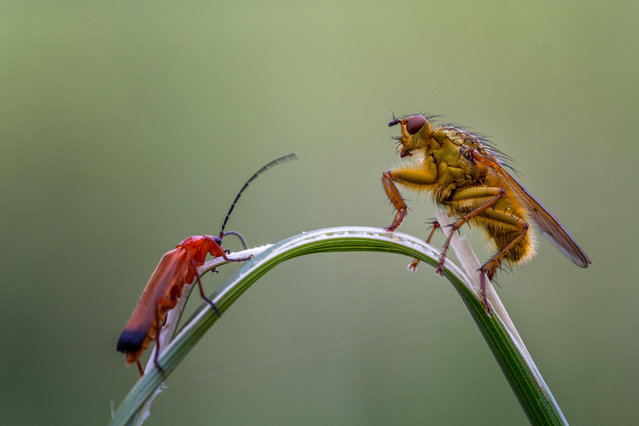
A hogweed bonking beetle and yellow dung fly in a stalk standoff (the fly gave in), in Burley-in-Wharfedale, Yorkshire, England. (Photo by Rebecca Cole/Alamy Stock Photo)

A hogweed bonking beetle and yellow dung fly in a stalk standoff (the fly gave in), in Burley-in-Wharfedale, Yorkshire, England. (Photo by Rebecca Cole/Alamy Stock Photo)
Details
19 Aug 2017 08:44:00
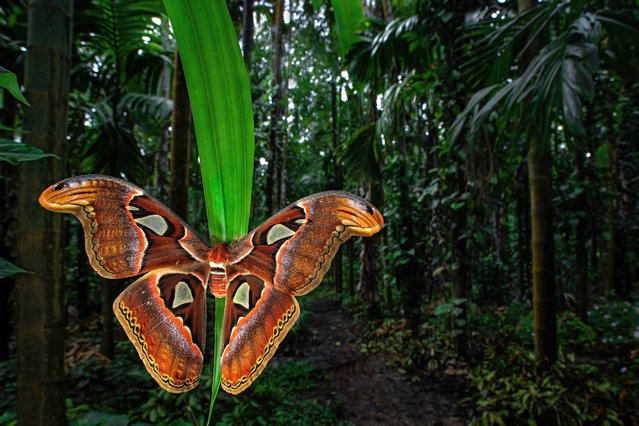
A huge atlas moth, with a wingspan of more than 9in, photographed on an areca nut plantation in Sirsi, India. (Photo by Uday Hegde/Close Up Photographer of the Year)

A huge atlas moth, with a wingspan of more than 9in, photographed on an areca nut plantation in Sirsi, India. (Photo by Uday Hegde/Close Up Photographer of the Year)
Details
09 Jan 2023 06:04:00
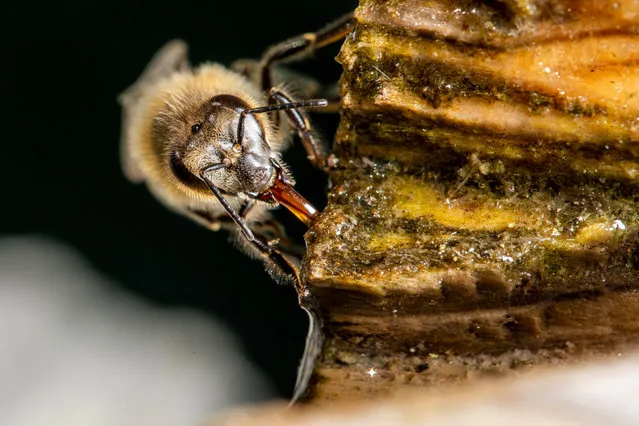
A Western honey bee feeds off acacia pollen at an apiary in Nagyszenas, eastern Hungary, 25 April 2020. The preparation of the bees for the acacia bloom began two weeks later than usual this year; due to the late frosts, this season's yield of Hungaricum acacia honey is expected to be lower. (Photo by Tibor Rosta/EPA/EFE)

A Western honey bee feeds off acacia pollen at an apiary in Nagyszenas, eastern Hungary, 25 April 2020. The preparation of the bees for the acacia bloom began two weeks later than usual this year; due to the late frosts, this season's yield of Hungaricum acacia honey is expected to be lower. (Photo by Tibor Rosta/EPA/EFE)
Details
08 Jan 2023 06:19:00
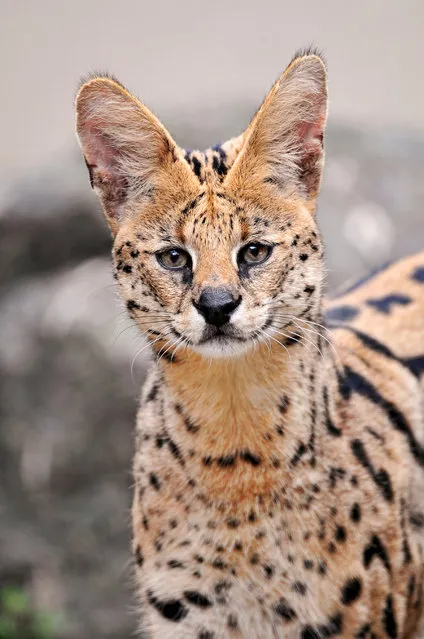
serval

This is a serval of the zoo of Amnéville, and yes indeed, he has big ears, servals are well known for that!


Emmanuel Keller began his photography in the late 1990’s when he was inspired by the emerging technology of digital photography and also by simply watching animals. Popularly known as “Tambako the Jaguar”, Emmanuel inspires many people with his photography. ...
Details
11 May 2015 09:51:00