Loading...
Done
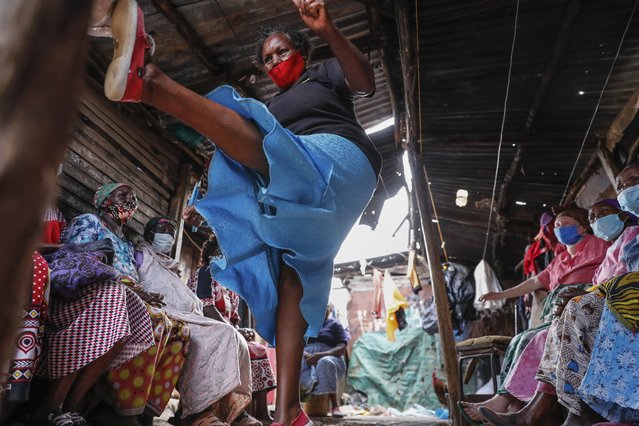
Group leader Jane Waithageni Kimaru, 60 years old, shows women how to fight off a potential rapist and escape, during a Taekwondo self-defense class for women in the Korogocho slum of Nairobi, Kenya, Thursday, September 16, 2021. (Photo by Brian Inganga/AP Photo)

Group leader Jane Waithageni Kimaru, 60 years old, shows women how to fight off a potential rapist and escape, during a Taekwondo self-defense class for women in the Korogocho slum of Nairobi, Kenya, Thursday, September 16, 2021. (Photo by Brian Inganga/AP Photo)
Details
23 Sep 2021 08:10:00
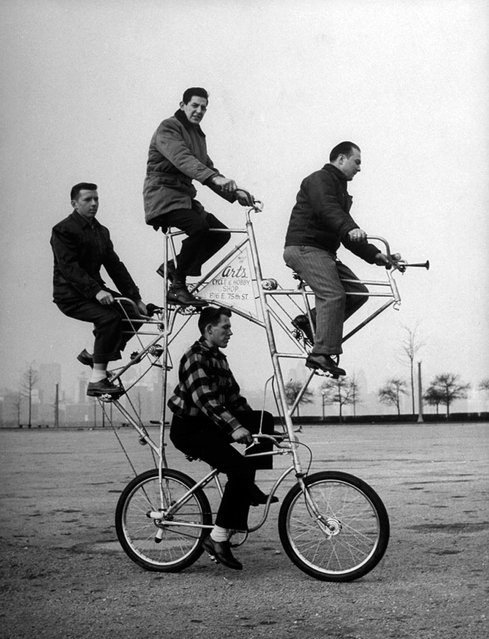
Four-man bicycle is powered by five chains and has brakes on both its wheels, 1948. The bike was built by Art Rothschild (top position) who broke three ribs while learning how to ride it. (Photo by Wallace Kirkland/Time & Life Pictures)

Four-man bicycle is powered by five chains and has brakes on both its wheels, 1948. The bike was built by Art Rothschild (top position) who broke three ribs while learning how to ride it. (Photo by Wallace Kirkland/Time & Life Pictures)
Details
05 May 2013 11:17:00
A model has her hair done backstage before a fashion show by Greek designer Mary Katrantzou during the Mercedes-Benz China Fashion Week in Beijing, China, 27 March 2016. The fashion week runs until 31 March. (Photo by How Hwee Young/EPA)

A model has her hair done backstage before a fashion show by Greek designer Mary Katrantzou during the Mercedes-Benz China Fashion Week in Beijing, China, 27 March 2016. The fashion week runs until 31 March. (Photo by How Hwee Young/EPA)
Details
28 Mar 2016 10:46:00
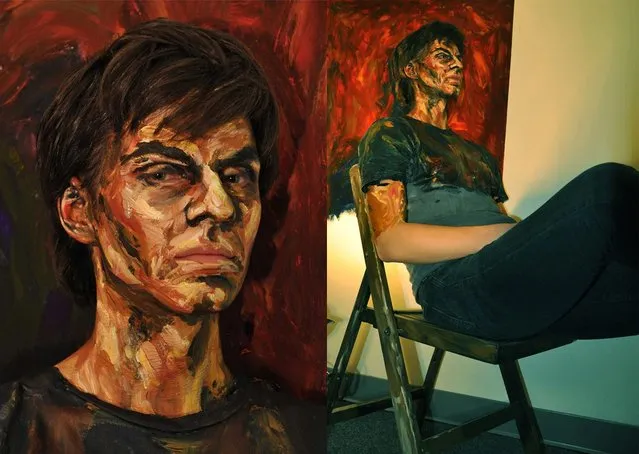
Living Paintings By Alexa Meade

The artworks that Alexa Meade makes are very unique and original. A usual painter creates a 2D or a 3D drawing on flat 2D surface. Alexa, on the other hand, draws over the body of a regular person, making them look like a 2D painting. The pictures of these people are almost uncanny, as you realize that the eyes “paintings” are real, and suddenly it dawns upon you that you are seeing a living and breathing human being. It is weird how we perceive this world, and how easy it is to trick our brain into thinking that it’s seeing a two-dimensional object. (Photo by Alexa Meade)
Details
12 Nov 2014 14:08:00
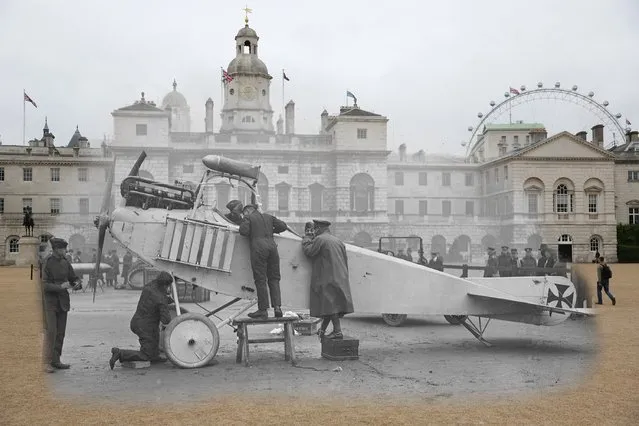
British soldiers inspect a captured German place in the Horseguards' Parade, London during World War I in November 1914, with the London Eye in the background as a reminder of just how much has changed in the last 100 years. (Photo by Peter Macdiarmid/Getty Images)

British soldiers inspect a captured German place in the Horseguards' Parade, London during World War I in November 1914, with the London Eye in the background as a reminder of just how much has changed in the last 100 years. (Photo by Peter Macdiarmid/Getty Images)
Details
29 Jul 2014 12:09:00
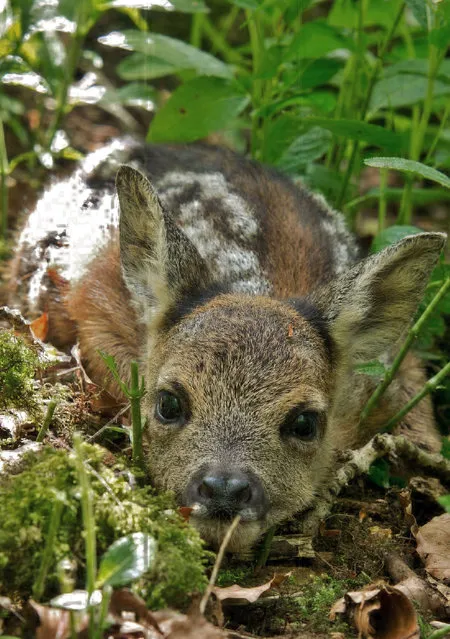
Young fawn shelters in the wood. He is so at one with nature that he knows how to call animals to him, and often gets within 30ft of them. (Photo by Adam Tatlow/BNPS)

Cotswold gamekeeper shoots amazing pictures of British wildlife – without the aid of long lenses and elaborate techniques. The photos may look like they have been shot from miles away – but amazingly Adam Tatlow is actually just feet away from his wild subjects. Photo: Young fawn shelters in the wood. He is so at one with nature that he knows how to call animals to him, and often gets within 30ft of them. (Photo by Adam Tatlow/BNPS)
Details
24 Sep 2013 08:31:00
“Start your day with a good breakfast together”, 2009. “There was this trend of eating sushi from a woman’s naked body. So when I found the perfect papaya, I knew exactly how to shoot it”. (Photo by Pixy Liao/The Guardian)

“Start your day with a good breakfast together”, 2009. “There was this trend of eating sushi from a woman’s naked body. So when I found the perfect papaya, I knew exactly how to shoot it”. (Photo by Pixy Liao/The Guardian)
Details
02 Jun 2019 00:03:00
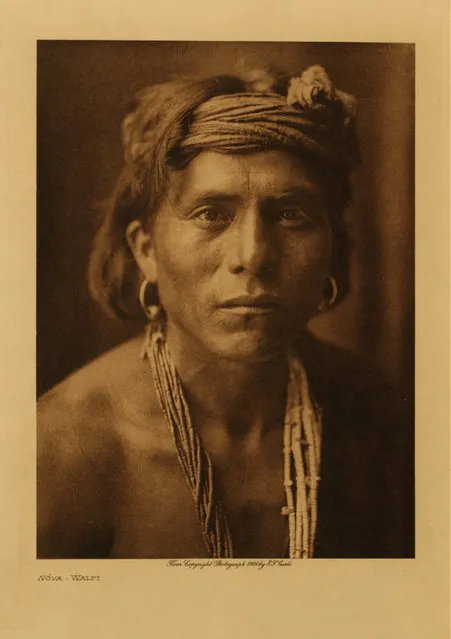
Nova, a Walpi, in 1906. (Photo by Edward S. Curtis)

At the beginning of the 20th century, Edward S. Curtis set out to document what he saw as a disappearing race: the Native American. From 1907 to 1930, Curtis took more than 2,000 photos of 80 tribes stretching from the Great Plains to the Pacific Northwest and Alaska. He then published and sold these photos, along with narrative text, in 20 volumes of work known as “The North American Indian”. It is one of the most significant collections of its kind, “probably the most important photographic document of its age and its topic,” said Jeffrey Garrett, associate university librarian for Special Libraries at Northwestern University. (Photo by Edward S. Curtis)

Details
07 Sep 2014 12:57:00