Loading...
Done
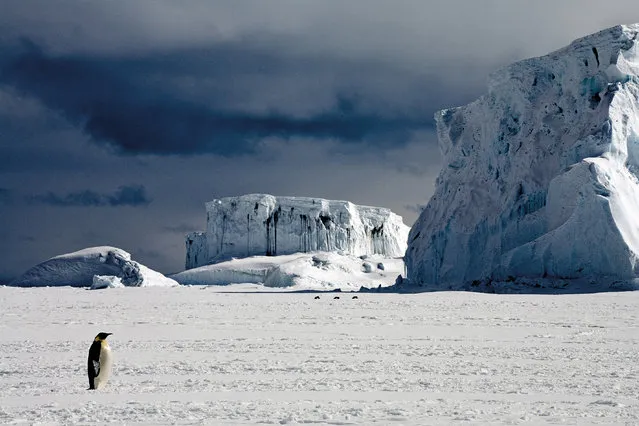
Image from Camille Seamans new book, “Melting Away”. (Photo by Camille Seaman/Barcroft Media)

Documenting the effects of climate change first hand over the past eight years, Camille Seaman fears we may be on the road to the last iceberg. Photographing the enormous frozen floats at both poles for the past eight years, the Californian adventurer has seen the receding ice shelves and experienced the changing warmer weather. Feeling that her intimate and emotional work documents a snapshot of history, Camille presents her series “The Last Iceberg” as a study of what she sees as the personality of each huge iceberg. Drawing parallels with the famous novel, “The Last of the Mohicans”, Camille, 42, wonders whether these unique, almost alien natural features will become a thing of the past or part of nature's renewal process. (Photo by Camille Seaman/Barcroft Media)
Details
02 Dec 2014 12:10:00
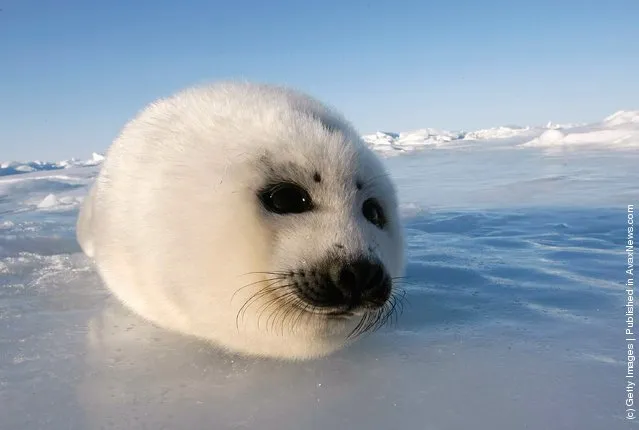
A harp seal pup

“The harp seal or saddleback seal is a species of earless seal native to the northernmost Atlantic Ocean and adjacent parts of the Arctic Ocean. Newborn pups weigh around 11 kilograms (24 lb) and are 80–85 centimetres (31–33 in) long. After birth, the mother only feeds that pup. During the 12 day nursing period, the mother does not eat, losing up to 3 kilograms (7 lb) per day. Harp seal milk contains up to 48% fat, so pups gain over 2.2 kilograms (4.9 lb) per day. During this time, the juvenile's “greycoat” grows in beneath the white neonatal coat, and it weighs 80 pounds (36 kg)”. – Wikipedia

Photo: A harp seal pup lies on an ice floe in the Gulf of Saint Lawrence March 24, 2008 in Charlottetown, Canada. (Photo by Joe Raedle/Getty Images)
Details
19 Sep 2011 15:49:00
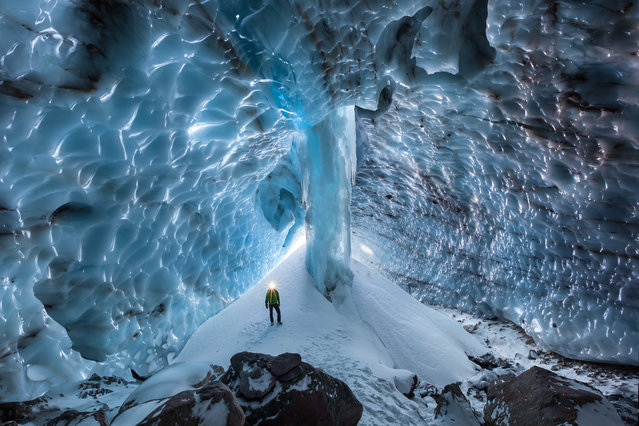
On the western side of Mount Hood lies the longest glacier cave system in the contiguous United States. In 2012, these caves were mapped to a combined length of 7,166.8 feet by cave explorers Brent McGregor and Eddy Cartaya. Currently, the total passage length is hundreds of feet less. Glaciers are frozen rivers; they are always moving and changing. In the past five years, we have seen the caves melt, shrink and collapse in a dramatic way. The caves are formed by water carving away at the ice. (Photo and caption by Josh Hydeman)

On the western side of Mount Hood lies the longest glacier cave system in the contiguous United States. In 2012, these caves were mapped to a combined length of 7,166.8 feet by cave explorers Brent McGregor and Eddy Cartaya. Currently, the total passage length is hundreds of feet less. Glaciers are frozen rivers; they are always moving and changing... (Photo and caption by Josh Hydeman)
Details
22 Mar 2015 11:05:00
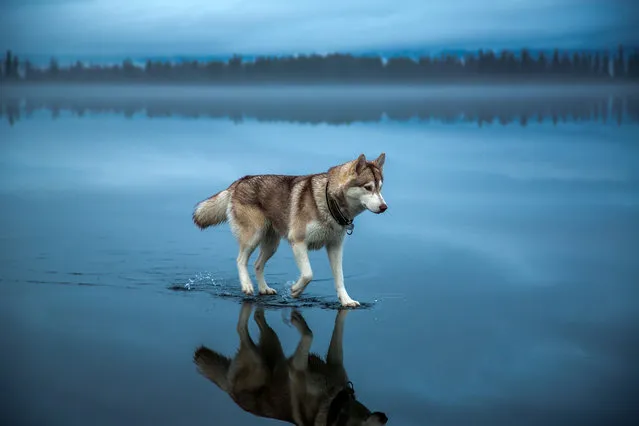
This graceful husky appears to be smarter than your average dog having apparently mastered the art of walking on water. The soft-footed canine was photographed while making its way across a lake in northern Russia. Photographer Fox Grom captured a remarkable set of images after heavy rain fell on a frozen lake to create the amazing illusion. Here: Husky dog Alaska walks on water in Northern Russia, January 2015. (Photo by Fox Grom/Visual Press Agency)

This graceful husky appears to be smarter than your average dog having apparently mastered the art of walking on water. The soft-footed canine was photographed while making its way across a lake in northern Russia. Photographer Fox Grom captured a remarkable set of images after heavy rain fell on a frozen lake to create the amazing illusion. The 40-year-old, who works as an all-terrain vehicle driver, regularly walks his pet dogs, Alaska and Blizzard, near the natural beauty spot. “I always take pictures of my dogs whilst walking them but on this occasion there was an extraordinary phenomenon“, he said. “The ice was already very thick when it rained heavily making for a spectacular scene”. Here: Husky dog Alaska walks on water in Northern Russia, January 2015. (Photo by Fox Grom/Visual Press Agency)
Details
20 Mar 2015 11:46:00
A dog with a cherry blossom-shaped pin, is seen in the cherry blossom festival in Seoul, South Korea, Sunday, April 9, 2017. (Photo by Lee Jin-man/AP Photo)

A dog with a cherry blossom-shaped pin, is seen in the cherry blossom festival in Seoul, South Korea, Sunday, April 9, 2017. (Photo by Lee Jin-man/AP Photo)
Details
16 Apr 2017 10:27:00
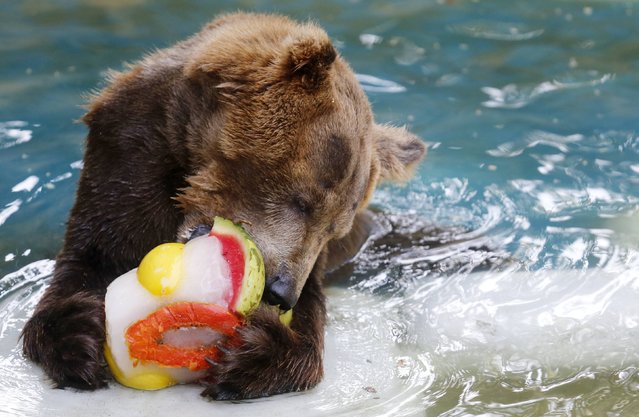
A grizzly bear eats a frozen fruits during a hot summer day at Rio de Janeiro's zoo January 13, 2015. According to a local climate institute, temperatures in Rio de Janeiro on Tuesday rose up to 34 degrees Celsius (93.2 degrees Fahrenheit). (Photo by Sergio Moraes/Reuters)

A grizzly bear eats a frozen fruits during a hot summer day at Rio de Janeiro's zoo January 13, 2015. According to a local climate institute, temperatures in Rio de Janeiro on Tuesday rose up to 34 degrees Celsius (93.2 degrees Fahrenheit). (Photo by Sergio Moraes/Reuters)
Details
14 Jan 2015 11:52:00
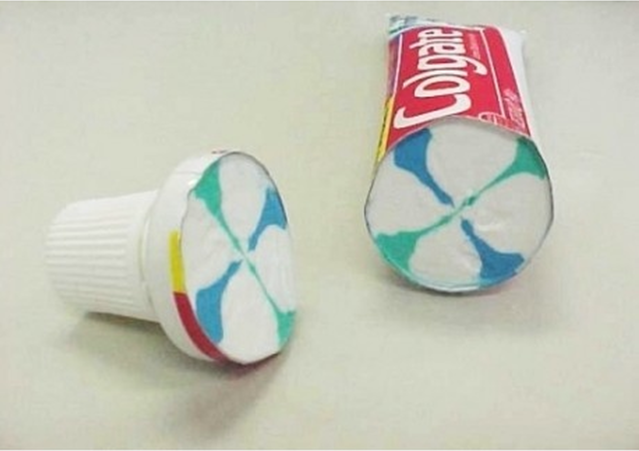
Things Cut in Half

HalfPics is a Twitter feed pointing to things cut in half like a bowl of ramen, a Mini Cooper, and toothpaste. Their tagline: “Ever wonder what stuff looks like when it’s cut in half?” Yes. We previously posted about “Cut Food,” a photo series of foods cut neatly in half by food photographer Beth Galton and food stylist Charlotte Omnès.


See also:Things Cut in Half Part2
Details
07 Sep 2013 10:32:00
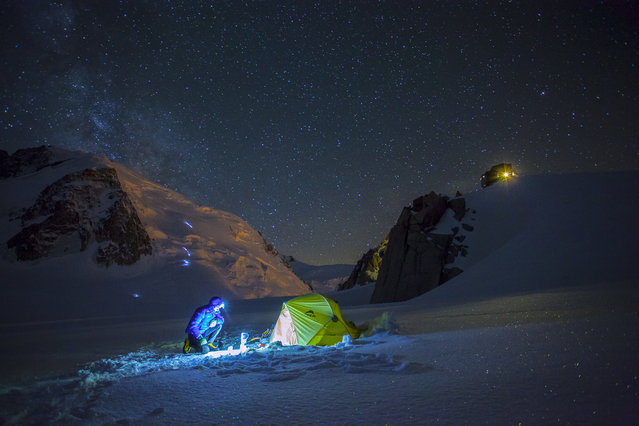
“A snapshot from mountaineer's life”. Have you ever wondered how does a mountaineer's day start? (Photo and caption by Kamil Tamiola/National Geographic Traveler Photo Contest)

“A snapshot from mountaineer's life”. Have you ever wondered how does a mountaineer's day start? I will give you a hint: you wake up at 3 am, set the stove, wake up your partner, pretend it is warm, quickly consume a high-calorie breakfast, watch your friends slowly ascending the icy slopes of your dream summit with their tiny head torches glimmering against perfectly blue ice, and hope for the good weather. One would ask: why all this trouble? The answer is easy: for the love of the adventure and the unknown. Location: Chamonix, Haute Savoye, France. (Photo and caption by Kamil Tamiola/National Geographic Traveler Photo Contest)

ATTENTION! All pictures are presented in high resolution. To see Hi-Res images – just TWICE click on any picture. In other words, click small picture – opens the BIG picture. Click BIG picture – opens VERY BIG picture.
Details
27 Jun 2013 12:47:00