Loading...
Done
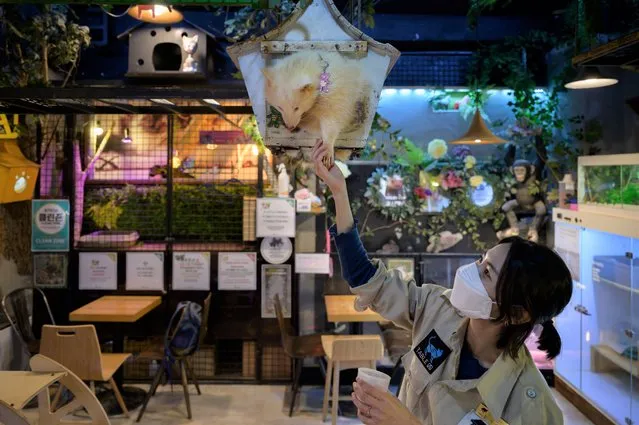
In a photo taken on April 2, 2020 a staff member feeds a raccoon at the Table A Raccoon Cafe in Seoul. Business has been devastated by the coronavirus outbreak, with South Koreans staying at home under social distancing guidelines, and tourism disappearing. But unlike other firms, animal cafes have to stay open so that staff can look after their stock. (Photo by Ed Jones/AFP Photo)

In a photo taken on April 2, 2020 a staff member feeds a raccoon at the Table A Raccoon Cafe in Seoul. Business has been devastated by the coronavirus outbreak, with South Koreans staying at home under social distancing guidelines, and tourism disappearing. But unlike other firms, animal cafes have to stay open so that staff can look after their stock. (Photo by Ed Jones/AFP Photo)
Details
13 Apr 2020 00:05:00
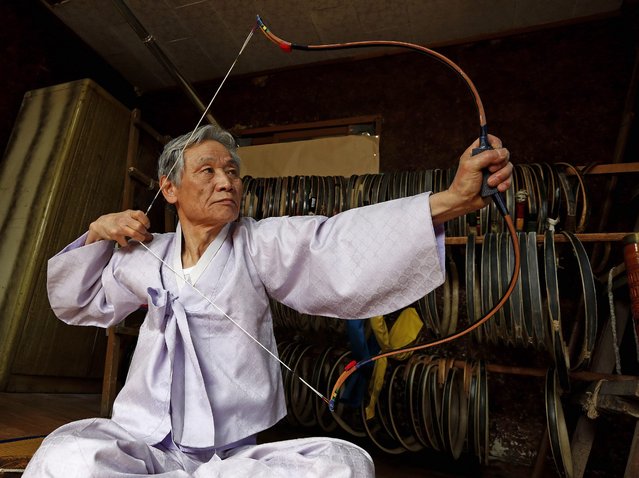
South Korean traditional bow artisan Kwon Yeong-Hak works on a bow in his workshop in Yecheon-gun, Gyeongsangbuk-do, South Korea, 26 February 2015. (Photo by Jeon Heon-Kyun/EPA)

South Korean traditional bow artisan Kwon Yeong-Hak works on a bow in his workshop in Yecheon-gun, Gyeongsangbuk-do, South Korea, 26 February 2015. Kwon Yeong-Hak still crafts his bows in the traditional way, carrying on a four-generation family business. The Gakgung bow, of which Kwon is one of the last remaining artisans, is unique to Korea, and is constructed with a variety of materials, including water buffalo horn, oak, bamboo and cattle spinal sinew. A ban on the import of water buffalo horns has put the Gakgung tradition at risk. (Photo by Jeon Heon-Kyun/EPA)
Details
24 Mar 2015 09:54:00
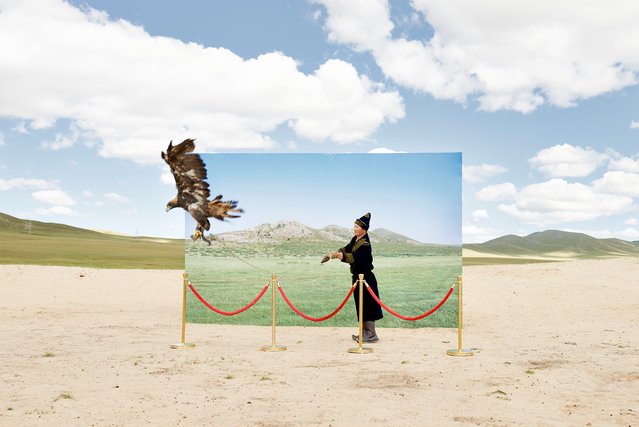
Up to 35% of Mongolians still live a nomadic life, depending on their land to survive. But environmental changes, particularly desertification, means this way of life is under threat. Korean photographer Daesung Lee’s Futuristic Archaeology images show billboard-size backdrops of lush steppe contrasting with actual scenery as former nomads enact scenes of hunting, herding and Mongolian wrestling. (Photo by Daesung Lee)

Up to 35% of Mongolians still live a nomadic life, depending on their land to survive. But environmental changes, particularly desertification, means this way of life is under threat. Korean photographer Daesung Lee’s Futuristic Archaeology images show billboard-size backdrops of lush steppe contrasting with actual scenery as former nomads enact scenes of hunting, herding and Mongolian wrestling. (Photo by Daesung Lee)
Details
24 Nov 2016 08:01:00
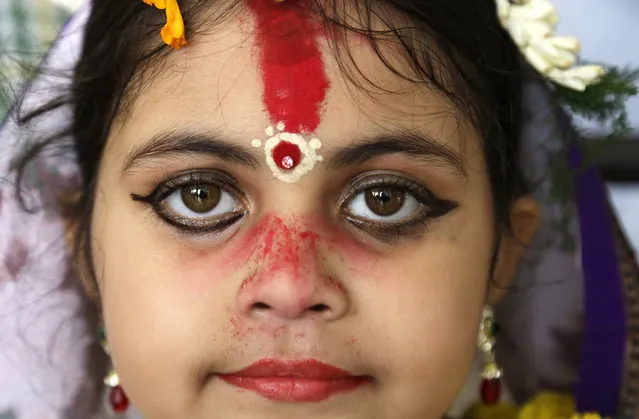
A young Hindu girl sits for a ceremony where she and other girls are worshipped as “Kumari”, or living goddess, during Ram Navami festival, at a temple in Kolkata, India, Saturday, March 28, 2015. (Photo by Bikas Das/AP Photo)

A young Hindu girl sits for a ceremony where she and other girls are worshipped as “Kumari”, or living goddess, during Ram Navami festival, at a temple in Kolkata, India, Saturday, March 28, 2015. Ram Navami marks the birth of Hindu God Rama. (Photo by Bikas Das/AP Photo)
Details
29 Mar 2015 12:23:00
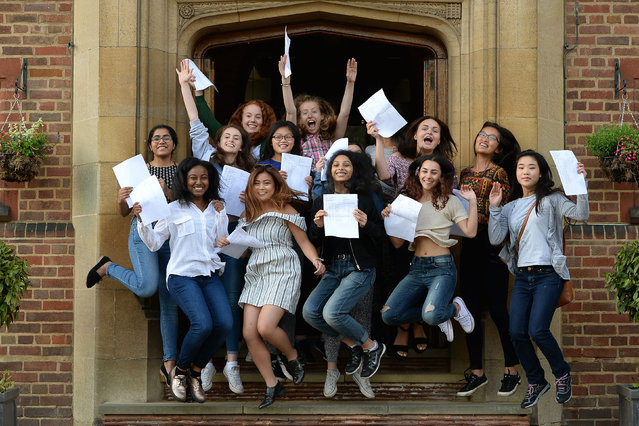
Students celebrate their A-level results at King Edward VI High School for Girls in Birmingham, England on August 18, 2016. The proportion of top grades achieved by A-level students across the UK has fallen for a fifth year in a row, and girls have caught up with boys in attaining A* grades. (Photo by Joe Giddens/PA Wire)

Students celebrate their A-level results at King Edward VI High School for Girls in Birmingham, England on August 18, 2016. The proportion of top grades achieved by A-level students across the UK has fallen for a fifth year in a row, and girls have caught up with boys in attaining A* grades. (Photo by Joe Giddens/PA Wire)
Details
19 Aug 2016 12:16:00
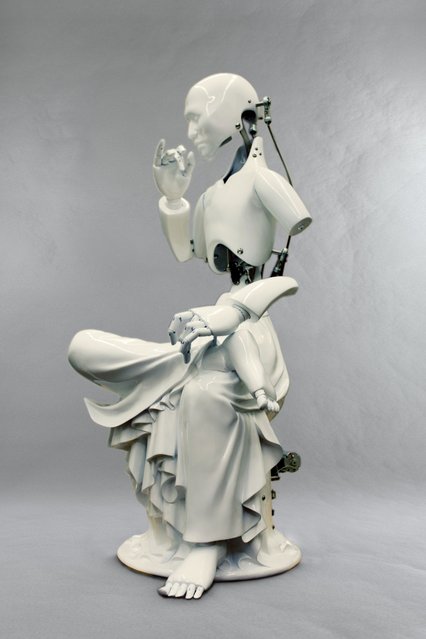
Wang Zi Won’s Mechanical Buddhas

South Korean artist Wang Zi Won creates enlightened robots, including the Buddha and an idealized mechanical doll based upon himself, as a guidepost for a future in which technology lead to self-actualization.
Humans will evolve and adapt themselves to enhanced science and technology just as men and animals in the past evolved to adapt themselves to their natural circumstances. The artist sees this as our destiny, not as a negative, gloomy dystopia.
Details
22 Mar 2013 12:02:00
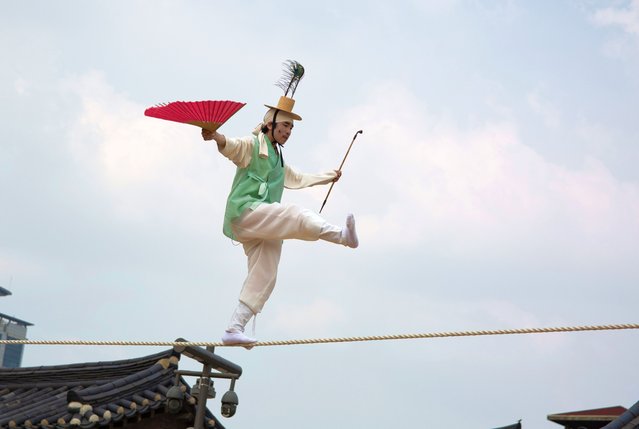
South Korean tightrope walker Nam Chang-dong performs “Jultage” or Tightrope walking during the traditional festival “Dano” at Namsan Hanok village in Seoul, South Korea, 14 June 2021. The festival falls on the fifth day of the fifth month of the lunar calendar. Only 30 audience members were allowed to attend the performance amid the coronavirus COVID-19 pandemic. (Photo by Jeon Heon-Kyun/EPA/EFE)

South Korean tightrope walker Nam Chang-dong performs “Jultage” or Tightrope walking during the traditional festival “Dano” at Namsan Hanok village in Seoul, South Korea, 14 June 2021. The festival falls on the fifth day of the fifth month of the lunar calendar. Only 30 audience members were allowed to attend the performance amid the coronavirus COVID-19 pandemic. (Photo by Jeon Heon-Kyun/EPA/EFE)
Details
18 Jul 2021 06:12:00
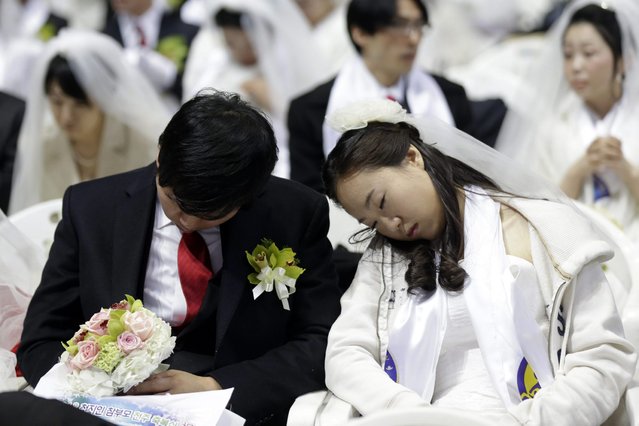
A newly-married couple takes a nap before their mass wedding ceremony at the CheongShim Peace World Center in Gapyeong, South Korea, Sunday, February 17, 2013. Some 3,500 South Korean and foreign couples exchanged or reaffirmed marriage vows in the Unification Church's mass wedding arranged by Hak Ja Han Moon, a wife of the late Rev. Sun Myung Moon, the controversial founder of the Unification Church. (Photo by Lee Jin-man/AP Photo)

A newly-married couple takes a nap before their mass wedding ceremony at the CheongShim Peace World Center in Gapyeong, South Korea, Sunday, February 17, 2013. Some 3,500 South Korean and foreign couples exchanged or reaffirmed marriage vows in the Unification Church's mass wedding arranged by Hak Ja Han Moon, a wife of the late Rev. Sun Myung Moon, the controversial founder of the Unification Church. (Photo by Lee Jin-man/AP Photo)
Details
18 Feb 2013 11:15:00