Loading...
Done
The US' winner Mikaela Shiffrin celebrates during a flowers ceremony after the women's Super G event of the 2019 FIS Alpine Ski World Championships at the National Arena in Are, Sweden, on February 5, 2019. (Photo by Denis Balibouse/Reuters)

The US' winner Mikaela Shiffrin celebrates during a flowers ceremony after the women's Super G event of the 2019 FIS Alpine Ski World Championships at the National Arena in Are, Sweden, on February 5, 2019. (Photo by Denis Balibouse/Reuters)
Details
11 Feb 2019 00:01:00
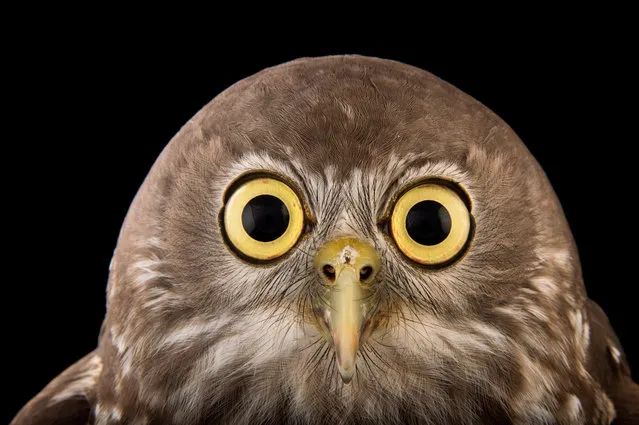
The National Geographic Photo Ark is a travelling exhibition of photographer Joel Sartore’s quest to create a photo archive of biodiversity around the world. So far, Sartore has captured studio portraits of more than 6,000 species – a number that he hopes to double. On 1 July, the ark will open at Melbourne zoo – the first time it has been exhibited in the southern hemisphere. More than 50 portraits will be on display, including many of Australian endangered animals being protected by programs at the zoo itself. These captions have been edited from text supplied by Melbourne zoo. Here: Barking owl. So-named because its call sounds like a barking dog, these birds are native to Australia, Indonesia and Papua New Guinea. In Victoria they are listed as an endangered species, and in 2003 there were estimated to be fewer than 50 breeding pairs. The main threat to the species in Victoria is loss of habitat, especially large trees with hollows in which they can nest and on which many of their prey depend. Apart from a bark, they may utter a chilling scream when they feel threatened. (Photo by Joel Sartore/National Geographic Photo Ark/The Guardian)

The National Geographic Photo Ark is a travelling exhibition of photographer Joel Sartore’s quest to create a photo archive of biodiversity around the world. So far, Sartore has captured studio portraits of more than 6,000 species – a number that he hopes to double. On 1 July, the ark will open at Melbourne zoo – the first time it has been exhibited in the southern hemisphere. More than 50 portraits will be on display, including many of Australian endangered animals being protected by programs at the zoo itself. These captions have been edited from text supplied by Melbourne zoo. Here: Barking owl. (Photo by Joel Sartore/National Geographic Photo Ark/The Guardian)

Details
01 Jul 2017 07:45:00
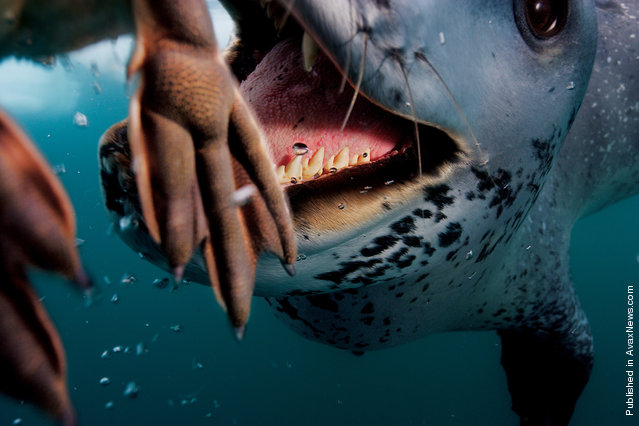
A leopard seal feeds Paul Nicklen a penguin

A leopard seal feeds Paul Nicklen a penguin. (Photo by Paul Nicklen/National Geographic). Antarctic Peninsula, 2011
Details
11 Apr 2012 13:39:00
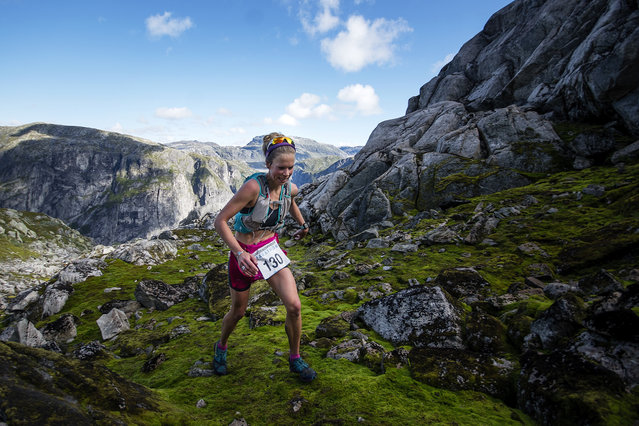
Female winner Ane Guro Moen at Hardangervidda Marathon on September 2, 2017 in Eidfjord, Norway. Hardangervidda Marathon goes through parts of the National Park of Hardangervidda, passing through glaciers and waterfalls. (Photo by Kai-Otto Melau/Getty Images)

Female winner Ane Guro Moen at Hardangervidda Marathon on September 2, 2017 in Eidfjord, Norway. Hardangervidda Marathon goes through parts of the National Park of Hardangervidda, passing through glaciers and waterfalls. (Photo by Kai-Otto Melau/Getty Images)
Details
04 Sep 2017 08:01:00
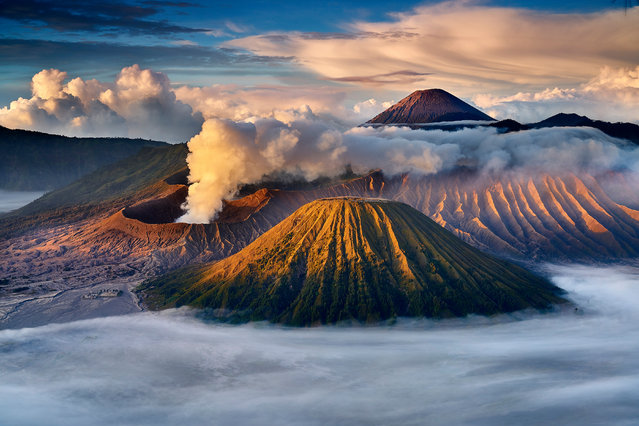
Myanmar national award second-place winner: Kyaw Win Hlaing. “Mount Bromo is an active volcano in East Java, Indonesia. The name Bromo derives from the Javanese pronunciation of Brahma, the Hindu creator god”. (Photo by Kyaw Win Hlaing/Sony World Photography Awards 2018)

Myanmar national award second-place winner: Kyaw Win Hlaing. “Mount Bromo is an active volcano in East Java, Indonesia. The name Bromo derives from the Javanese pronunciation of Brahma, the Hindu creator god”. (Photo by Kyaw Win Hlaing/Sony World Photography Awards 2018)
Details
22 Mar 2018 00:03:00
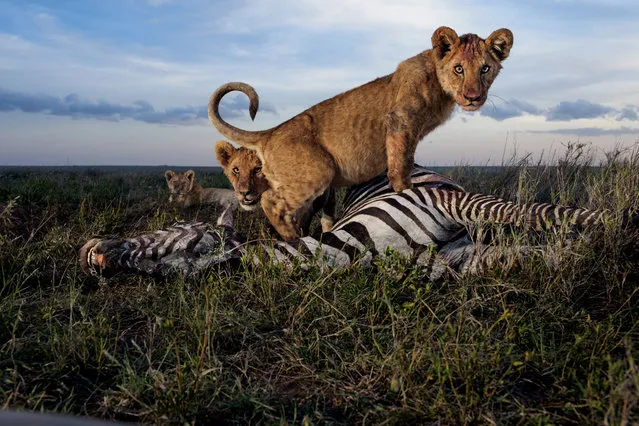
Cubs of the Simba East pride: too young to kill but old enough to crave meat. Adult females, and sometimes males, do the hunting. Zebras and wildebeests rank high as chosen prey in the rainy season. (Photo by Michael Nichols/National Geographic via The Atlantic)

“Serengeti National Park encompasses 5,700 square miles of grassy plains and woodlands near the northern border of Tanzania, and is home to more than 3,500 lions grouped into a couple dozen prides. Photographer Nick Nichols and videographer Nathan Williamson made several extended trips to the Serengeti between July 2011 and January 2013, determined to break new visual ground in their coverage of the Serengeti Lions”. Photo: Cubs of the Simba East pride: too young to kill but old enough to crave meat. Adult females, and sometimes males, do the hunting. Zebras and wildebeests rank high as chosen prey in the rainy season. (Photo by Michael Nichols/National Geographic via The Atlantic)
Details
09 Aug 2013 08:15:00
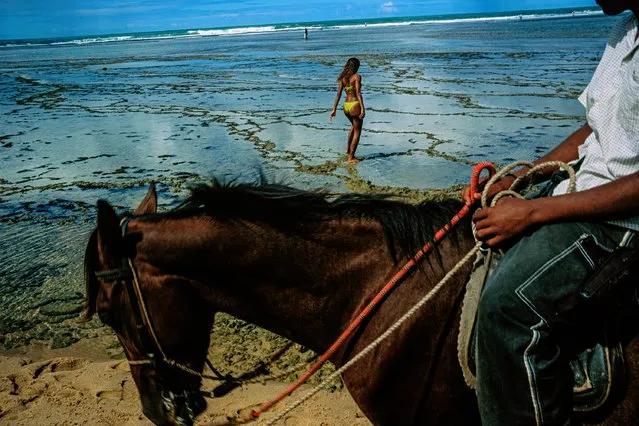
Praia du Forte, Bahia. “This was the lead picture for a National Geographic story on Bahia, because it was both mysterious as well as a “geography” picture showing where the slaves arrived from Nigeria. Beach pictures seem like they should be easy to take, but for me they are actually quite difficult. Too easy to fall into cliche. When I saw the kid coming on the horse, I quickly ran to see if I could make something with a woman in a bikini that was not a bikini shot”. (Photo by David Alan Harvey/The Guardian)

Praia du Forte, Bahia. “This was the lead picture for a National Geographic story on Bahia, because it was both mysterious as well as a “geography” picture showing where the slaves arrived from Nigeria. Beach pictures seem like they should be easy to take, but for me they are actually quite difficult. Too easy to fall into cliche. When I saw the kid coming on the horse, I quickly ran to see if I could make something with a woman in a bikini that was not a bikini shot”. (Photo by David Alan Harvey/The Guardian)
Details
20 Aug 2016 11:35:00
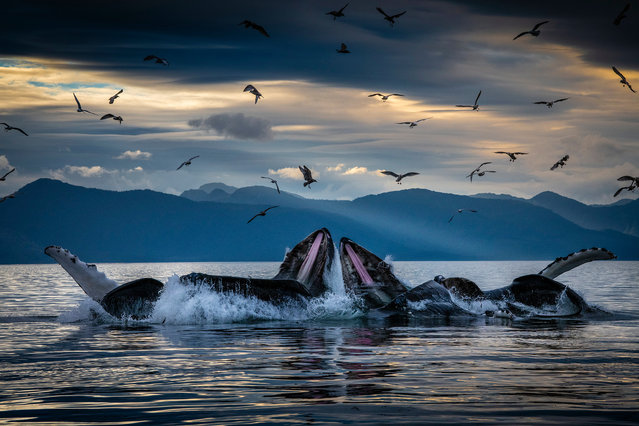
“Secrets of the Whales”. Skerry’s photographs celebrate the lives and culture of whales, illuminating recent research and their diverse behaviours. His latest work focuses on four key species: sperm whales, humpbacks, orca and beluga whales. Humpback whales bubble-net feeding off the coast of Alaska. They work cooperatively to feed on herring by blowing a perfect ring of bubbles underwater to form a net encircling the fish. The whales then swim up through the centre of the bubble net with their mouths open. (Photo by Brian Skerry/National Geographic Photo/Visa pour l'Image)

“Secrets of the Whales”. Skerry’s photographs celebrate the lives and culture of whales, illuminating recent research and their diverse behaviours. His latest work focuses on four key species: sperm whales, humpbacks, orca and beluga whales. Humpback whales bubble-net feeding off the coast of Alaska. They work cooperatively to feed on herring by blowing a perfect ring of bubbles underwater to form a net encircling the fish. The whales then swim up through the centre of the bubble net with their mouths open. (Photo by Brian Skerry/National Geographic Photo/Visa pour l'Image)
Details
04 Sep 2021 09:02:00