Loading...
Done
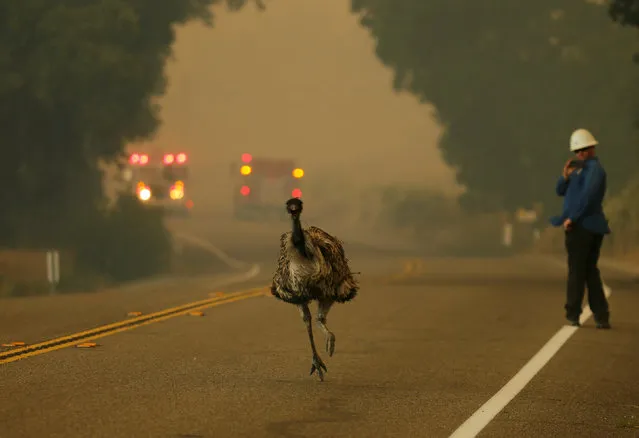
An emu runs to escape an approaching wildfire as it burns near Potero, California, U.S. June 20, 2016. (Photo by Mike Blake/Reuters)

An emu runs to escape an approaching wildfire as it burns near Potero, California, U.S. June 20, 2016. (Photo by Mike Blake/Reuters)
Details
21 Jun 2016 07:18:00
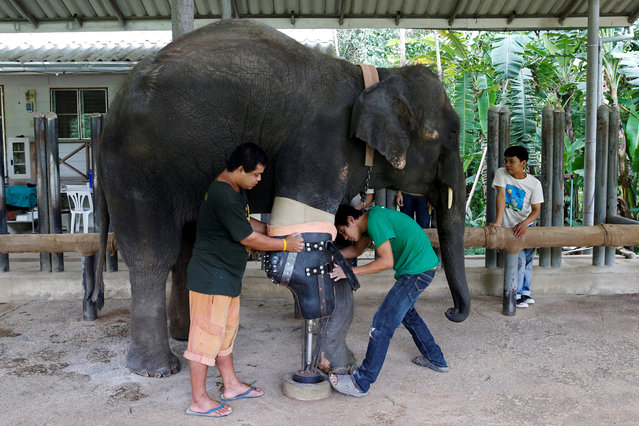
Mosha, the elephant that was injured by a landmine, has her prosthetic leg attached at the Friends of the Asian Elephant Foundation in Lampang, Thailand, June 29, 2016. Mosha was 7 months old when she stepped on a land mine near Thailand’s border with Myanmar and lost a front leg. That was a decade ago. Mosha is one of more than a dozen elephants who have been wounded by land mines in the border region, where rebels have been fighting the Myanmar government for decades. She was the first elephant to be fitted with a prosthetic limb at the hospital near Lampang. Mosha weighed about 1,300 pounds (590 kg) when she was wounded. (Photo by Athit Perawongmetha/Reuters)

Mosha, the elephant that was injured by a landmine, has her prosthetic leg attached at the Friends of the Asian Elephant Foundation in Lampang, Thailand, June 29, 2016. Mosha was 7 months old when she stepped on a land mine near Thailand’s border with Myanmar and lost a front leg. That was a decade ago... (Photo by Athit Perawongmetha/Reuters)
Details
24 Aug 2016 11:19:00
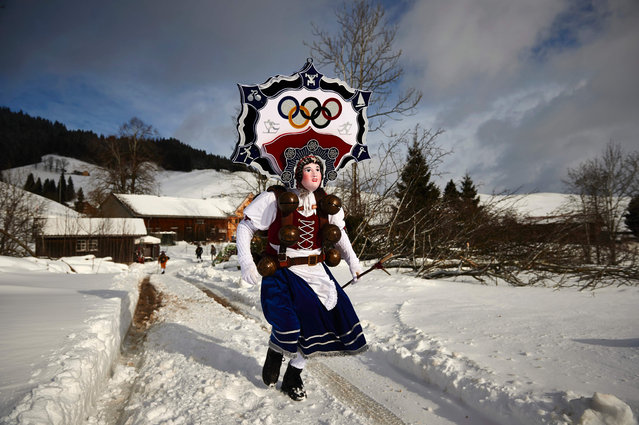
A leader “Rolli” of a yodel group “Schuppel” runs in the snow in front of a farmstead during the “Silvesterchlausen” in the early morning in Urnaesch in the Swiss canton Appenzell Ausserroden on January 13, 2017. The “Silvesterchlausen” is a tradition of the Swiss canton Appenzell, where colorfull characters organized in groups called “Schuppel”, chase out the old year and welcome the new one. They run all day long from farmstead to farmstead, gather together to sing a jodel and great the farmers. A “Schuppel” consists of some “Schelli” and two “Rolli”, sometimes with female dresses and nice scenes over the head, despite the dress all participants are males. The Silversterchlausen run twice a year, first for the new Silvester on December 31, and then again on January 13, for the old Silvester following the Julian calendar. (Photo by Michael Buholzer/AFP Photo)

A leader “Rolli” of a yodel group “Schuppel” runs in the snow in front of a farmstead during the “Silvesterchlausen” in the early morning in Urnaesch in the Swiss canton Appenzell Ausserroden on January 13, 2017. (Photo by Michael Buholzer/AFP Photo)
Details
14 Jan 2017 12:41:00


A New Year, New Hope
or, abandon all hope, ye who enter here? Intrigue!

But that's okay, we'll soon find out. Happy New Year! And now disco.
Details
31 Dec 2021 06:11:00
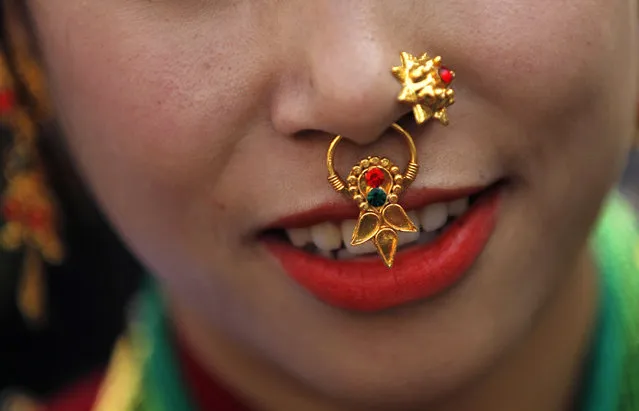
A Nepalese Gurung community woman, wearing traditional attire, prepares to participate in a parade to mark their New Year known as “Tamu Loshar” in Kathmandu, Nepal, Friday, December 30, 2016. The indigenous Gurungs, also known as Tamu, are celebrating the advent of the year of the bird. (Photo by Niranjan Shrestha/AP Photo)

A Nepalese Gurung community woman, wearing traditional attire, prepares to participate in a parade to mark their New Year known as “Tamu Loshar” in Kathmandu, Nepal, Friday, December 30, 2016. The indigenous Gurungs, also known as Tamu, are celebrating the advent of the year of the bird. (Photo by Niranjan Shrestha/AP Photo)
Details
31 Dec 2016 10:44:00
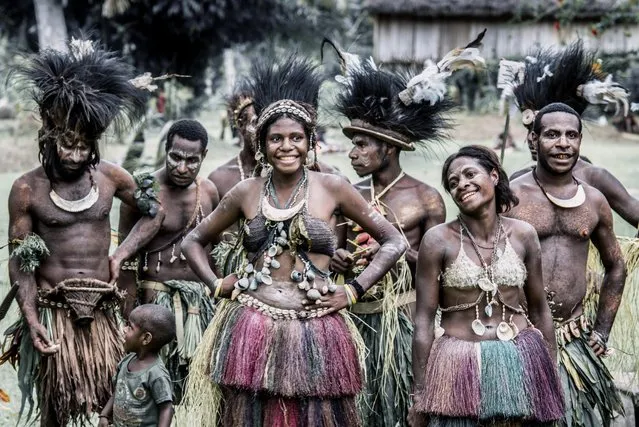
Stunning images capture the tribes of Papua New Guinea during a gathering of clans. (Photo by Trevor Cole/Media Drum World)

These powerful images capture the spear-wielding tribes of Papua new Guinea who believe they are possessed with the spirit of the crocodile. They show how the Kangunaman clansmen scar their backs to resemble reptile scales while the Huli Wigmen wear elaborate headdresses to signal they are ready for battle. (Photo by Trevor Cole/Media Drum World)
Details
05 May 2018 00:05:00
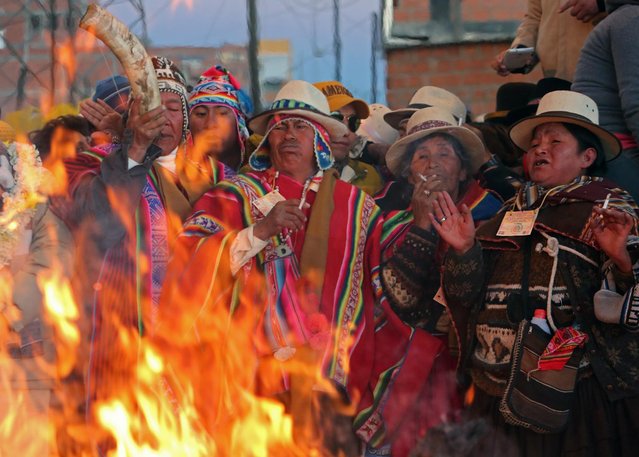
Local priests celebrate the “Aimara New Year”, an Andean Bolivian traditional festival that marks the winter solstice in El Alto, Bolivia, 21 June 2016. Aimara or Aymara means the Return of the Sun. (Photo by Martin Alipaz/EPA)

Local priests celebrate the “Aimara New Year”, an Andean Bolivian traditional festival that marks the winter solstice in El Alto, Bolivia, 21 June 2016. Aimara or Aymara means the Return of the Sun. (Photo by Martin Alipaz/EPA)
Details
22 Jun 2016 12:57:00
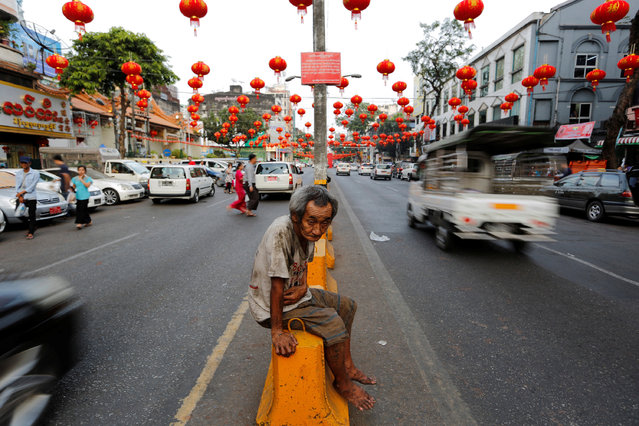
A man sits under lanterns and decorations on a street ahead of the Chinese Lunar New Year in Chinatown Yangon, Myanmar January 23, 2017. (Photo by Soe Zeya Tun/Reuters)

A man sits under lanterns and decorations on a street ahead of the Chinese Lunar New Year in Chinatown Yangon, Myanmar January 23, 2017. (Photo by Soe Zeya Tun/Reuters)
Details
25 Jan 2017 11:32:00