Loading...
Done
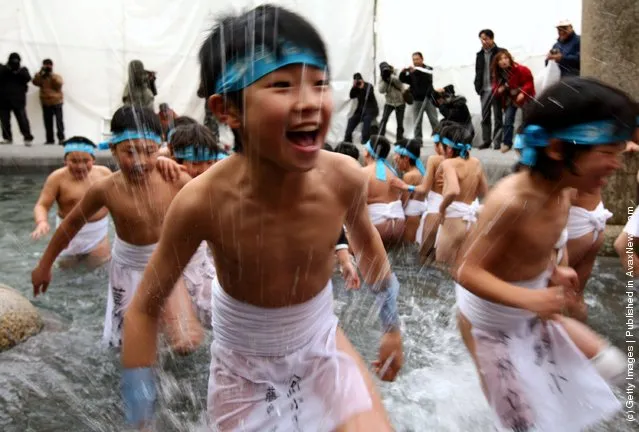
Japanese children wear loincloths as they splash about in freezing cold water during Saidaiji Naked Festival, at Saidaiji Temple

“A Hadaka Matsuri (“Naked Festival”) is a type of Japanese festival, or matsuri, in which participants wear a minimum amount of clothing; usually just a Japanese loincloth (called fundoshi), sometimes with a short happi coat, and rarely completely naked. Whatever the clothing, it is considered to be above vulgar, or everyday, undergarments, and on the level of holy Japanese shrine attire. Naked festivals are held in dozens of places throughout Japan every year, usually in the summer or winter. The most famous festival is held in Okayama, where the festival originated. Every year, over 9,000 men participate in this festival”. – Wikipedia

Photo: Japanese men wear loincloths as they splash about in freezing cold water during Saidaiji Naked Festival, at Saidaiji Temple on February 18, 2012 in Okayama, Japan. (Photo by Buddhika Weerasinghe/Getty Images)
Details
19 Feb 2012 12:18:00
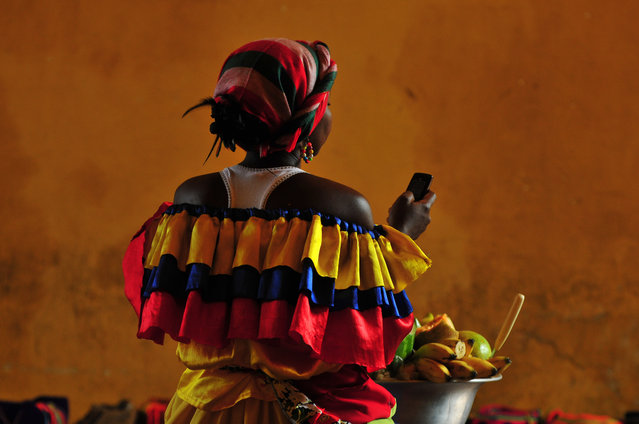
Winner. “I took this picture of a woman in traditional clothing in Cartagena, Colombia”. PAUL GOLDSTEIN, JUDGE: “The blaze of colour from every angle, the boldness of the picture, taken from behind, which gives it so much more allure and frankly a superb get up. Did I mention the colours? Oh, and that looks suspiciously like a Nokia”. (Photo by Stanislav Shmelev/The Guardian)

Winner. “I took this picture of a woman in traditional clothing in Cartagena, Colombia”. PAUL GOLDSTEIN, JUDGE: “The blaze of colour from every angle, the boldness of the picture, taken from behind, which gives it so much more allure and frankly a superb get up. Did I mention the colours? Oh, and that looks suspiciously like a Nokia”. (Photo by Stanislav Shmelev/The Guardian)
Details
30 Mar 2017 11:05:00
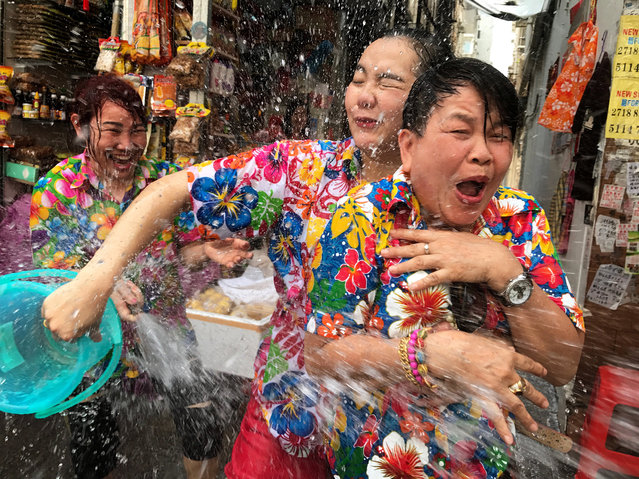
People spray water in the street ahead of “Songkran”, the annual Thai New Year water-throwing festival, in Kowloon City, Hong Kong, China, 09 April 2017. The pouring of water is a key element in the festival as it represents purification and the washing away of one's sins and bad luck for the year. The event also includes a “Miss Songkran” pageant where contestants are clothed in traditional Thai dress, and a winner is crowned. This year's “Songkran” will begin in Thailand on 13 April 2017. (Photo by Alex Hofford/EPA)

People spray water in the street ahead of “Songkran”, the annual Thai New Year water-throwing festival, in Kowloon City, Hong Kong, China, 09 April 2017. The pouring of water is a key element in the festival as it represents purification and the washing away of one's sins and bad luck for the year. The event also includes a “Miss Songkran” pageant where contestants are clothed in traditional Thai dress, and a winner is crowned. This year's “Songkran” will begin in Thailand on 13 April 2017. (Photo by Alex Hofford/EPA)
Details
10 Apr 2017 09:05:00
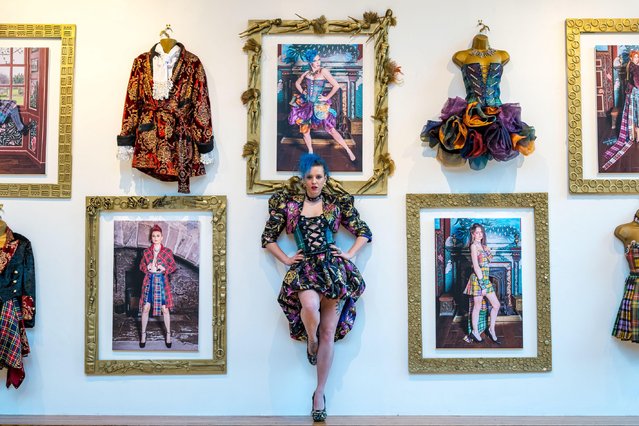
New exhibition of sustainable fashion explores the role of tartan in Scottish traditional dance, opening on April 23, 2024 as part of the Pomegranates festival in Edinburgh, Scotland. Vengefully Changed Allegiance is asolo exhibition by fashion designer Alison Harm, founder of Edinburgh Psychomoda clothing brand, who uses industry scraps, vintage clot and broken jewellery. (Photo by Sally Anderson/Alamy Live News)

New exhibition of sustainable fashion explores the role of tartan in Scottish traditional dance, opening on April 23, 2024 as part of the Pomegranates festival in Edinburgh, Scotland. Vengefully Changed Allegiance is asolo exhibition by fashion designer Alison Harm, founder of Edinburgh Psychomoda clothing brand, who uses industry scraps, vintage clot and broken jewellery. (Photo by Sally Anderson/Alamy Live News)
Details
23 Aug 2025 03:12:00
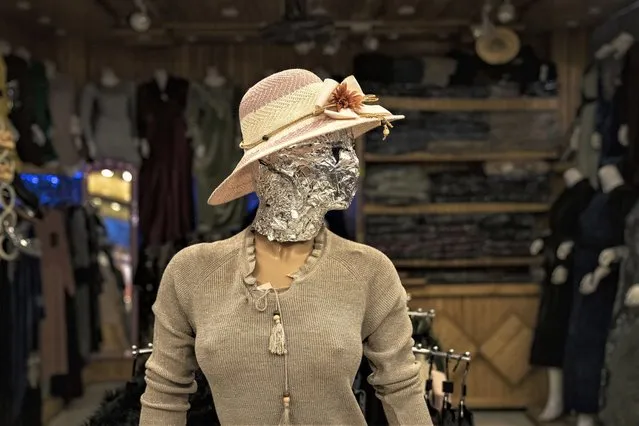
A mannequin's head is covered in a woman dress shop in Kabul, Afghanistan, Monday, December 26, 2022. Under the Taliban, the mannequins in women's dress shops across the Afghan capital Kabul are a haunting sight, their heads cloaked in cloth sacks or wrapped in black plastic bags. The hooded mannequins are one symbol of the Taliban's puritanical rule over Afghanistan. (Photo by Ebrahim Noroozi/AP Photo)

A mannequin's head is covered in a woman dress shop in Kabul, Afghanistan, Monday, December 26, 2022. Under the Taliban, the mannequins in women's dress shops across the Afghan capital Kabul are a haunting sight, their heads cloaked in cloth sacks or wrapped in black plastic bags. The hooded mannequins are one symbol of the Taliban's puritanical rule over Afghanistan. (Photo by Ebrahim Noroozi/AP Photo)
Details
09 Apr 2023 04:39:00
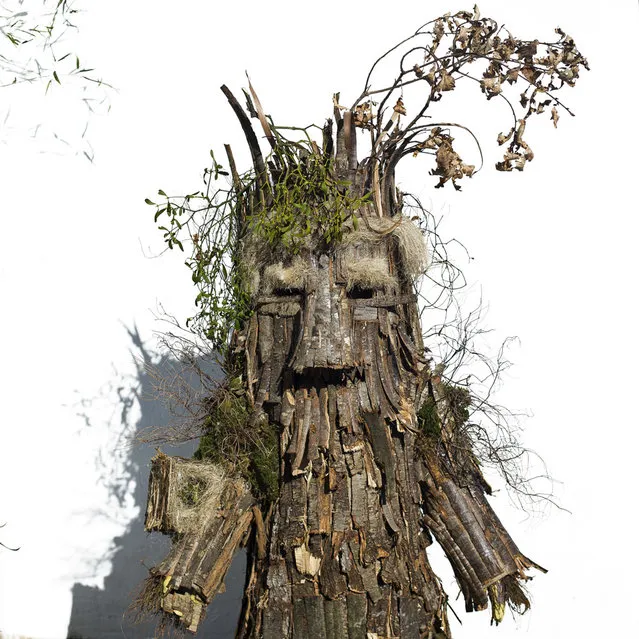
A man dressed as a  “Trapajon”, representing entities of nature, poses for a picture after taking part in the Vijanera Festival in Silio, northern Spain, Sunday, Jan. 6, 2013. The Vijanera masquerade, of pre-Roman origin, is the first carnival of the year in Europe symbolizing the triumph of good over evil and involving the participation of crowds of residents wearing different masks, animal skins and brightly colored clothing with its own complex function and symbolism and becoming the living example of the survival of archaic cults to nature. (Photo by Daniel Ochoa de Olza/AP Photo)

A man dressed as a “Trapajon”, representing entities of nature, poses for a picture after taking part in the Vijanera Festival in Silio, northern Spain, Sunday, Jan. 6, 2013. The Vijanera masquerade, of pre-Roman origin, is the first carnival of the year in Europe symbolizing the triumph of good over evil and involving the participation of crowds of residents wearing different masks, animal skins and brightly colored clothing with its own complex function and symbolism and becoming the living example of the survival of archaic cults to nature. (Photo by Daniel Ochoa de Olza/AP Photo)
Details
19 Jan 2013 13:01:00
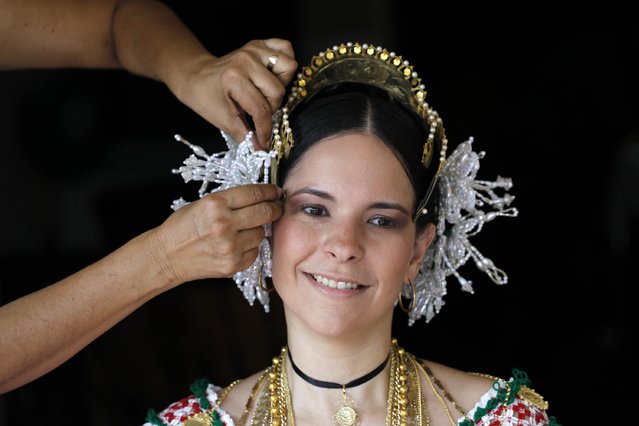
A woman is helped with adorning her hair with jewelry, part of the traditional clothing known as “Pollera”, before the annual Thousand Polleras parade in Las Tablas, in the province of Los Santos January 10, 2015. According to local residents, the Pollera dates back to the 18th century and was worn by the Spanish lower classes. (Photo by Carlos Jasso/Reuters)

A woman is helped with adorning her hair with jewelry, part of the traditional clothing known as “Pollera”, before the annual Thousand Polleras parade in Las Tablas, in the province of Los Santos January 10, 2015. According to local residents, the Pollera dates back to the 18th century and was worn by the Spanish lower classes. Today, it has become the Panamanian national costume. The dress is made entirely by hand and the jewellery worn is pure gold and worth thousands of dollars. (Photo by Carlos Jasso/Reuters)
Details
12 Jan 2015 15:46:00
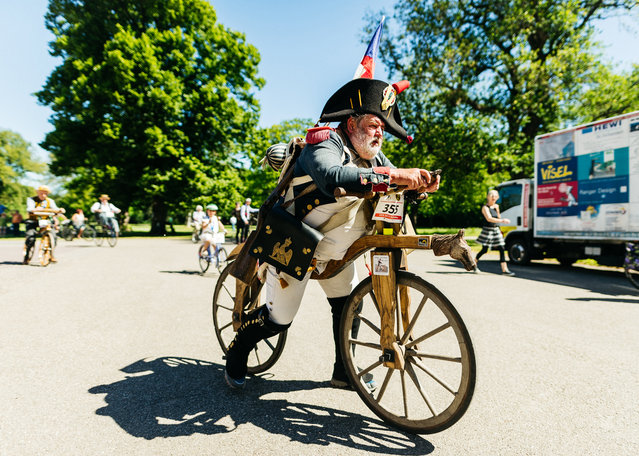
Participants dressed in historical clothing ride high-wheel bicycles during a bicycle ballet event at Schloss Karlsruhe palace during the 2017 International Veteran Cycle Association (IVCA) rally to celebrate the 200th anniversary of the bicycle on May 27, 2017 in Karlsruhe, Germany. (Photo by Alexander Scheuber/Getty Images)

Participants dressed in historical clothing ride high-wheel bicycles during a bicycle ballet event at Schloss Karlsruhe palace during the 2017 International Veteran Cycle Association (IVCA) rally to celebrate the 200th anniversary of the bicycle on May 27, 2017 in Karlsruhe, Germany. Karl Drais, a German inventor, built and tested the first bicycle, called the Draisine, that ran without pedals in 1817. (Photo by Alexander Scheuber/Getty Images)
Details
01 Jun 2017 10:04:00