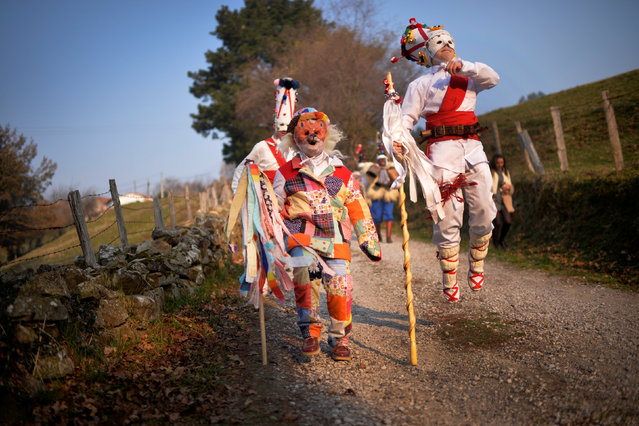
Dancers take part in “La Vijanera”, a winter masquerade at the beginning of carnival season in Europe, in Silio, northern Spain, January 8, 2017. (Photo by Vincent West/Reuters)
Members of a comparsa, a Uruguayan carnival group, dance during the Llamadas parade, a street fiesta with traditional Afro-Uruguayan roots in Montevideo February 9, 2017. (Photo by Andres Stapff/Reuters)
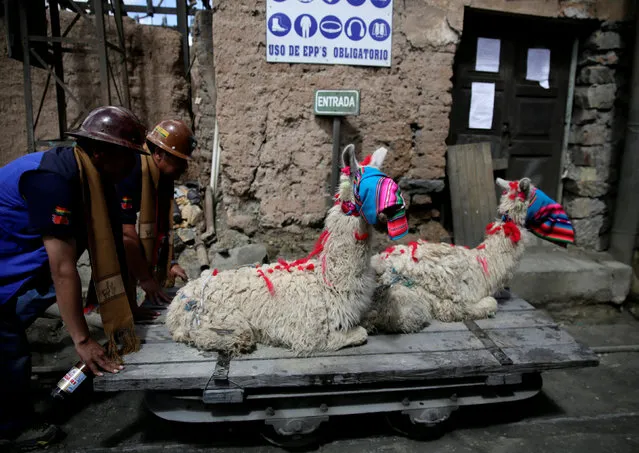
Independent miners transport llamas to sacrifice them for good fortune during the year as part of Andean carnival celebrations, outside the Mina Itos on the outskirts of Oruro, Bolivia February 24, 2017. (Photo by David Mercado/Reuters)
A reveller wearing a costume dances as she holds a dring during the carnival street parade in Valletta, Malta, February 25, 2017. (Photo by Darrin Zammit Lupi/Reuters)
Women wear the traditional costume of the Alto Tio Diego carnival during the Women's Afro-Mestizo Carnival of Alto Tio Diego on February 11, 2024 in Veracruz, Mexico. Alto Tio Diego is a small town near the State capital Xalapa where every year inhabitants celebrate their traditional carnival. Women of the town demanded a special day for them to parade and few years ago, they started to do it by walking through the streets wearing traditional costumes and masks (mostly of animals) but the attires have evolved to more modern characters. (Photo by Hector AD Quintanar/Getty Images)
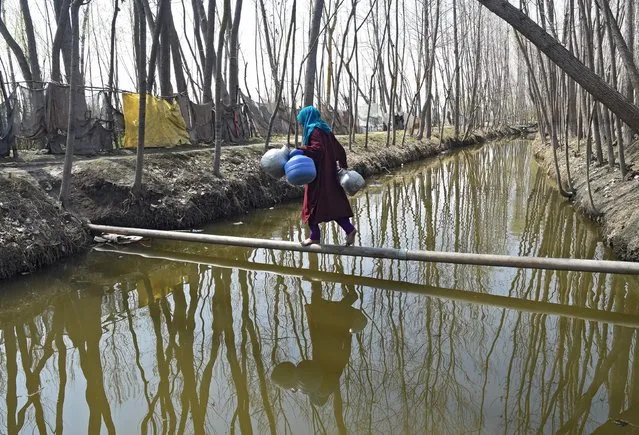
A Kashmiri Muslim woman balances on a water pipe before collecting water at Dasilpora village on March 22, 2018. World Water Day is held annually on 22 March as a means of focusing attention on the importance of freshwater and advocating for the sustainable management of freshwater resources. (Photo by Tauseef Mustafa/AFP Photo)
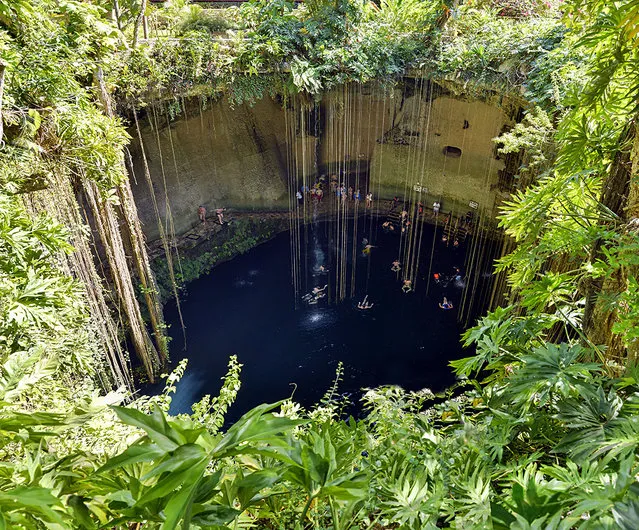
A cenote is a natural phenomenon, a sinkhole in the Earth’s surface. The Yucatan Peninsula in Mexico has an estimated 7,000 cenotes because it is primarily made up of porous limestone. For millions of years, rainfall slowly ate away at the limestone and a huge system of underground caves and caverns was formed. Many filled with water from rain or from the underground water table. When the roof of a water filled cave collapses, a cenote is born. The water found in a cenote may be fresh water, salt water, or both. Structurally it may be completely open, like a lake, almost completely closed with just a small opening at the top, or somewhere in between.
Natalia Lage Rainha de Drums of the Escola de Samba Inocente de Belford Roxo during a presentation in the parade of the Special Group of Carnival in Rio de Janeiro at Avenida Marques de Sapucai, Sambadrome in Rio de Janeiro on April 21, 2021. The Carnival parades that take place in February were postponed to this month of April due to the high number of cases caused during the pandemic caused by COVID-19 (Coronavirus). (Photo by Thiago Ribeiro/AGIF via AFP Photo)