Loading...
Done
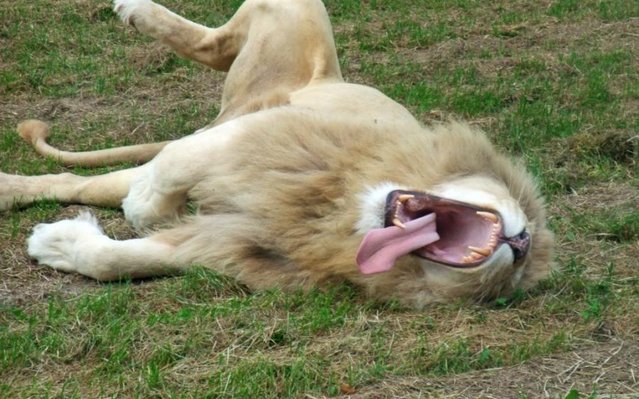
Animals Yawning

In animals, yawning can serve as a warning signal. For example, Charles Darwin, in his book The Expression of the Emotions in Man and Animals, mentioned that baboons yawn to threaten their enemies, possibly by displaying large canine teeth. Similarly, Siamese fighting fish yawn only when they see a conspecific (same species) or their own mirror-image, and their yawn often accompanies aggressive attack. Guinea pigs also yawn in a display of dominance or anger, displaying their impressive incisor teeth. This is often accompanied by teeth chattering, purring and scent marking.

Details
11 Aug 2012 09:12:00
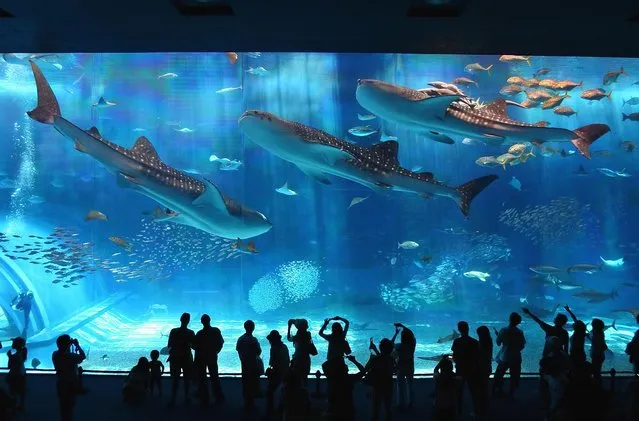
Okinawa Churaumi Aquarium

The aquarium is a part of the Ocean Expo Commemorative National Government Park located in Motobu, Okinawa. The aquarium is made up of four floors, with tanks containing deep sea creatures, sharks, coral and tropical fish. The aquarium is set on 19,000 m² of land, with a total of 77 tanks containing 10,000 m³ of water. Water for the saltwater exhibits is pumped into the aquarium from a source 350m offshore, 24 hours a day.
Details
21 Aug 2012 12:45:00
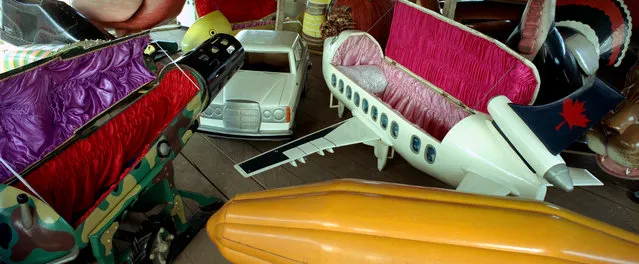
The Fantasy Coffins From Ghana

Some people joke about having clowns at their funeral, but how about having a coffin that looks like a gigantic cellphone? It is impossible to tell at the first glance that these colorful sculptures are actually coffins. The coffins were made by Kane Kwei and his assistant Paa Joe more than twenty years ago and have been a somewhat grim tourist attraction ever since. These coffins were probably made as an advertisement for the actual business, since it would hard to imagine someone actually ordering a coffin such as this.
Details
07 Apr 2015 10:40:00
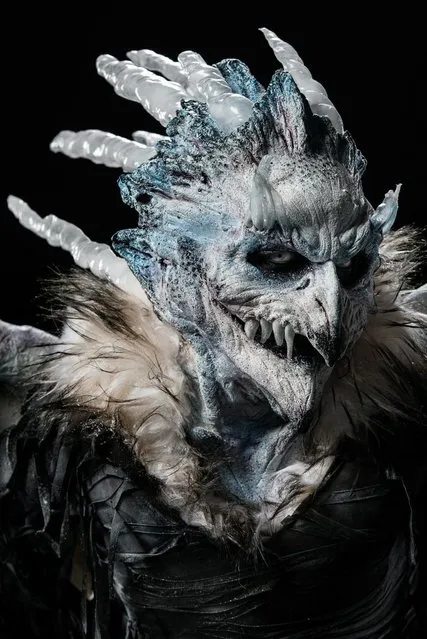
Face Off  Is An American Reality Television Show Part 1

Face Off is an American reality television game show on the Syfy cable network in which a group of prosthetic makeup artists compete against each other to create prostheses such as those found in science fiction and horror films.
Details
10 Sep 2014 14:26:00
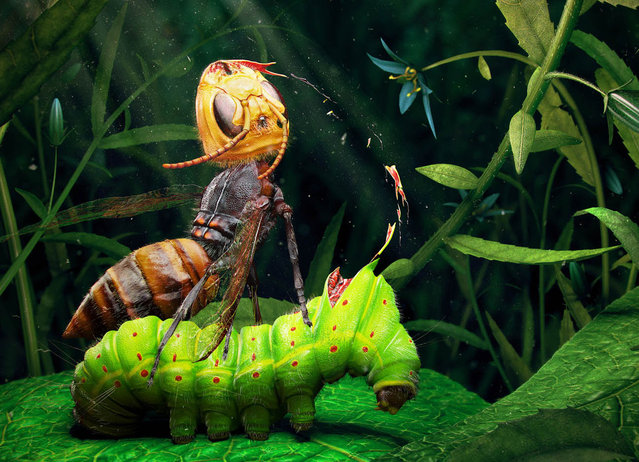
Deadly Insects Hornet

Hornets are insects that are the largest eusocial wasps. Some species can reach up to 5.5 cm (2.2 in) in length. The true hornets make up the genus Vespa and are distinguished from other vespines by the width of the vertex (part of the head behind the eyes), which is proportionally larger in Vespa and by the anteriorly rounded gasters (the section of the abdomen behind the wasp waist). The best known species is the European hornet (Vespa crabro), about 2–3.5 cm in length, widely distributed throughout Europe, Russia, North America and Northeast Asia.
Details
13 Oct 2014 10:17:00
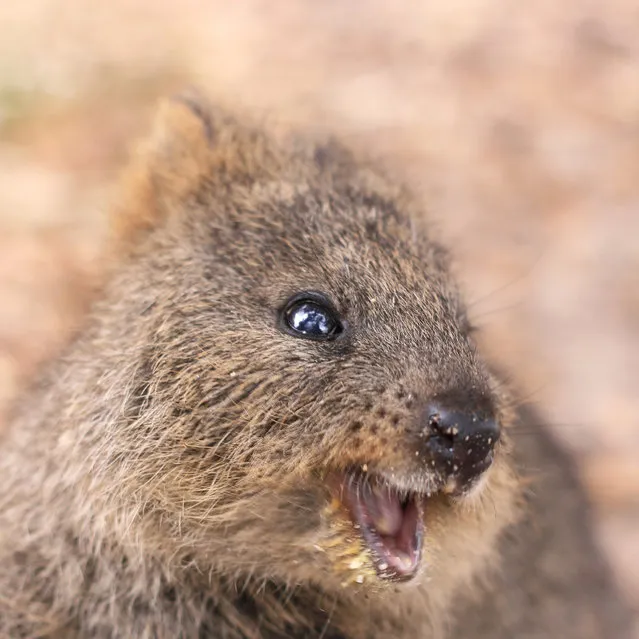
Quokka The Happiest Animal in the World

The quokka the only member of the genus Setonix, is a small macropod about the size of a domestic cat. Like other marsupials in the macropod family (such as the kangaroos and wallabies), the quokka is herbivorous and mainly nocturnal.
Details
14 Oct 2014 10:30:00
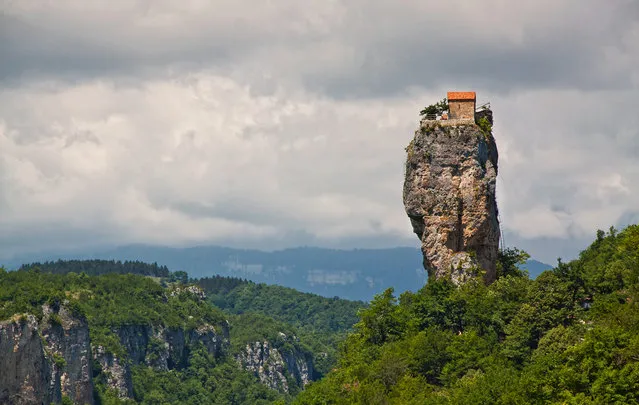
Katskhi Pillar In Georgia

The Katskhi pillar is a natural limestone monolith located at the village of Katskhi in western Georgian region of Imereti, near the town of Chiatura. It is approximately 40 metres (130 ft) high, and overlooks the small river valley of Katskhura, a right affluent of the Q'virila.
Details
13 Jun 2014 12:01:00
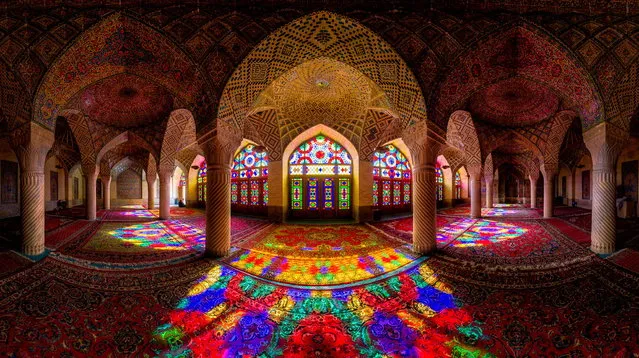
The Nasir Al-Mulk Mosque

The Nasīr al-Mulk Mosque or Pink Mosque is a traditional mosque in Shiraz, Iran, located in Goade-e-Araban place (near the famous Shah Cheragh mosque). The mosque was built during the Qājār era, and is still in use under protection by Nasir al Mulk's Endowment Foundation. It was built by the order of Mirza Hasan Ali Nasir al Molk, one of the lords of the Qajar Dynasty, in 1876 and was finished in 1888. The designers were Muhammad Hasan-e-Memar and Muhammad Reza Kashi Paz-e-Shirazi. The mosque extensively uses colored glass in its facade, and displays other traditional elements such as panj kāseh-i (five concaves) in its design, it is also named in popular culture as Pink Mosque due to the usage of beautiful pink color tiles for its interior design.
Details
26 Mar 2014 14:04:00