Loading...
Done
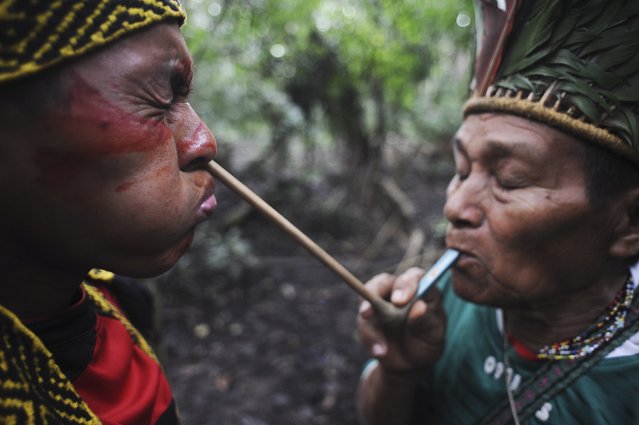
A spiritual leader (R) of the Huni Kui Indian tribe blows an herbal powder into the nose of a tribal member during a ceremony outside the village of Novo Segredo along the Envira river of Brazil's northwestern Acre state, March 9, 2014. (Photo by Lunae Parracho/Reuters)

A spiritual leader (R) of the Huni Kui Indian tribe blows an herbal powder into the nose of a tribal member during a ceremony outside the village of Novo Segredo along the Envira river of Brazil's northwestern Acre state, March 9, 2014. Many indigenous groups, including the Huni Kui, Ashaninka, and Madija, live in villages in the Brazilian rainforest near the border with Peru. (Photo by Lunae Parracho/Reuters)
Details
04 Apr 2014 08:18:00
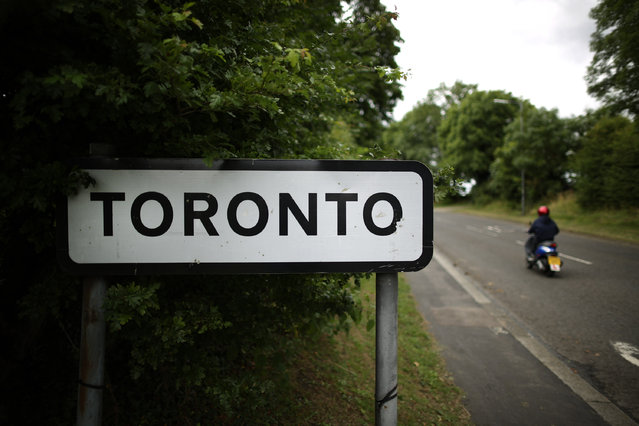
A road sign points the way on August 6, 2013 in Toronto, England. Originally called Newton Cap in the county of Durham, built for workers at the nearby colliery,  owner Henry Stobart re-named the village Toronto after visiting Canada. (Photo by Peter Macdiarmid/Getty Images)

A handful of villages in the U.K. share the same name as cities or countries from around the world, and they’re spending life in the shadows of their more famous namesakes. Photo: A road sign points the way on August 6, 2013 in Toronto, England. Originally called Newton Cap in the county of Durham, built for workers at the nearby colliery, owner Henry Stobart re-named the village Toronto after visiting Canada. (Photo by Peter Macdiarmid/Getty Images)
Details
29 Aug 2014 11:51:00
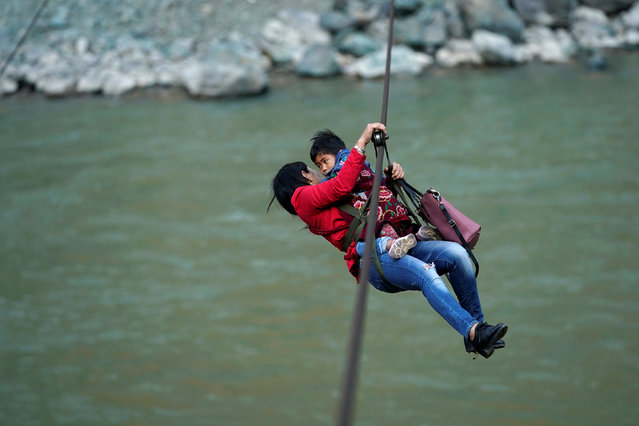
Cha Huilan, a 40-year old Lisu woman, and her daughter leave Lazimi village with a zipline across the Nu River in Nujiang Lisu Autonomous Prefecture in Yunnan province, China, March 24, 2018. (Photo by Aly Song/Reuters)

Cha Huilan, a 40-year old Lisu woman, and her daughter leave Lazimi village with a zipline across the Nu River in Nujiang Lisu Autonomous Prefecture in Yunnan province, China, March 24, 2018. Chinese mountain villagers, cut off from shops and churches by a raging river, use a zipline to cross its violent rapids and jagged rocks. (Photo by Aly Song/Reuters)
Details
28 May 2018 00:05:00
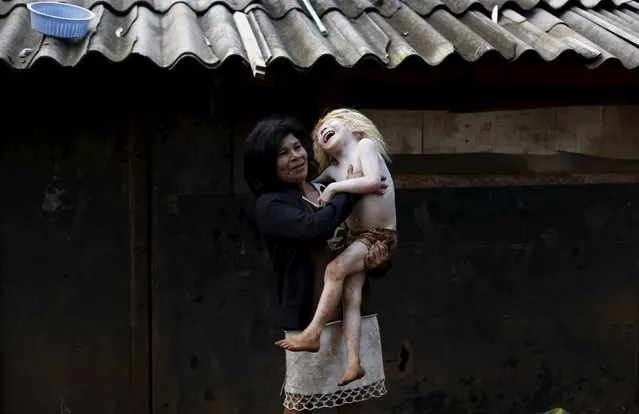
A Guarani Indian woman jokes with her son in the village of Pyau at Jaragua district, in Sao Paulo April 27, 2015. The National Indian Foundation (FUNAI) has recognised 521 hectares of this area as indigenous territory, making it the smallest indigenous reserve in Brazil. Members of the Guarani community have now established a new village outside the demarcation and are being threatened with an eviction through a court order. (Photo by Nacho Doce/Reuters)

A Guarani Indian woman jokes with her son in the village of Pyau at Jaragua district, in Sao Paulo April 27, 2015. The National Indian Foundation (FUNAI) has recognised 521 hectares of this area as indigenous territory, making it the smallest indigenous reserve in Brazil. Members of the Guarani community have now established a new village outside the demarcation and are being threatened with an eviction through a court order. (Photo by Nacho Doce/Reuters)
Details
01 May 2015 12:42:00
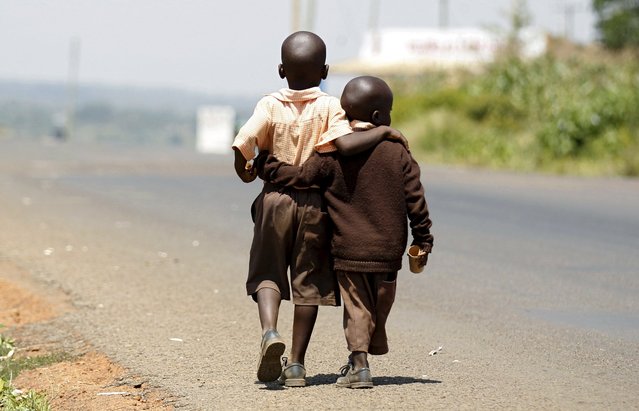
Boys walk home for lunch from school in the village of Kogelo, west of Kenya's capital Nairobi, July 16, 2015. (Photo by Thomas Mukoya/Reuters)

Boys walk home for lunch from school in the village of Kogelo, west of Kenya's capital Nairobi, July 16, 2015. U.S. President Barack Obama visits Kenya and Ethiopia later this month. His ancestral home of Kogelo is home to Sarah Hussein Obama, his step-grandmother. The Kenyan village, burial place of Obama's father, features an open-pit goldmine, a pork butcher's, a school named after their most famous son and outdoor market stalls. Villagers get around by motorbike taxi or on foot while a donkey-cart transports water. Children, some of them named Obama in honour of the President, walk to and from school together. (Photo by Thomas Mukoya/Reuters)
Details
24 Jul 2015 11:46:00
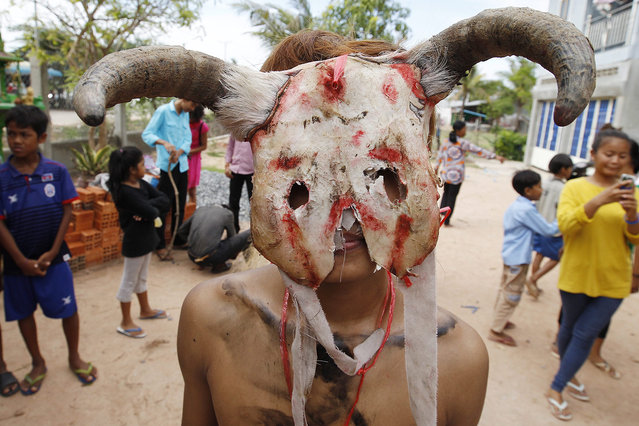
A Cambodian resident wearing a mask attends a ceremony at Pring Ka-Ek village on the outskirts of Phnom Penh, Cambodia, 09 June 2016. Villagers organized a ceremony to continue their local traditions by paying respect to the Neakta Pring Ka-Ek (Spirit house) to prevent them from diseases and to achieve abundant rice harvests and other agricultural yields. (Photo by Mak Remissa/EPA)

A Cambodian resident wearing a mask attends a ceremony at Pring Ka-Ek village on the outskirts of Phnom Penh, Cambodia, 09 June 2016. Villagers organized a ceremony to continue their local traditions by paying respect to the Neakta Pring Ka-Ek (Spirit house) to prevent them from diseases and to achieve abundant rice harvests and other agricultural yields. (Photo by Mak Remissa/EPA)
Details
11 Jun 2016 12:23:00
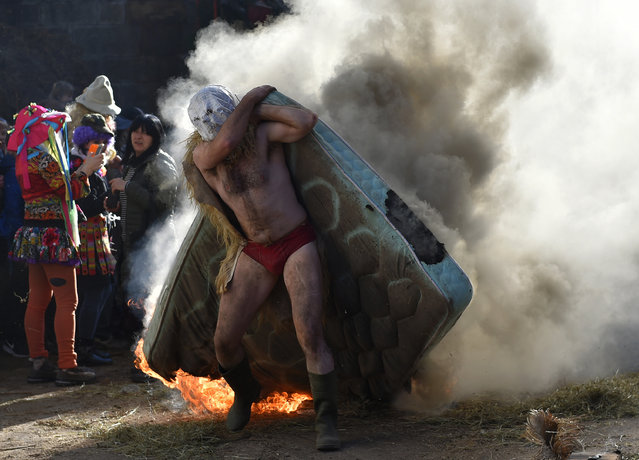
A masked participant carries a burning matress during the ancient carnival of Zubieta, in the northern Spanish Navarra province on January 30, 2018. The yearly three day festivities, revolving mainly around agriculture and principally sheep hearding, run on the last Sunday, Monday and Tuesday of January where Navarra Valley locals from two villages dress up and participate in a variety of activites as they perform a pilgrimage through each village. (Photo by Ander Gillenea/AFP Photo)

A masked participant carries a burning matress during the ancient carnival of Zubieta, in the northern Spanish Navarra province on January 30, 2018. The yearly three day festivities, revolving mainly around agriculture and principally sheep hearding, run on the last Sunday, Monday and Tuesday of January where Navarra Valley locals from two villages dress up and participate in a variety of activites as they perform a pilgrimage through each village. (Photo by Ander Gillenea/AFP Photo)
Details
01 Feb 2018 08:52:00
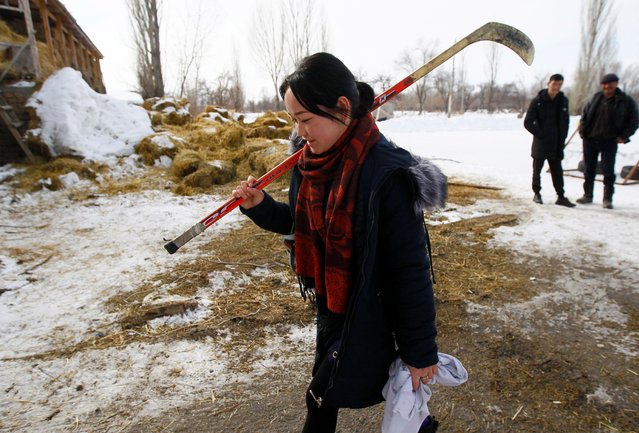
A member of Kyrgyzstan's first female hockey team arrives for a training session in the village of Otradnoye, Kyrgyzstan on February 4, 2020. Based in the remote village of Otradnoe, 249 miles (400 kilometres) east of the country's capital Bishkek, the team comprises of around 15 girls from a local school and uses a flooded allotment to train on during the winter months. (Photo by Vladimir Pirogov/Reuters)

A member of Kyrgyzstan's first female hockey team arrives for a training session in the village of Otradnoye, Kyrgyzstan on February 4, 2020. Based in the remote village of Otradnoe, 249 miles (400 kilometres) east of the country's capital Bishkek, the team comprises of around 15 girls from a local school and uses a flooded allotment to train on during the winter months. (Photo by Vladimir Pirogov/Reuters)
Details
12 Feb 2020 00:01:00