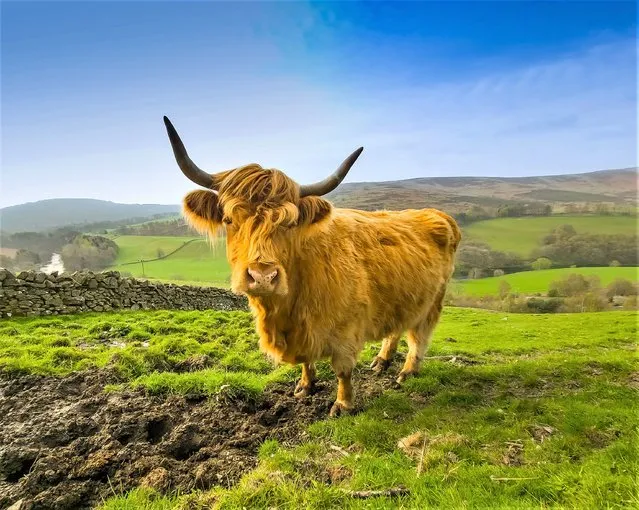
A highland cow grazing high above the River Tweed at Thormylee in the Scottish Borders strikes a formidable pose in the morning light on May 3, 2023. (Photo by Phil Wilkinson/The Times)
Waiters pose at their terrace of their restaurant rue de Buci in Paris on June 2, 2020, as cafes and restaurants reopen in France, while the country eases lockdown measures taken to curb the spread of the COVID-19 (the novel coronavirus). (Photo by Martin Bureau/AFP Photo)
Snow and ice adorn trees in Ovacık district, Turkey on February 20, 2020. The country has been experiencing heavy snowfall this month. (Photo by Sidar Can Eren/Anadolu Agency via Getty Images)
A child dressed in a Santa Claus costume reacts, on the day Palestinian Christians attend an Orthodox Christmas Mass at the Greek Orthodox Saint Porphyrius Church, amid the ongoing conflict between Israel and Hamas, in Gaza City on January 7, 2025. (Photo by Dawoud Abu Alkas/Reuters)
A wildfire on the Scottish island in the first decade of April 2025. Fire services are calling on people to act responsibly after an “extreme” wildfire warning was issued for the whole of Scotland. (Photo by Police Scotland/PA Wire)
Superstar Taylor Swift revealed the album cover and artwork for her highly anticipated 12th studio album, “The Life of a Showgirl”, on Wednesday, August 13, 2025. (Photo by Mert Alas & Marcus Piggott)
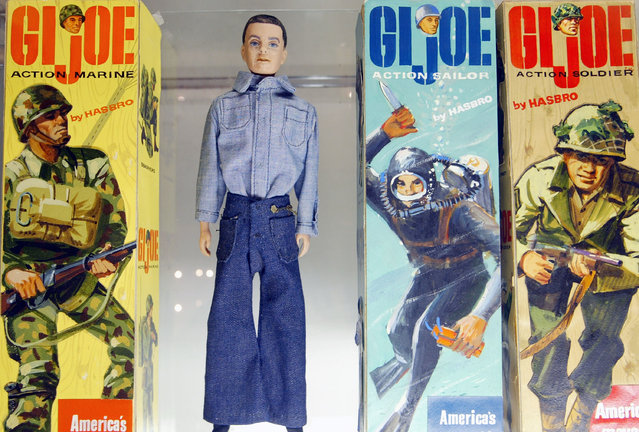
“G.I. Joe is a line of action figures produced by the toy company Hasbro. The term G.I. stands, in popular usage, for Government Issued and after the First World War became a generic term for U.S. soldiers. The origin of the term dates to World War I, when much of the equipment issued to U.S. soldiers was stamped “G.I.”, meaning that it was made from galvanized iron. The development of G.I. Joe led to the coining of the term “action figure”. G.I. Joe's appeal to children has made it an American icon among toys”. – Wikipedia. Photo: Vintage G.I. Joe figurers are on display at the 2003 Hasbro International G.I. Joe Collectors' Convention June 27, 2003 in Burlingame, California. (Photo by Justin Sullivan/Getty Images)
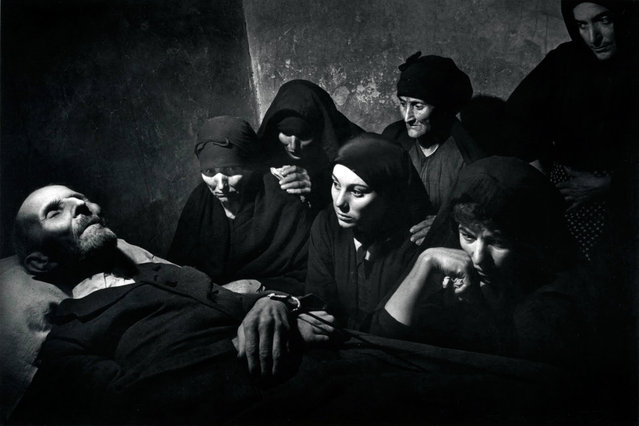
“Originally published in the April 9, 1951, issue of LIFE magazine, W. Eugene Smith’s photo essay, «Spanish Village», has been lauded for more than six decades as the most moving photographic portrait ever made of daily life in rural Spain during the rule of dictator Francisco Franco”. – Time & Life Pictures. Photo: His wife, daughter, granddaughter and friends have their last earthly visit with a villager. (Photo by W. Eugene Smith/Time & Life Pictures)