Loading...
Done
In this Friday, August 9, 2019, file photo, Pakistan Rangers soldiers face Indian Border Security Force soldiers at a daily closing ceremony on the Indian side of the Attari-Wagah border. India's recent clampdown has a long history in Kashmir and the conflict has existed since the late 1940s, when India and Pakistan won independence from the British empire and began fighting over rival claims to the Muslim-majority territory. India and Pakistan have fought two of their three subsequent wars over Kashmir, and each administers a portion of the region. India has long seen the Kashmiri struggle for self-determination as Islamabad's proxy war against New Delhi. (Photo by Prabhjot Gill/AP Photo/File)

In this Friday, August 9, 2019, file photo, Pakistan Rangers soldiers face Indian Border Security Force soldiers at a daily closing ceremony on the Indian side of the Attari-Wagah border. India's recent clampdown has a long history in Kashmir and the conflict has existed since the late 1940s, when India and Pakistan won independence from the British empire and began fighting over rival claims to the Muslim-majority territory. India and Pakistan have fought two of their three subsequent wars over Kashmir, and each administers a portion of the region. India has long seen the Kashmiri struggle for self-determination as Islamabad's proxy war against New Delhi. (Photo by Prabhjot Gill/AP Photo/File)
Details
02 Oct 2019 00:01:00
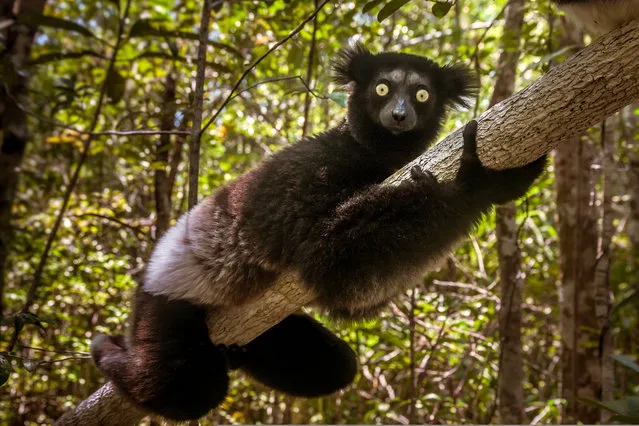
The secretive indri (Indri indri) of Madagascar, the largest living lemur. It is also critically endangered and highly evolutionarily distinct with no close relatives, which makes its branch one of most precarious on the mammal evolutionary tree. In the likely event that the indri goes extinct, we will lose 19m years of unique evolutionary history from the mammal tree of life. (Photo by Pierre-Yves Babelon/Aarhus University)

The secretive indri (Indri indri) of Madagascar, the largest living lemur. It is also critically endangered and highly evolutionarily distinct with no close relatives, which makes its branch one of most precarious on the mammal evolutionary tree. In the likely event that the indri goes extinct, we will lose 19m years of unique evolutionary history from the mammal tree of life. (Photo by Pierre-Yves Babelon/Aarhus University)
Details
18 Nov 2018 00:02:00
A girl cools off from the heat in water from an open fire hydrant in the Washington Heights section of upper Manhattan in New York City, New York, U.S., July 19, 2019. (Photo by Mike Segar/Reuters)

A girl cools off from the heat in water from an open fire hydrant in the Washington Heights section of upper Manhattan in New York City, New York, U.S., July 19, 2019. (Photo by Mike Segar/Reuters)
Details
27 Jul 2019 00:03:00
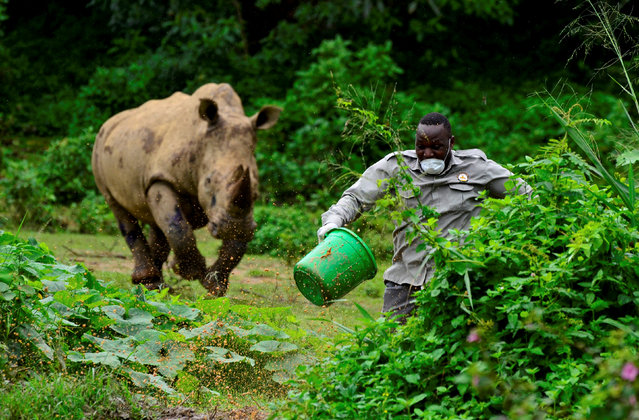
Steven Busulwa, an animal keeper, runs away from a charging rhino at the Uganda Wildlife Conservation Education Center (UWEC) amid the lockdown as part of the measures taken to prevent the spread of the coronavirus disease (COVID-19), within Wakiso district, in Entebbe, Uganda on April 20, 2020. (Photo by Abubaker Lubowa/Reuters)

Steven Busulwa, an animal keeper, runs away from a charging rhino at the Uganda Wildlife Conservation Education Center (UWEC) amid the lockdown as part of the measures taken to prevent the spread of the coronavirus disease (COVID-19), within Wakiso district, in Entebbe, Uganda on April 20, 2020. (Photo by Abubaker Lubowa/Reuters)
Details
08 May 2020 00:05:00
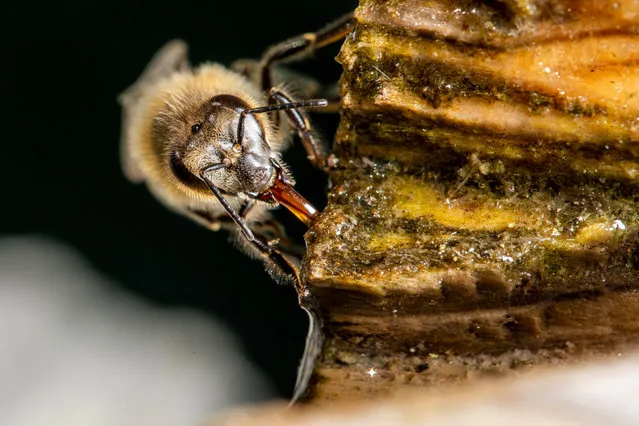
A Western honey bee feeds off acacia pollen at an apiary in Nagyszenas, eastern Hungary, 25 April 2020. The preparation of the bees for the acacia bloom began two weeks later than usual this year; due to the late frosts, this season's yield of Hungaricum acacia honey is expected to be lower. (Photo by Tibor Rosta/EPA/EFE)

A Western honey bee feeds off acacia pollen at an apiary in Nagyszenas, eastern Hungary, 25 April 2020. The preparation of the bees for the acacia bloom began two weeks later than usual this year; due to the late frosts, this season's yield of Hungaricum acacia honey is expected to be lower. (Photo by Tibor Rosta/EPA/EFE)
Details
08 Jan 2023 06:19:00
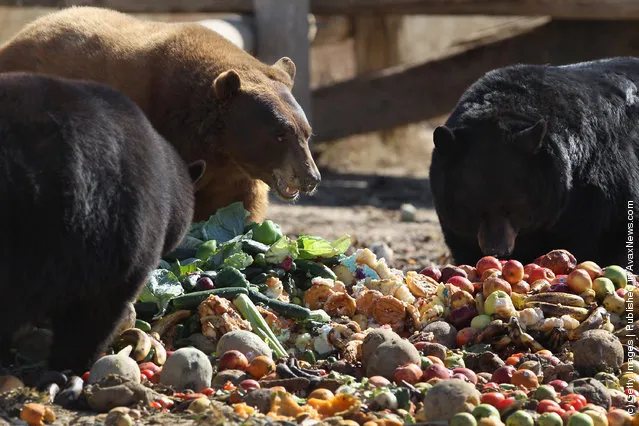
Rescued brown and black bears feed at The Wild Animal Sanctuary

“The Wild Animal Sanctuary is a U.S. organization that specializes in rescuing and caring for large predators which are being ill-treated, for which their owners can no longer care, or which might otherwise be euthanized. Created in 1980, The Wild Animal Sanctuary is situated on 720 acres (291 ha) of grassland near Keenesburg, Colorado North of Denver, and has helped over 1,000 animals since it first opened. As of 2010, it was home to over 290 animals”. – Wikipedia

Photo: Rescued brown and black bears feed at The Wild Animal Sanctuary on October 20, 2011 in Keenesburg, Colorado. (Photo by John Moore/Getty Images)
Details
27 Feb 2012 11:59:00
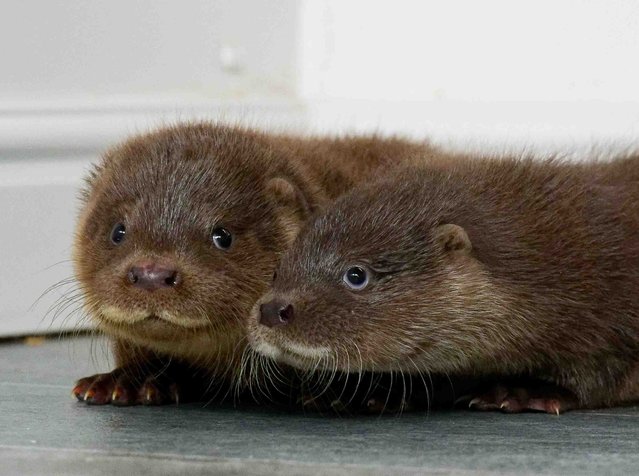
A rescued otter cub named Mingo is receiving specialist care after being found in July 2025 in the flamingo habitat at Colchester Zoo, far from where he should have been. He is being raised with two other cubs at the UK Wild Otter Trust’s centre in Devon, UK. (Photo by UK Wild Otter Trust/Cover Images)

A rescued otter cub named Mingo is receiving specialist care after being found in July 2025 in the flamingo habitat at Colchester Zoo, far from where he should have been. He is being raised with two other cubs at the UK Wild Otter Trust’s centre in Devon, UK. (Photo by UK Wild Otter Trust/Cover Images)
Details
10 Aug 2025 03:45:00
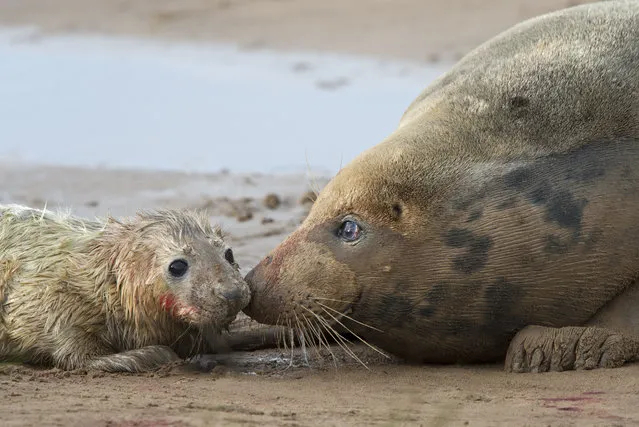
A newborn grey seal pup is tended by its mother at Donna Nook, a nature reserve on the county’s coastline managed by Lincolnshire Wildlife Trust in Lincolnshire, UK on November 23, 2015. (Photo by David Tipling/Rex Shutterstock)

A newborn grey seal pup is tended by its mother at Donna Nook, a nature reserve on the county’s coastline managed by Lincolnshire Wildlife Trust in Lincolnshire, UK on November 23, 2015. (Photo by David Tipling/Rex Shutterstock)
Details
30 Nov 2015 08:02:00