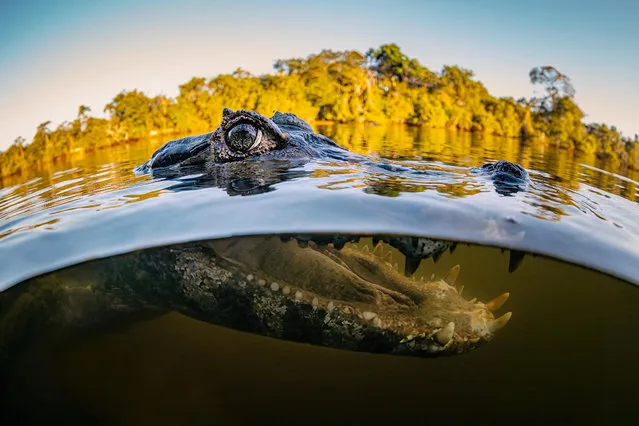
A caiman in the Pantanal region of Brazil in 2021. They are used to seeing humans, allowing the photographer, Leighton Lum, a close-up shot. (Photo by Leighton Lum/Caters News Agency)
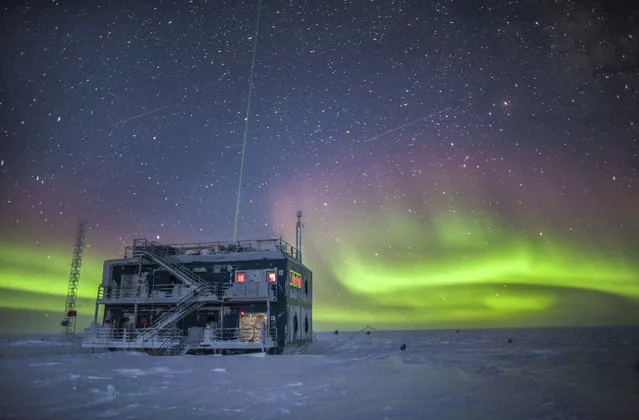
This undated photo provided by NOAA in May 2018 shows aurora australis near the South Pole Atmospheric Research Observatory in Antarctica. When a hole in the ozone formed over Antarctica, countries around the world in 1987 agreed to phase out several types of ozone-depleting chemicals called chlorofluorocarbons (CFCs). Production was banned, emissions fell and the hole shriveled. But according to a study released on Wednesday, May 16, 2018, scientists say since 2013, there’s more of a banned CFC going into the atmosphere. (Photo by Patrick Cullis/NOAA via AP Photo)
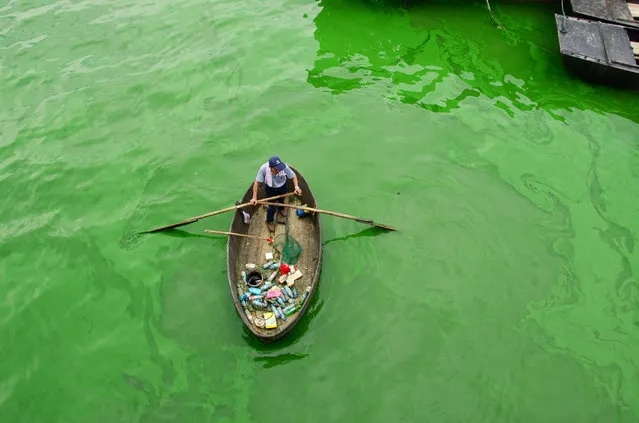
A fisherman boats in Chao Lake where thick cyanobacteria gather on the surface on August 5, 2015 in Chaohu, Anhui Province of China. As high temperature came in summar, part of water in Anhui Province's Chao Lake breeds large tracts of cyanobacteria which not only brought pollution to sense of smell, but also affected people's life. (Photo by ChinaFotoPress/ChinaFotoPress via Getty Images)
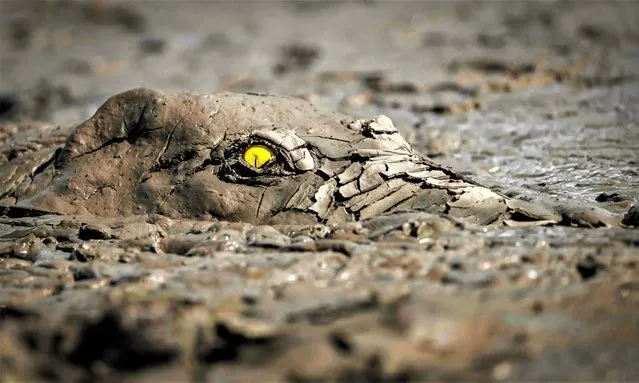
“Danger in the mud” – a crocodile at Mana Pools National Park, Zimbabwe. The grand prize winner. (Photo by Jens Cullmann/World Nature Photography Awards 2022)
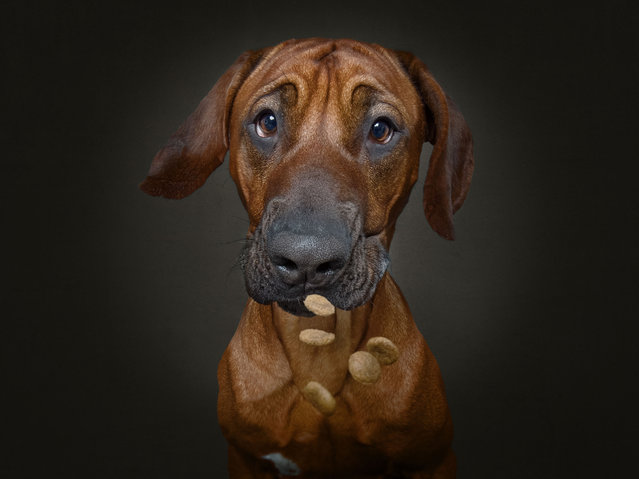
This unique collection of photographs shows the concentrated faces of dogs just before catching their beloved treats. Professional photographer Christian Vieler, from Germany, shot the latest series of his “Dogs Catching Treats in Trouble” collection with hilarious results. Here: Hudson the Rhodesian Ridgeback. (Photo by Christian Vieler/Caters News Agency)
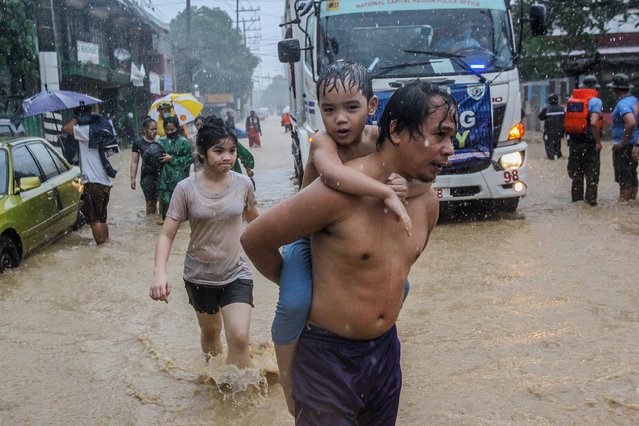
Residents wade through the flood brought by typhoon Vamco in Manila, the Philippines, on November 12, 2020. Typhoon Vamco, the third powerful cyclone to batter the Philippines in 11 days, made landfall on Wednesday night, unleashed fierce winds and intense rains that triggered landslide, rockslide and flash floods. (Photo by Rouelle Umali/Xinhua News Agency)