Loading...
Done
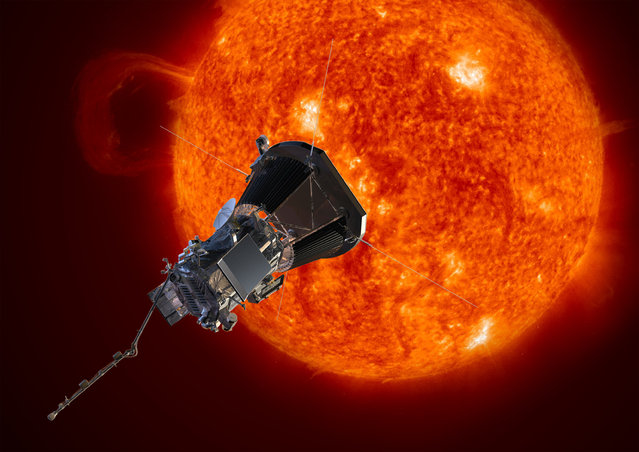
This image made available by the Johns Hopkins University Applied Physics Laboratory on Wednesday, May 31, 2017 depicts NASA's Solar Probe Plus spacecraft approaching the sun. On Wednesday, NASA announced it will launch the probe in summer 2018 to explore the solar atmosphere. It will be subjected to brutal heat and radiation like no other man-made structure before. (Photo by Johns Hopkins University Applied Physics Laboratory via AP Photo)

This image made available by the Johns Hopkins University Applied Physics Laboratory on Wednesday, May 31, 2017 depicts NASA's Solar Probe Plus spacecraft approaching the sun. On Wednesday, NASA announced it will launch the probe in summer 2018 to explore the solar atmosphere. It will be subjected to brutal heat and radiation like no other man-made structure before. (Photo by Johns Hopkins University Applied Physics Laboratory via AP Photo)
Details
08 Sep 2017 09:42:00
A child reacts as a family takes a break next to a cooling mist at the Sensoji temple as Japanese government issued heat stroke alerts in 39 of the country's 47 prefectures in Tokyo, Japan on July 22, 2024. (Photo by Issei Kato/Reuters)

A child reacts as a family takes a break next to a cooling mist at the Sensoji temple as Japanese government issued heat stroke alerts in 39 of the country's 47 prefectures in Tokyo, Japan on July 22, 2024. (Photo by Issei Kato/Reuters)
Details
29 Jul 2024 03:37:00
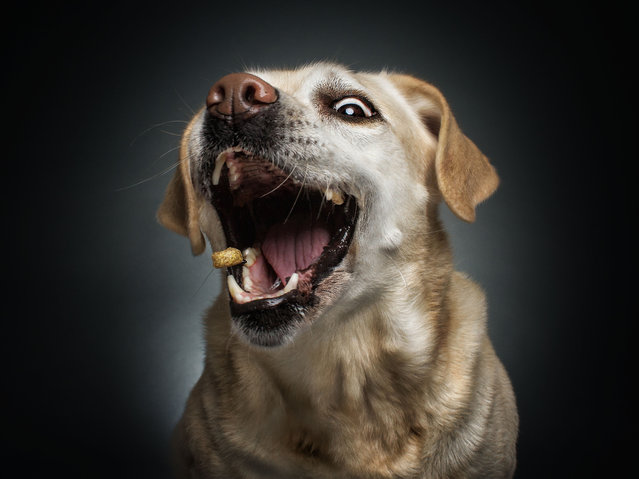
A photographer has created a series of paw-traits of hungry dogs pulling hilarious faces as they try and catch treats. Using a unique technique, the shots are captured at the exact moment the adorable pooches attempt to catch an airborne piece of food. The dogs appear surprised, happy, sad, confused – and sometimes even so blasé they miss the treat entirely. The images were taken by Christian Vieler, a photographer from Waltrop, Germany. Here: A labrador retriever. (Photo by Christian Vieler/Caters News)

A photographer has created a series of paw-traits of hungry dogs pulling hilarious faces as they try and catch treats. Using a unique technique, the shots are captured at the exact moment the adorable pooches attempt to catch an airborne piece of food. The dogs appear surprised, happy, sad, confused – and sometimes even so blasé they miss the treat entirely. The images were taken by Christian Vieler, a photographer from Waltrop, Germany. Here: A labrador retriever. (Photo by Christian Vieler/Caters News)
Details
20 Dec 2015 08:02:00
Details
11 May 2012 03:39:00
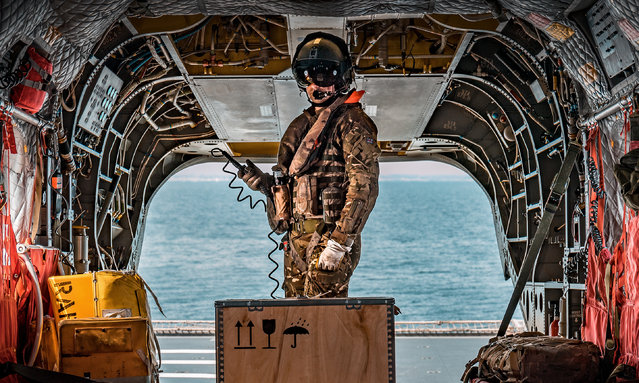
“This Way Up”. Photographic section portfolio, first prize. A Chinook CH-47 weapon systems operator prepares his aircraft during a training exercise in June 2018. (Photo bu SAC Ed Wright/RAF)

“This Way Up”. Photographic section portfolio, first prize. A Chinook CH-47 weapon systems operator prepares his aircraft during a training exercise in June 2018. (Photo bu SAC Ed Wright/RAF)
Details
31 Aug 2018 00:01:00
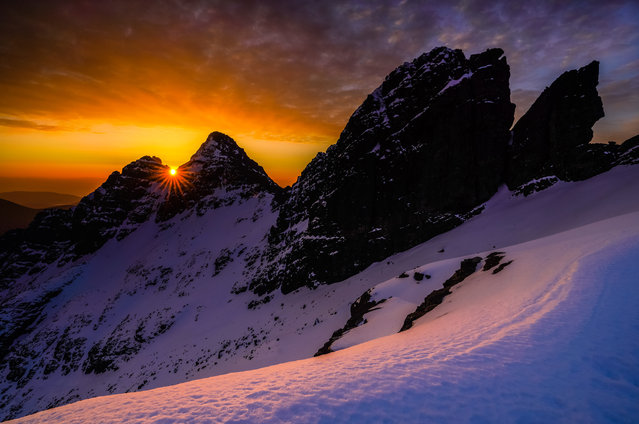
The sun rises between Sgurr nan Gillean and Knight’s Peak, Black Cuillin, Isle of Skye. (Photo by Adrian Trendall/Mountain Photo of the Year)

The sun rises between Sgurr nan Gillean and Knight’s Peak, Black Cuillin, Isle of Skye. (Photo by Adrian Trendall/Mountain Photo of the Year)
Details
13 Jan 2023 02:09:00
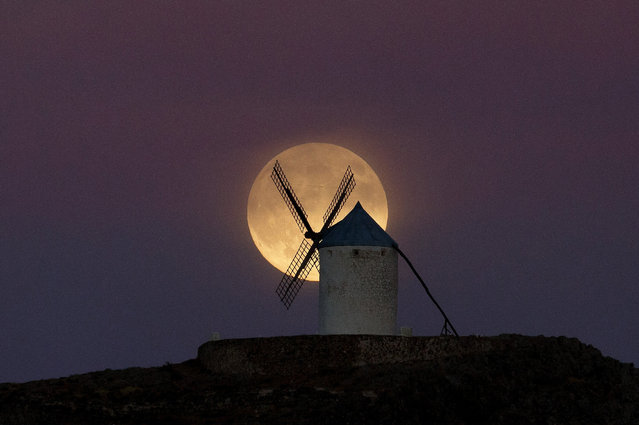
A moon appears behind a windmill a day before the supermoon is full on September 8, 2014 in Consuegra, in Toledo province, Spain. Consuegra belongs to a region made famous by the novel “Don Quijote de la Mancha” (Don Quixote) writed by Miguel De Cervantes. Some of the windmills belong to the 16th century. (Photo by Pablo Blazquez Dominguez/Getty Images)

A moon appears behind a windmill a day before the supermoon is full on September 8, 2014 in Consuegra, in Toledo province, Spain. Consuegra belongs to a region made famous by the novel “Don Quijote de la Mancha” (Don Quixote) writed by Miguel De Cervantes. Some of the windmills belong to the 16th century. (Photo by Pablo Blazquez Dominguez/Getty Images)
Details
10 Sep 2014 12:06:00
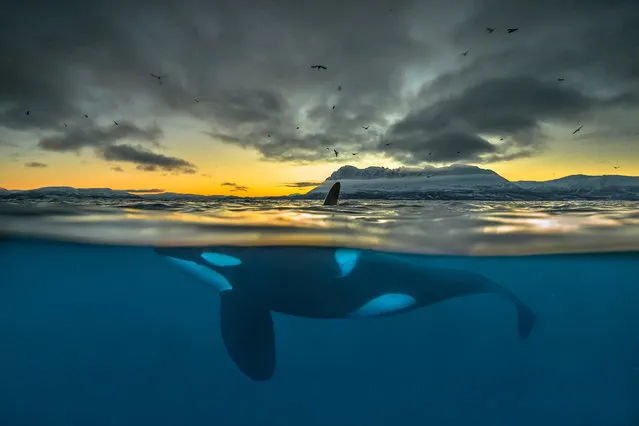
Split-view of a killer whale at sunrise off the coast of Northern Norway. At least half of the world’s killer whale populations are doomed to extinction due to pollution of the oceans, a new study says. (Photo by Audun Rikardsen/Science)

Split-view of a killer whale at sunrise off the coast of Northern Norway. At least half of the world’s killer whale populations are doomed to extinction due to pollution of the oceans, a new study says. (Photo by Audun Rikardsen/Science)
Details
16 Dec 2018 00:03:00