Loading...
Done
Women wearing traditional hats, known as a non la, sell fruits in Hoi An, Vietnam April 4, 2016. (Photo by Jorge Silva/Reuters)

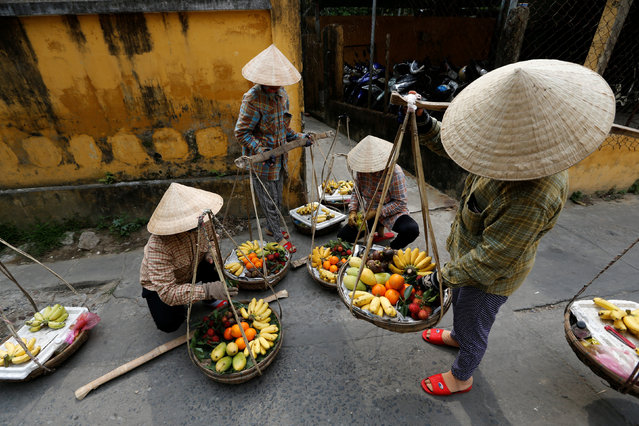
Women wearing traditional hats, known as a non la, sell fruits in Hoi An, Vietnam April 4, 2016. The non la hats are made of readily available materials such as palm leaves, tree bark and bamboo and are visible everywhere in the city, a UNESCO World Heritage site. Hoi An's history as a busy trading port is evident throughout its architecture, a mix of eras and styles, with traditional wooden Vietnamese houses, Chinese temples and French colonial buildings. (Photo by Jorge Silva/Reuters)
Details
11 May 2016 11:32:00
A reveller dressed as Spider-Man takes part in a presentation at the top of a building during an annual block party known as “Enquanto isso na Sala da Justiça” (Meanwhile, in the justice room), one of the many carnival parties taking place in the neighbourhood of Olinda, Brazil February 7, 2016. (Photo by Ueslei Marcelino/Reuters)

A reveller dressed as Spider-Man takes part in a presentation at the top of a building during an annual block party known as “Enquanto isso na Sala da Justiça” (Meanwhile, in the justice room), one of the many carnival parties taking place in the neighbourhood of Olinda, Brazil February 7, 2016. (Photo by Ueslei Marcelino/Reuters)
Details
08 Feb 2016 11:25:00
Libyan forces allied with the U.N.-backed government fire weapons during a battle with IS fighters in Sirte, Libya, July 21, 2016. (Photo by Goran Tomasevic/Reuters)

Libyan forces allied with the U.N.-backed government fire weapons during a battle with IS fighters in Sirte, Libya, July 21, 2016. (Photo by Goran Tomasevic/Reuters)
Details
22 Jul 2016 12:19:00
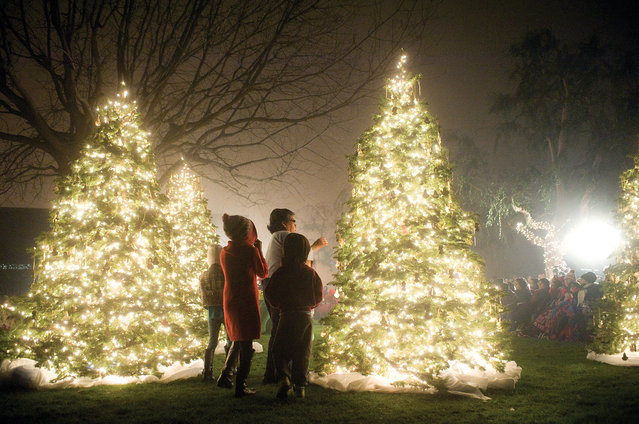
Community members look for the nameplates of their loved ones Tuesday, December 9, 2014 at Myers Funeral Service and Crematory in Porterville, Calif. during the 20th year of the memorial tree lighting. (Photo by Chieko Hara/AP Photo/The Porterville Recorder)

Community members look for the nameplates of their loved ones Tuesday, December 9, 2014 at Myers Funeral Service and Crematory in Porterville, Calif. during the 20th year of the memorial tree lighting. (Photo by Chieko Hara/AP Photo/The Porterville Recorder)
Details
22 Dec 2014 12:00:00
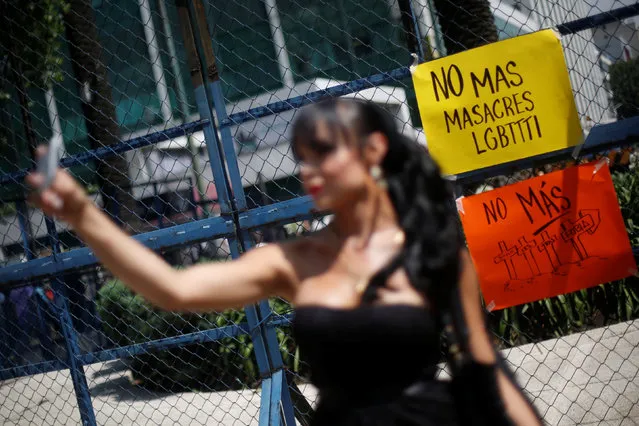
A sign that reads “No more massacres LGBT” is seen to remember the victims of the Pulse nightclub mass shooting in Orlando, near the U.S. Embassy in Mexico City, Mexico, June 14, 2016. (Photo by Edgard Garrido/Reuters)

A sign that reads “No more massacres LGBT” is seen to remember the victims of the Pulse nightclub mass shooting in Orlando, near the U.S. Embassy in Mexico City, Mexico, June 14, 2016. (Photo by Edgard Garrido/Reuters)
Details
16 Jun 2016 08:25:00
A girl walks an Akita-inu dog dressed in a military uniform in Vladivostok, Russia on April 9, 2019. (Photo by Yuri Smityuk/TASS)

A girl walks an Akita-inu dog dressed in a military uniform in Vladivostok, Russia on April 9, 2019. (Photo by Yuri Smityuk/TASS)
Details
30 Dec 2019 00:05:00
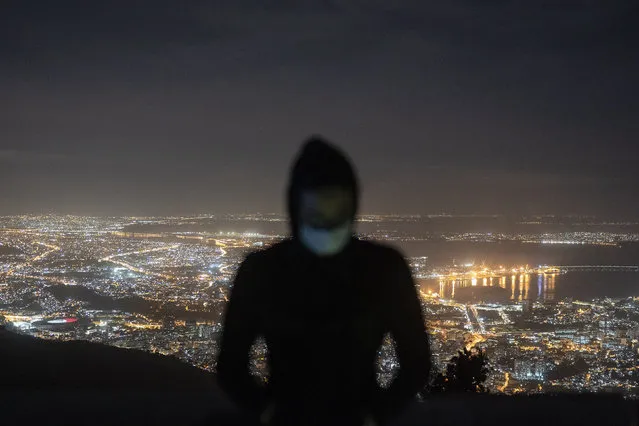
Wearing a protective mask to curb the spread of the new coronavirus a man attends a memorial for those who have died from COVID-19 worldwide, at Rio's Christ the Redeemer statue in Rio de Janeiro, Brazil, Wednesday, July 1, 2020. (Photo by Leo Correa/AP Photo)

Wearing a protective mask to curb the spread of the new coronavirus a man attends a memorial for those who have died from COVID-19 worldwide, at Rio's Christ the Redeemer statue in Rio de Janeiro, Brazil, Wednesday, July 1, 2020. (Photo by Leo Correa/AP Photo)
Details
04 Jul 2020 00:07:00
For her series “Japanese Whispers”, Belgian photographer Zaza Bertrand headed inside the intimate world of rabuhos – Japanese love hotels. Love hotels became popular in Japan from the 1960s onwards, due to a lack of privacy in many family homes. There are now around 37,000 of these hotels in Japan, allowing short daytime “rests” or overnight stays. (Photo by Zaza Bertrand/The Guardian)

For her series “Japanese Whispers”, Belgian photographer Zaza Bertrand headed inside the intimate world of rabuhos – Japanese love hotels. Love hotels became popular in Japan from the 1960s onwards, due to a lack of privacy in many family homes. There are now around 37,000 of these hotels in Japan, allowing short daytime “rests” or overnight stays. (Photo by Zaza Bertrand/The Guardian)
Details
02 Dec 2016 11:30:00