Loading...
Done
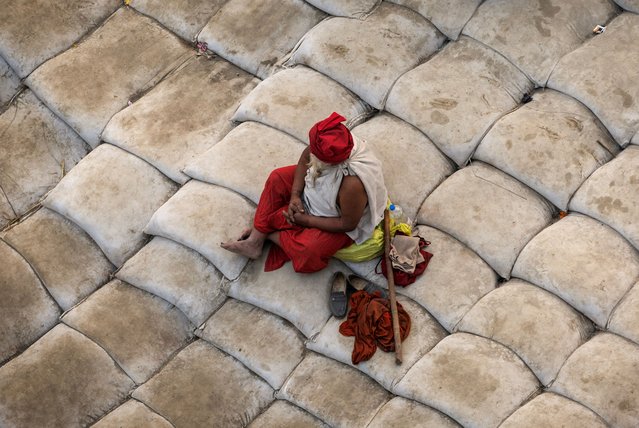
A Sadhu or a Hindu holy man sits on the banks before taking a holy dip at Sangam, the confluence of the Ganges and Yamuna rivers with the mythical, invisible Saraswati river, during the “Maha Kumbh Mela”, or the Great Pitcher Festival, in Prayagraj, India, on January 13, 2025. (Photo by Adnan Abidi/Reuters)

A Sadhu or a Hindu holy man sits on the banks before taking a holy dip at Sangam, the confluence of the Ganges and Yamuna rivers with the mythical, invisible Saraswati river, during the “Maha Kumbh Mela”, or the Great Pitcher Festival, in Prayagraj, India, on January 13, 2025. (Photo by Adnan Abidi/Reuters)
Details
10 Feb 2025 04:54:00
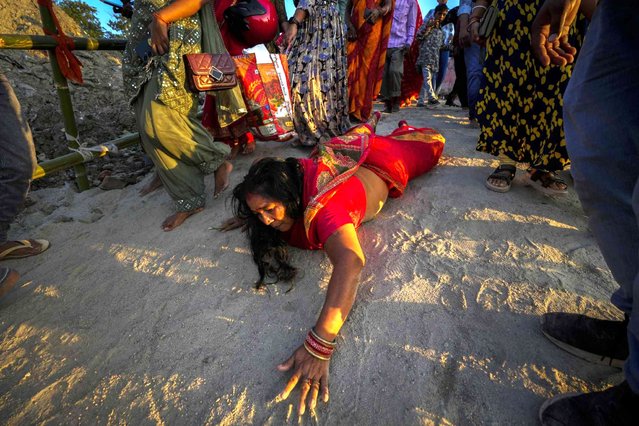
A Hindu devotee moves toward the river Brahmaputra in a prostrate manner to perform rituals during Chhath Puja festival in Guwahati, in the northeastern Indian state of Assam, India, Thursday, November 7, 2024. (Photo by Anupam Nath/AP Photo)

A Hindu devotee moves toward the river Brahmaputra in a prostrate manner to perform rituals during Chhath Puja festival in Guwahati, in the northeastern Indian state of Assam, India, Thursday, November 7, 2024. (Photo by Anupam Nath/AP Photo)
Details
03 Dec 2024 06:08:00
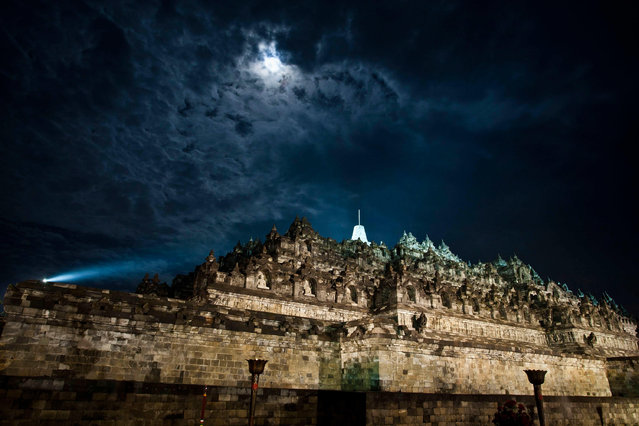
The Borobudur temple seen illuminated during Vesak Day, commonly known as “Buddha's birthday”, at the Borobudur Mahayana Buddhist monument on May 6, 2012 in Magelang, Indonesia. (Photo by Ulet Ifansasti/Getty Images)

The Borobudur temple seen illuminated during Vesak Day, commonly known as “Buddha's birthday”, at the Borobudur Mahayana Buddhist monument on May 6, 2012 in Magelang, Indonesia. Buddhists in Indonesia celebrate Vesak at the Borobudur temple annually, which makes it the most visited tourist attraction in Indonesia. Vesak is observed during the full moon in May or June and the ceremony centers around three Buddhist temples, whereby pilgrims walk from Mendut to Pawon, ending at Borobudur. The stages of life of Buddhism's founder, Gautama Buddha, which are celebrated at Vesak are his birth, enlightenment to Nirvana, and his passing. (Photo by Ulet Ifansasti/Getty Images)
Details
15 May 2014 08:37:00
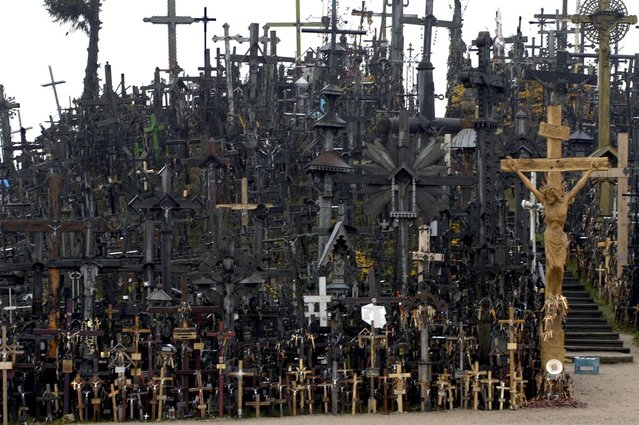
In 1831 an unsuccessful uprising against the Russian czar left many rebels dead. Relatives of the dead rebels, with no bodies to bury, instead left crosses, according to the Daily Mail. (Photo by Richard Gardner/Rex USA)

The phenomenon of the Hill of Crosses in northern Lithuania began when people started leaving crosses there hundreds of years ago – and continues to this day. These photos of a hill covered in crosses show the amazing sight it has become. Photo: In 1831 an unsuccessful uprising against the Russian czar left many rebels dead. Relatives of the dead rebels, with no bodies to bury, instead left crosses, according to the Daily Mail. (Photo by Richard Gardner/Rex USA)
Details
06 Jun 2013 09:56:00
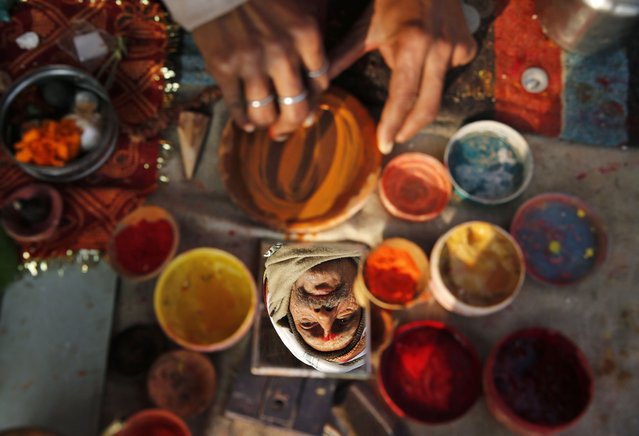
A Hindu holy man is reflected on a mirror as he prepares a bowl of vermillion powder for devotees near “Sangam”, the confluence of holy rivers of Ganges, Yamuna and the mythical Saraswati, during the annual traditional fair of Magh Mela in Allahabad, in the northern Indian state of Uttar Pradesh, India, Tuesday, January 6, 2015. (Photo by Rajesh Kumar Singh/AP Photo)

A Hindu holy man is reflected on a mirror as he prepares a bowl of vermillion powder for devotees near “Sangam”, the confluence of holy rivers of Ganges, Yamuna and the mythical Saraswati, during the annual traditional fair of Magh Mela in Allahabad, in the northern Indian state of Uttar Pradesh, India, Tuesday, January 6, 2015. Hundreds of thousands of devout Hindus are expected to take holy dips at the confluence during the astronomically auspicious period of over 45 days celebrated as Magh Mela. (Photo by Rajesh Kumar Singh/AP Photo)
Details
07 Jan 2015 13:41:00
An Indian artist gives the finishing touches to a figure of the elephant-headed Hindu god Ganesha at a workshop ahead of the Ganesh Chaturthi festival in New Delhi on September 15, 2015. (Photo by Sajjad Hussain/AFP Photo)

An Indian artist gives the finishing touches to a figure of the elephant-headed Hindu god Ganesha at a workshop ahead of the Ganesh Chaturthi festival in New Delhi on September 15, 2015. The idol is meant for the forthcoming festival Ganesha Chaturthi, a ten-day long event which is celebrated all over India. During the Ganpati festival, that is celebrated as the birthday of Lord Ganesha, idols of the Hindu deity are worshipped at hundreds of pandals or makeshift tents before they are immersed into water bodies. This year, the festival starts on 17 September 2015. (Photo by Sajjad Hussain/AFP Photo)
Details
17 Sep 2015 10:38:00
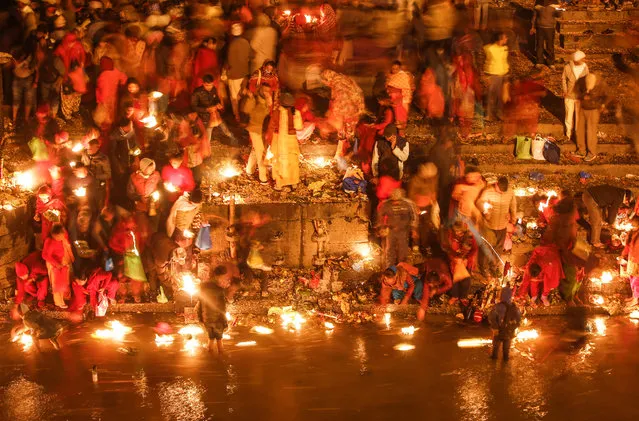
Nepalese Hindu devotees offer oil lamps in the Bagmati River as they observe the festival of Bala Chaturdashi in the early morning hours at the Pashupati Temple in Kathmandu, Nepal, 28 November 2016. Seven kinds of seeds – paddy, barley, sesame, wheat, gram, maize and finger millet – are sown around the temple premises in the name of loved ones departed during the last three years, in the belief that the departed souls will receive salvation. (Photo by Narendra Shrestha)

Nepalese Hindu devotees offer oil lamps in the Bagmati River as they observe the festival of Bala Chaturdashi in the early morning hours at the Pashupati Temple in Kathmandu, Nepal, 28 November 2016. Seven kinds of seeds – paddy, barley, sesame, wheat, gram, maize and finger millet – are sown around the temple premises in the name of loved ones departed during the last three years, in the belief that the departed souls will receive salvation. (Photo by Narendra Shrestha)
Details
05 Dec 2016 11:28:00
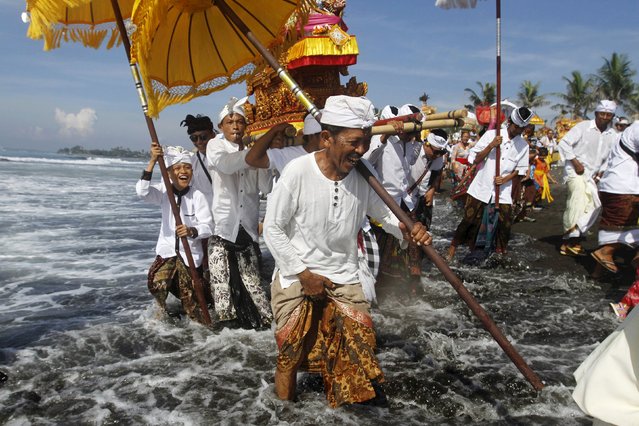
Balinese Hindus carry Pratimas, or symbols of God, on the beach during Melasti, a purification ceremony, ahead of the holy day of Nyepi, in Gianyar on the Indonesian resort island of Bali, March 6, 2016. Nyepi is a day of silence to celebrate the Balinese new year, reserved for self-reflection, where people are not allowed to use lights, light fires, work, travel or enjoy entertainment. (Photo by Roni Bintang/Reuters)

Balinese Hindus carry Pratimas, or symbols of God, on the beach during Melasti, a purification ceremony, ahead of the holy day of Nyepi, in Gianyar on the Indonesian resort island of Bali, March 6, 2016. Nyepi is a day of silence to celebrate the Balinese new year, reserved for self-reflection, where people are not allowed to use lights, light fires, work, travel or enjoy entertainment. (Photo by Roni Bintang/Reuters)
Details
07 Mar 2016 11:19:00