Loading...
Done
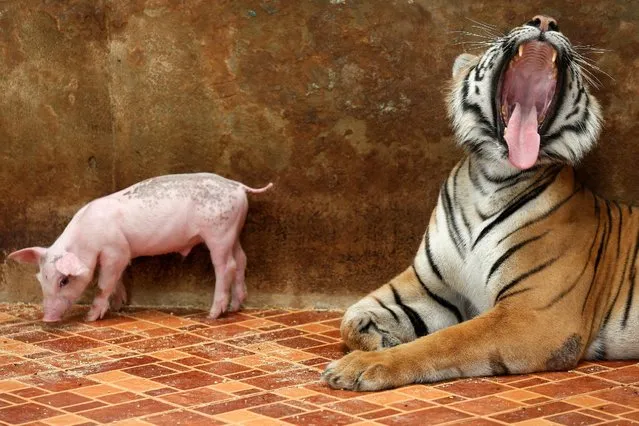
A tiger yawns next to a piglet at the Sriracha Tiger Zoo, in Chonburi province, Thailand, June 7, 2016. (Photo by Chaiwat Subprasom/Reuters)

A tiger yawns next to a piglet at the Sriracha Tiger Zoo, in Chonburi province, Thailand, June 7, 2016. (Photo by Chaiwat Subprasom/Reuters)
Details
10 Jun 2016 13:36:00
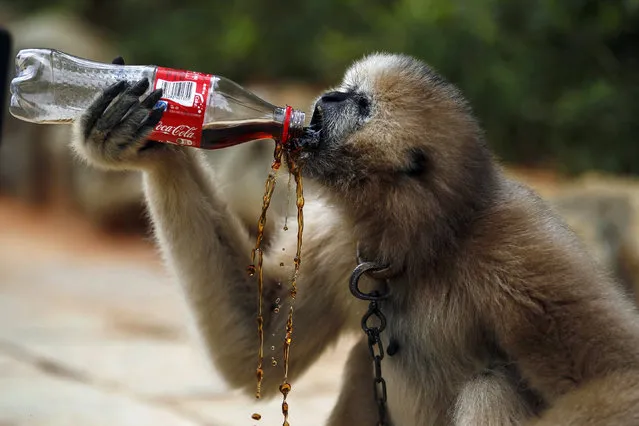
A gibbon drinks from a soft drink bottle, given by a tourist, at a zoo in Kunming, Yunnan province, June 18, 2015. (Photo by Wong Campion/Reuters)

A gibbon drinks from a soft drink bottle, given by a tourist, at a zoo in Kunming, Yunnan province, June 18, 2015. (Photo by Wong Campion/Reuters)
Details
30 Jun 2015 11:48:00
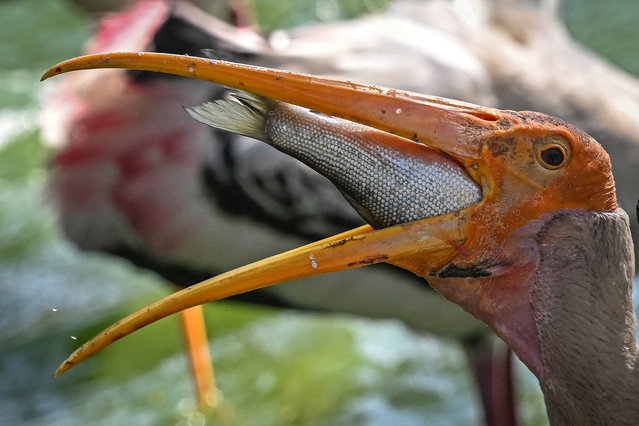
A painted stork eats a fish as it is pictured in the Delhi Zoo in New Delhi on December 5, 2024. (Photo by Sajjad Hussain/AFP Photo)

A painted stork eats a fish as it is pictured in the Delhi Zoo in New Delhi on December 5, 2024. (Photo by Sajjad Hussain/AFP Photo)
Details
15 Dec 2024 02:32:00
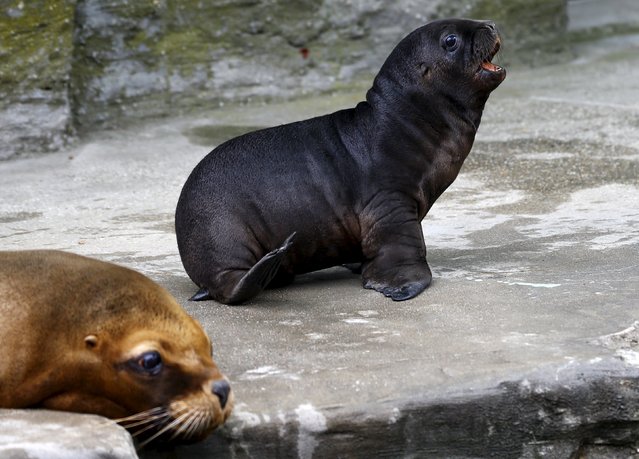
A ten days old South American sea lion pup sits next to its mother Lunita at the “Tiergarten Schoenbrunn” Zoo in Vienna, Austria, July 28, 2015. (Photo by Leonhard Foeger/Reuters)

A ten days old South American sea lion pup sits next to its mother Lunita at the “Tiergarten Schoenbrunn” Zoo in Vienna, Austria, July 28, 2015. The pup was born in the zoo and weighs about 14 kilograms (30 pounds). (Photo by Leonhard Foeger/Reuters)
Details
29 Jul 2015 10:54:00


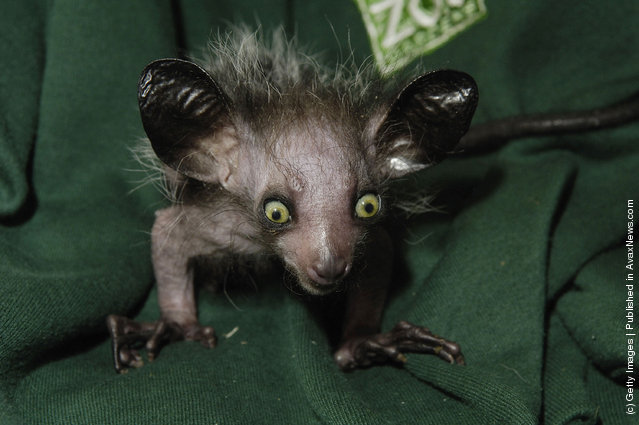
“The aye-aye (Daubentonia madagascariensis) is a lemur, a strepsirrhine primate native to Madagascar that combines rodent-like teeth and a special thin middle finger to fill the same ecological niche as a woodpecker. It is the world's largest nocturnal primate, and is characterized by its unusual method of finding food; it taps on trees to find grubs, then gnaws holes in the wood and inserts its narrow middle finger to pull the grubs out. The only other animal species known to find food in this way is the striped possum. From an ecological point of view the aye-aye fills the niche of a woodpecker as it is capable of penetrating wood to extract the invertebrates within”. – Wikipedia

Photo: In this handout image from Bristol Zoo is seen the first captive bred aye-aye in the UK named “Kintana” (meaning star in Malagasy) April 15, 2005 at Bristol Zoo Gardens, England. The zoo announced today only the second baby aye-aye to be hand-reared in the world (the first was in Jersey Zoo) and has now made his first public appearance since his birth on 11 February 2005. (Photo by Rob Cousins/Bristol Zoo via Getty Images)
Details
13 Apr 2011 13:33:00
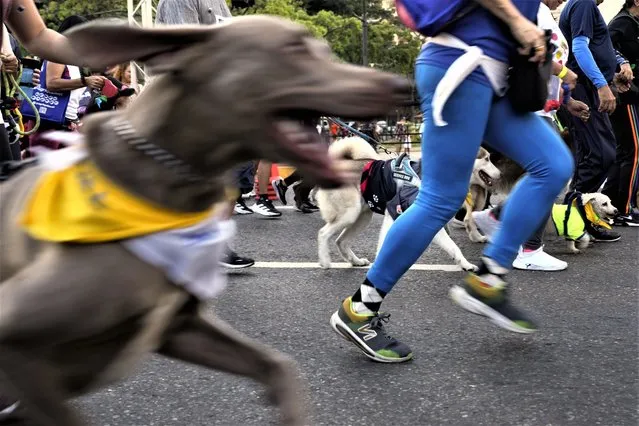
Dogs and owners run during of 4k pet run “A Race with a Cause”, organized to raise funds for a shelter for rescued dogs in Caracas, Venezuela, Sunday, April 30, 2023. (Photo by Ariana Cubillos/AP Photo)

Dogs and owners run during of 4k pet run “A Race with a Cause”, organized to raise funds for a shelter for rescued dogs in Caracas, Venezuela, Sunday, April 30, 202. (Photo by Ariana Cubillos/AP Photo)
Details
04 Jul 2023 02:08:00
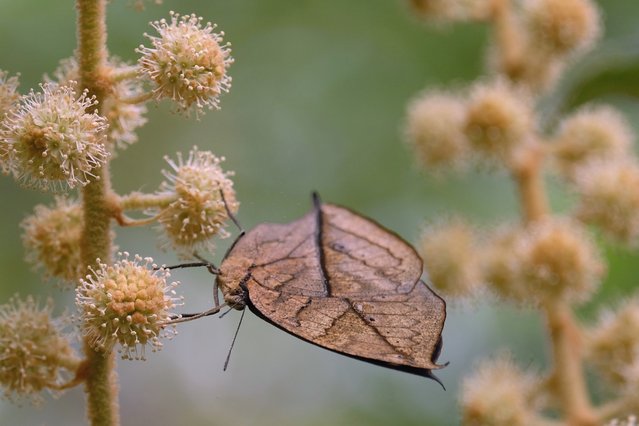
An orange oakleaf rests on a plant at the Taipei Zoo on November 26, 2020. (Photo by Sam Yeh/AFP Photo)

An orange oakleaf rests on a plant at the Taipei Zoo on November 26, 2020. (Photo by Sam Yeh/AFP Photo)
Details
10 Sep 2022 04:08:00
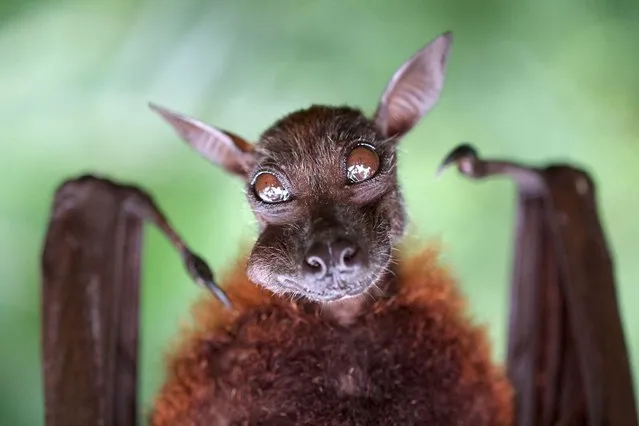
This bat gives a cheeky smile as he gobbles down his food at Singapore Zoo, on September 10, 2013. (Photo by Benny Iskander/HotSpot Media)

This bat gives a cheeky smile as he gobbles down his food at Singapore Zoo, on September 10, 2013. (Photo by Benny Iskander/HotSpot Media)
Details
14 Sep 2013 11:57:00