A screen grab from a police body camera video shows the pilot of a plane that crashed on railway tracks being rescued by Los Angeles Police Department officers moments before a train hit the aircraft in Los Angeles, California, U.S. January 9, 2022. (Photo by LAPD/Handout via Reuters)
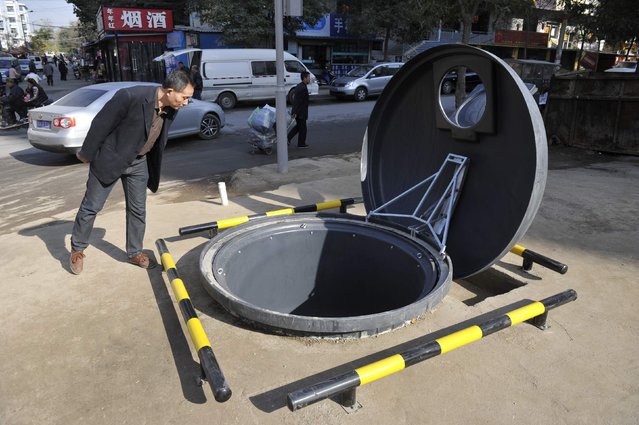
A resident looks into a newly-built giant trash can, partially buried underground, next to a street in Taiyuan, Shanxi province November 6, 2014. The trash can, which has a diameter of 1.9 meters and a depth of 2.8 meters, could contain approximately 10 cubic metres of garbage. It was built to replace an open-air garbage dump site, local media reported. (Photo by Reuters/Stringer)
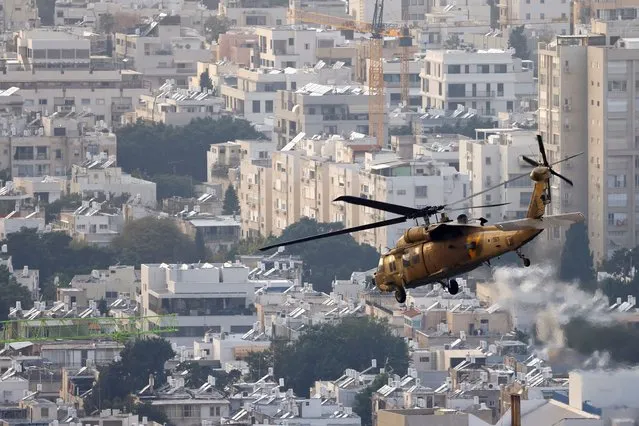
A military helicopter flies over Tel Aviv after lifting off from the Tel Aviv Sourasky Medical Center (Ichilov), amid the ongoing conflict between Israel and the Palestinian Islamist group Hamas, Israel on December 27, 2023. (Photo by Clodagh Kilcoyne/Reuters)
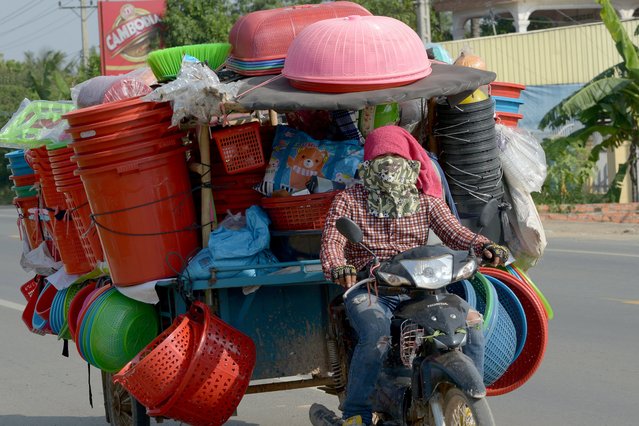
A Cambodian man rides his motor-cart loaded with goods along a street on the outskirts Phnom Penh, Cambodia on October 30, 2017. (Photo by Tang Chhin Sothy/AFP Photo)
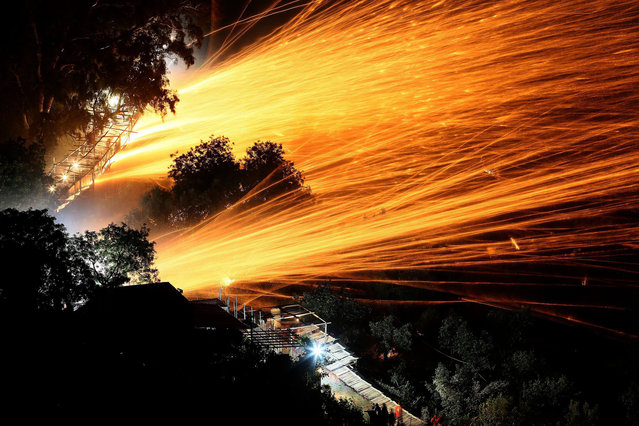
St. Mark's and Panagia Erithiani church congregations perform “Rocket War” by firing thousands of home-made rockets across the sky during Greek Orthodox Easter celebrations in the town of Vrontados on the Greek island of Chios on April 19, 2014. Greek habit of throwing handmade rockets with the aim of hitting the bell tower of the church at the other side during the celebration of the service at midnight before Easter Sunday. (Photo by Cem Oksuz/Anadolu Agency/Getty Images)
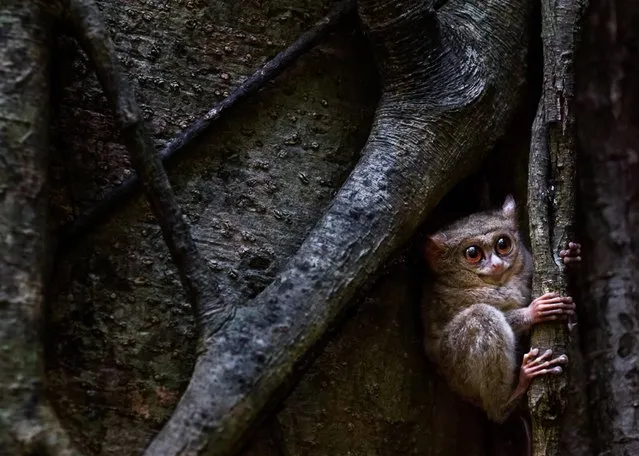
From rural life in India to a chick growing inside its embryo and a sea turtle eating a purple jellyfish, the Society of Biology has released their stunning photography competition shortlist. Here: “Spectral Tarsier”. Tangkoko, Northern Sulawesi, Indonesia: Spectral tarsier by Wolfgang Weinhardt. (Photo and caption by Wolfgang Weinhardt/UK Society of Biology Photography Award 2014)
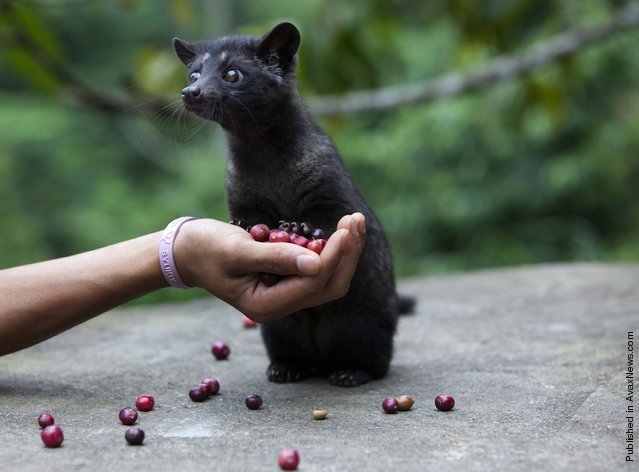
“Kopi luwak (Malay pronunciation), or civet coffee, is one of the world's most expensive and low-production coffee. It is made from the beans of coffee berries which have been eaten by the Asian Palm Civet (Paradoxurus hermaphroditus) and other related civets, then passed through its digestive tract. ...