Loading...
Done


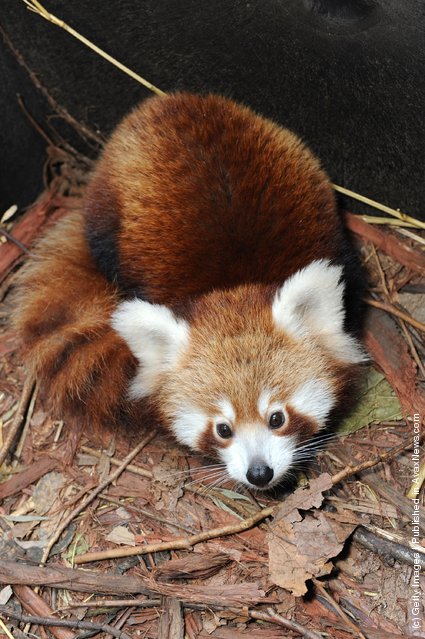
“The red panda (Ailurus fulgens, or shining-cat), is a small arboreal mammal native to the eastern Himalayas and southwestern China. It is the only species of the genus Ailurus. Slightly larger than a domestic cat, it has reddish-brown fur, a long, shaggy tail, and a waddling gait due to its shorter front legs. It feeds mainly on bamboo, but is omnivorous and may also eat eggs, birds, insects, and small mammals. It is a solitary animal, mainly active from dusk to dawn, and is largely sedentary during the day”. – Wikipedia

Photo: In this handout image provided by Taronga Zoo, Seba, a baby Red Panda, explores his new home at Taronga Zoo on April 7, 2011 in Sydney, Australia. The Red Panda cub was born at Christmas and is the 45th to be born at the zoo since 1977. (Photo by Peter Hardin/Taronga Zoo via Getty Images)
Details
07 Apr 2011 08:51:00
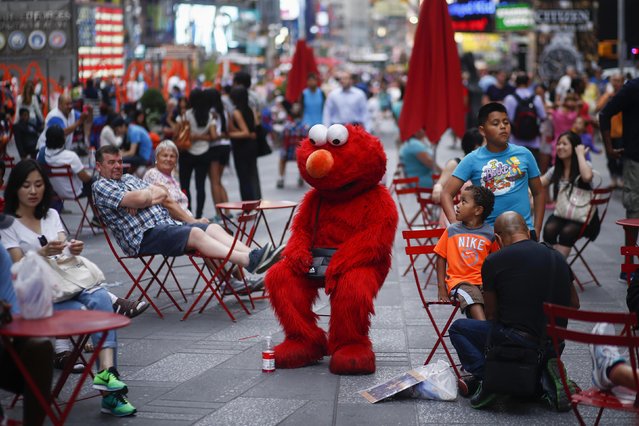
Jorge, an immigrant from Mexico, dressed as the Sesame Street character Elmo rests in Times Square, New York July 29, 2014.  Elmo and Cookie Monster have long delighted young viewers on TV's “Sesame Street”, but the recent antics of New York street performers dressed as the beloved characters have drawn the ire of city officials and now the show's producers. (Photo by Eduardo Munoz/Reuters)

Jorge, an immigrant from Mexico, dressed as the Sesame Street character Elmo rests in Times Square, New York July 29, 2014. Elmo and Cookie Monster have long delighted young viewers on TV's “Sesame Street”, but the recent antics of New York street performers dressed as the beloved characters have drawn the ire of city officials and now the show's producers. Sesame Workshop, which owns the rights to Big Bird, Ernie and the assorted puppet monsters on the 45-year-old program, said on July 29, 2014 it was drafting plans to stop performers who dress up as the characters from appearing in Times Square, where they pose for photos with tourists and then demand tips. (Photo by Eduardo Munoz/Reuters)
Details
02 Aug 2014 13:25:00
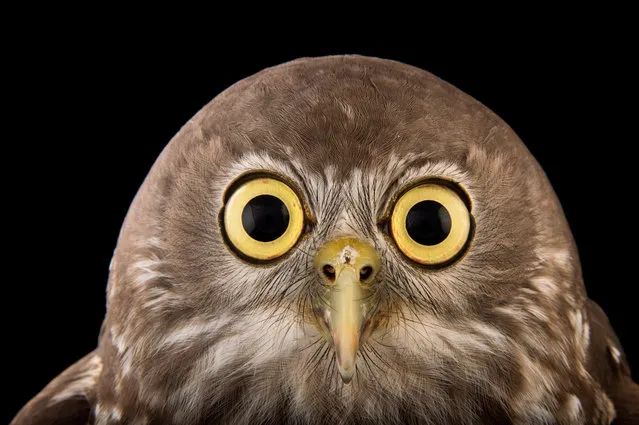
The National Geographic Photo Ark is a travelling exhibition of photographer Joel Sartore’s quest to create a photo archive of biodiversity around the world. So far, Sartore has captured studio portraits of more than 6,000 species – a number that he hopes to double. On 1 July, the ark will open at Melbourne zoo – the first time it has been exhibited in the southern hemisphere. More than 50 portraits will be on display, including many of Australian endangered animals being protected by programs at the zoo itself. These captions have been edited from text supplied by Melbourne zoo. Here: Barking owl. So-named because its call sounds like a barking dog, these birds are native to Australia, Indonesia and Papua New Guinea. In Victoria they are listed as an endangered species, and in 2003 there were estimated to be fewer than 50 breeding pairs. The main threat to the species in Victoria is loss of habitat, especially large trees with hollows in which they can nest and on which many of their prey depend. Apart from a bark, they may utter a chilling scream when they feel threatened. (Photo by Joel Sartore/National Geographic Photo Ark/The Guardian)

The National Geographic Photo Ark is a travelling exhibition of photographer Joel Sartore’s quest to create a photo archive of biodiversity around the world. So far, Sartore has captured studio portraits of more than 6,000 species – a number that he hopes to double. On 1 July, the ark will open at Melbourne zoo – the first time it has been exhibited in the southern hemisphere. More than 50 portraits will be on display, including many of Australian endangered animals being protected by programs at the zoo itself. These captions have been edited from text supplied by Melbourne zoo. Here: Barking owl. (Photo by Joel Sartore/National Geographic Photo Ark/The Guardian)
Details
01 Jul 2017 07:45:00
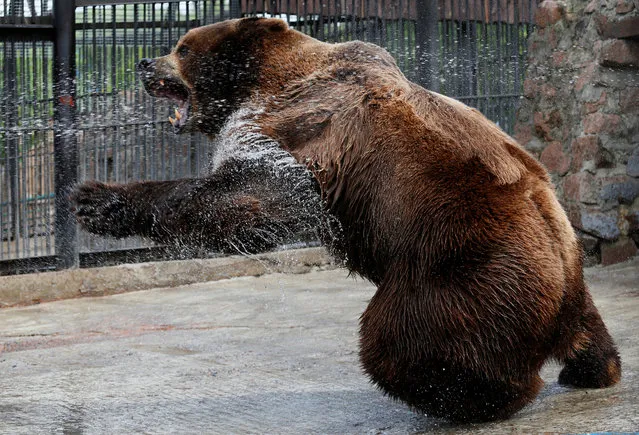
Buyan, a male Siberian brown bear, cools down under a stream of water sprayed by an employee in an enclosure on a hot summer day, at the Royev Ruchey zoo in Krasnoyarsk, Russia on June 14, 2019. (Photo by Ilya Naymushin/Reuters)

Buyan, a male Siberian brown bear, cools down under a stream of water sprayed by an employee in an enclosure on a hot summer day, at the Royev Ruchey zoo in Krasnoyarsk, Russia on June 14, 2019. (Photo by Ilya Naymushin/Reuters)
Details
16 Jun 2019 00:03:00
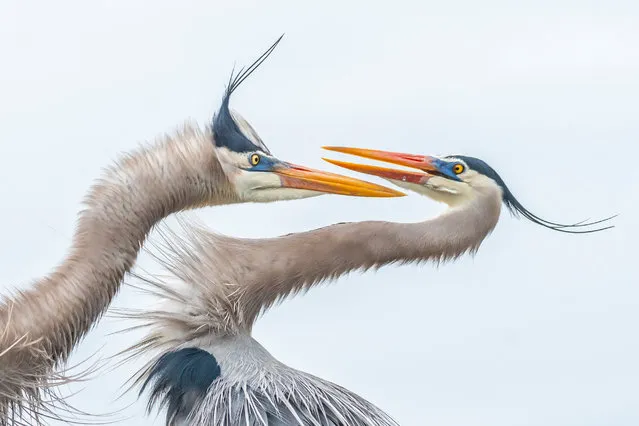
Melissa Rowell, amateur honourable mention. Wakodahatchee wetlands, Delray Beach, Florida, US. Equipped with sinewy necks and spear-like bills, great blue herons can lunge with fearsome speed to strike their aquatic prey. Adults will also employ rapid stabbing motions as one aspect of their complex courtship displays; they’re seemingly dangerous moves, but fitting to the intensity of mating season. (Photo by Melissa Rowell/Audubon photography awards)

Wakodahatchee wetlands, Delray Beach, Florida, US. Equipped with sinewy necks and spear-like bills, great blue herons can lunge with fearsome speed to strike their aquatic prey. Adults will also employ rapid stabbing motions as one aspect of their complex courtship displays; they’re seemingly dangerous moves, but fitting to the intensity of mating season. (Photo by Melissa Rowell/Audubon Photography Awards)
Details
17 Jul 2019 00:03:00
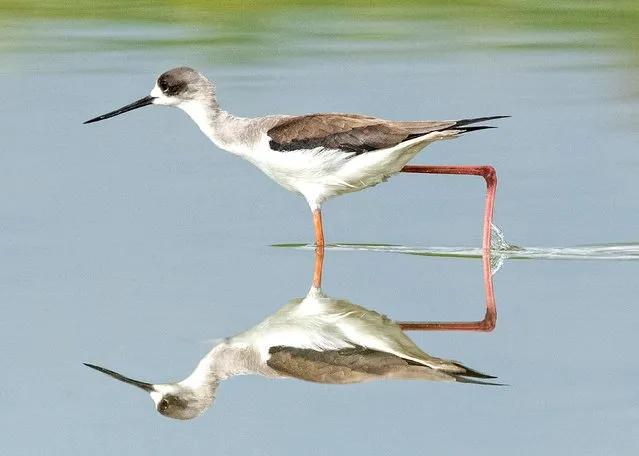
A black-winged stilt patrols a reservoir in Jezreel Valley in Israel early April 2023. Their eggs are a golden colour mottled with brown. (Photo by Itamar Procaccia/Solent News)

A black-winged stilt patrols a reservoir in Jezreel Valley in Israel early April 2023. Their eggs are a golden colour mottled with brown. (Photo by Itamar Procaccia/Solent News)
Details
16 Apr 2023 03:43:00
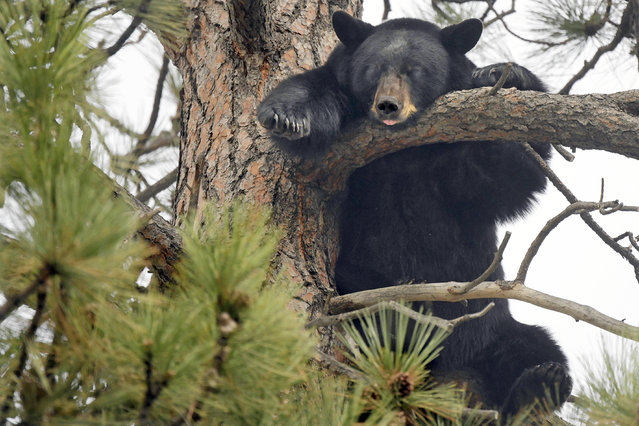
In this Thursday, October 3, 2019 photo, a female black bear sleeps with its tongue out high up in a Ponderosa pine tree near Clark Fork School in the Rattlesnake neighborhood of Missoula, Mont. The bear's cub, not pictured, was snoozing on a nearby branch. (Photo by Tommy Martino/The Missoulian via AP Photo)

In this Thursday, October 3, 2019 photo, a female black bear sleeps with its tongue out high up in a Ponderosa pine tree near Clark Fork School in the Rattlesnake neighborhood of Missoula, Mont. The bear's cub, not pictured, was snoozing on a nearby branch. (Photo by Tommy Martino/The Missoulian via AP Photo)
Details
13 Oct 2019 00:03:00
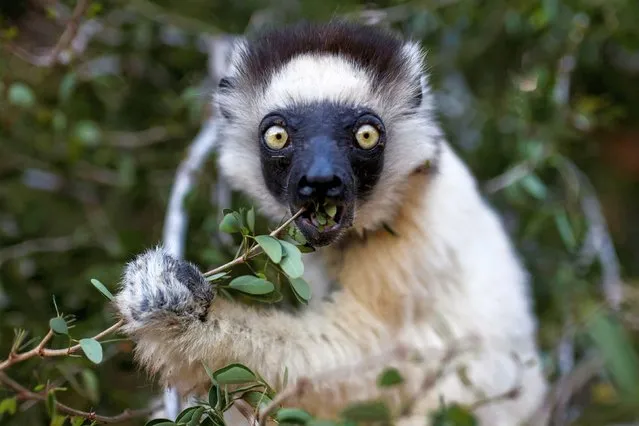
A sifaka lemur eats leaves at the Berenty Reserve in Toliara province, Madagascar, February 15, 2022. (Photo by Alkis Konstantinidis/Reuters)

A sifaka lemur eats leaves at the Berenty Reserve in Toliara province, Madagascar, February 15, 2022. (Photo by Alkis Konstantinidis/Reuters)
Details
06 Mar 2022 05:40:00