Loading...
Done
Ocean voyage

Do you think that history is a science? Well, not exactly. First, and foremost, history is the state's “legend of wars”, it’s official regalia. Of course, public historians are not interested in scientific truth – quite the opposite. In this respect, any attempt to present a state’s history as altruistic and benevolent as possible is welcomed and encouraged – as opposed to any revisionism attempts that may be more accurate. In this matter, Chinese have surpassed us all – they revised in highly creative manner (but rather shamelessly) the technology already invented by Europeans, a process that resulted in oldest state on the planet. Here is an interesting paradox: ask any sinologist about the Middle Kingdom during second century B.C., and he will describe it to you in such a vivid manner as if he has been living there all his life – but as soon as you will ask him to describe Chinese history in the 19-20th centuries… let's say, his eagerness will be greatly diminished. However, we will discuss China in a different article, and in the meantime we will try to understand how exactly historic “legend of wars” is formed and functions – based on a specific and well-known example. A great example is Ferdinand Magellan's first voyage around the world.
Details
14 Nov 2011 09:11:00
Meghan Puhr participates in a virtual realty presentation during an Intel news conference before CES International, Wednesday, January 4, 2017, in Las Vegas. (Photo by John Locher/AP Photo)

Meghan Puhr participates in a virtual realty presentation during an Intel news conference before CES International, Wednesday, January 4, 2017, in Las Vegas. (Photo by John Locher/AP Photo)
Details
07 Jan 2017 13:59:00
Tourists take pictures of straw figurines of traditional deities Shennong (R) and Zhang Wulang (L back) during China's National Day Holiday, in Xinhua county, Hunan province, October 4, 2015. (Photo by Reuters/China Daily)

Tourists take pictures of straw figurines of traditional deities Shennong (R) and Zhang Wulang (L back) during China's National Day Holiday, in Xinhua county, Hunan province, October 4, 2015. (Photo by Reuters/China Daily)
Details
07 Oct 2015 08:08:00
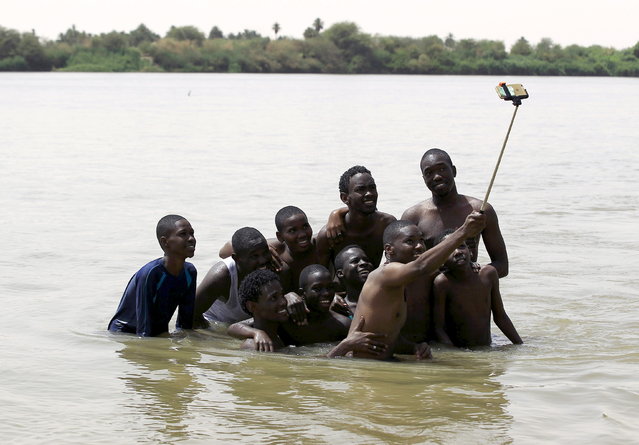
A group of young men use a selfie stick to take a picture of themselves in shallow waters known as the first cataract of the River Nile outside Khartoum, Sudan, May 22, 2015. In Sudan, which faces insurgences in the western region of Darfur and along its border with breakaway South Sudan, as well as double-digit inflation and high unemployment, life goes on for young people in the capital Khartoum. (Photo by Mohamed Nureldin Abdallah/Reuters)

A group of young men use a selfie stick to take a picture of themselves in shallow waters known as the first cataract of the River Nile outside Khartoum, Sudan, May 22, 2015. In Sudan, which faces insurgences in the western region of Darfur and along its border with breakaway South Sudan, as well as double-digit inflation and high unemployment, life goes on for young people in the capital Khartoum. (Photo by Mohamed Nureldin Abdallah/Reuters)
Details
09 Jul 2015 12:20:00
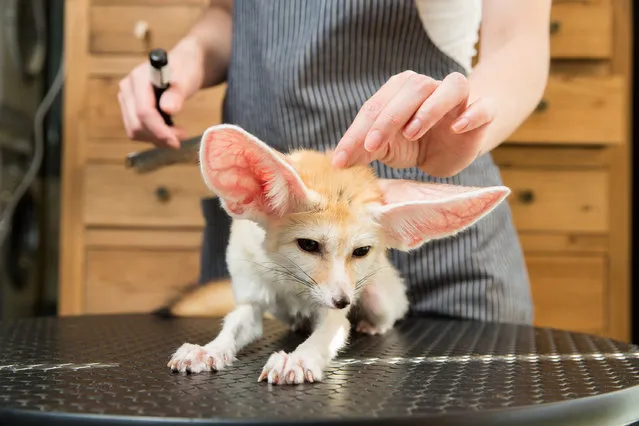
A fennec fox (Vulpes zerda) is groomed in a pet store in central Beijing. Native to the Sahara in North Africa, the species became a popular pet after being depicted as a character in Disney’s 2016 animated movie Zootopia. Individuals can cost between $2,000–$3,000. (Photo by Sean Gallagher/The Guardian)

A dramatic rise in owning exotic pets in China is fuelling global demand for threatened species. The growing trade in alligators, snakes, monkeys, crocodiles and spiders is directly linked to species loss in some of the world’s most threatened ecosystems. Here: A fennec fox (Vulpes zerda) is groomed in a pet store in central Beijing. Native to the Sahara in North Africa, the species became a popular pet after being depicted as a character in Disney’s 2016 animated movie Zootopia. Individuals can cost between $2,000–$3,000. (Photo by Sean Gallagher/The Guardian)
Details
23 Sep 2017 08:04:00
A young girl sits on a mat, as worshippers arrive to pray to mark the Muslim Eid-al-Adha (Festival of Sacrifices) without observationg precautionary measures to curb the spread of COVID-19, in Kara, Ogun State in southwest Nigeria, on July 31, 2020. Nigerian Muslim faithfuls joined their counterparts across the world to celebrate Eid-El-Adha, Islamic festival of sacrifice. (Photo by Pius Utomi Ekpei/AFP Photo)

A young girl sits on a mat, as worshippers arrive to pray to mark the Muslim Eid-al-Adha (Festival of Sacrifices) without observationg precautionary measures to curb the spread of COVID-19, in Kara, Ogun State in southwest Nigeria, on July 31, 2020. Nigerian Muslim faithfuls joined their counterparts across the world to celebrate Eid-El-Adha, Islamic festival of sacrifice. (Photo by Pius Utomi Ekpei/AFP Photo)
Details
21 Aug 2020 00:03:00
Enthusiasts participate in the historical re-enactment of the Sevastopol Fortress assault, which took place during the Crimean War of 1853-1856, at a military historical festival in Sevastopol, Crimea, September 5, 2020. (Photo by Alexey Pavlishak/Reuters)

Enthusiasts participate in the historical re-enactment of the Sevastopol Fortress assault, which took place during the Crimean War of 1853-1856, at a military historical festival in Sevastopol, Crimea, September 5, 2020. (Photo by Alexey Pavlishak/Reuters)
Details
21 Sep 2020 00:01:00
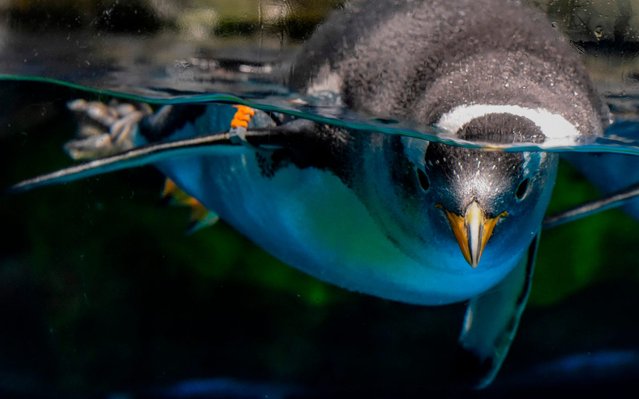
This picture taken on May 4, 2020 shows a gentoo penguin swimming in an enclosure at the Ocean Park theme park, which is currently closed due to the COVID-19 novel coronavirus, in Hong Kong. (Photo by Richard A. Brooks/AFP Photo)

This picture taken on May 4, 2020 shows a gentoo penguin swimming in an enclosure at the Ocean Park theme park, which is currently closed due to the COVID-19 novel coronavirus, in Hong Kong. (Photo by Richard A. Brooks/AFP Photo)
Details
15 Jan 2021 00:03:00