Loading...
Done
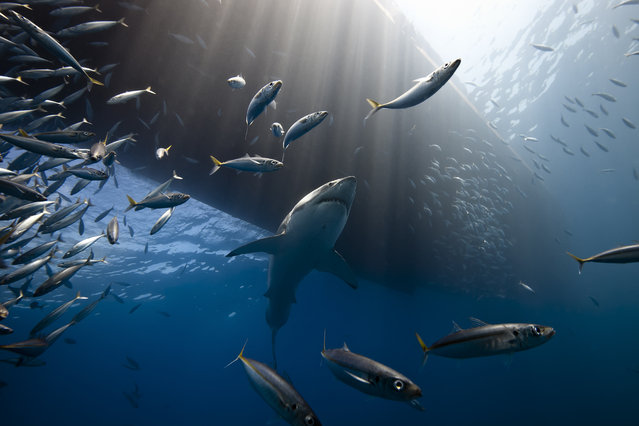
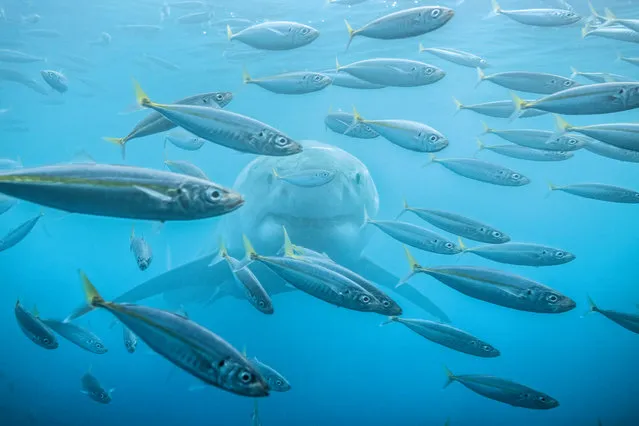
Under Exposed: Pekka Tuuri (Finland) – Great white shark, Isla Guadalupe, Mexico. Isla Guadalupe is the world capital when it comes to observing great white sharks, but cage diving seriously limits the possibilities to take ‘fresh’ pictures. When I took this, the water close to the surface was quite milky, making photography very challenging. From out of the ‘mist’, I saw this great white shark lurking behind a school of fusiliers. I quickly focused on the shark and set a wide aperture to get focus blur on the fish, along with a fast shutter to avoid excessive motion blur. (Photo by Pekka Tuuri/The Outdoor Photographer of the Year/The Guardian)

Under Exposed: Pekka Tuuri (Finland) – Great white shark, Isla Guadalupe, Mexico. “Isla Guadalupe is the world capital when it comes to observing great white sharks, but cage diving seriously limits the possibilities to take ‘fresh’ pictures. When I took this, the water close to the surface was quite milky, making photography very challenging. From out of the “mist”, I saw this great white shark lurking behind a school of fusiliers. I quickly focused on the shark and set a wide aperture to get focus blur on the fish, along with a fast shutter to avoid excessive motion blur”. (Photo by Pekka Tuuri/The Outdoor Photographer of the Year/The Guardian)
Details
25 Jan 2018 07:37:00
“Great White Shark of Guadalupe Island”. A great white shark very quiet under the boat and a lot of fish. The sun ray lighting the head of the shark. Location: Guadalupe Island, Mexico. (Photo and caption by Marc Henauer/National Geographic Traveler Photo Contest)

“Great White Shark of Guadalupe Island”. A great white shark very quiet under the boat and a lot of fish. The sun ray lighting the head of the shark. Location: Guadalupe Island, Mexico. (Photo and caption by Marc Henauer/National Geographic Traveler Photo Contest)

ATTENTION! All pictures are presented in high resolution. To see Hi-Res images – just TWICE click on any picture. In other words, click small picture – opens the BIG picture. Click BIG picture – opens VERY BIG picture.
Details
04 Jul 2013 09:49:00
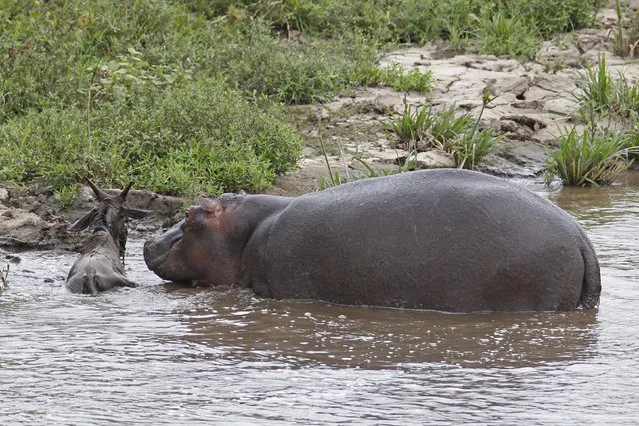
One of the biggest hippos protects the gnu as it makes its way back to the shoreline, guarding it from any further attacks. (Photo by Vadim Onishchenko/Caters News)

This is the amazing moment a heroic hippo saved a gnu from certain death. After being bitten by a crocodile, the large antelope is seen being dragged slowly under the water. But in a miraculous turn of events, a nearby hippo is seen making its way across the water to help the animal in its hour of need. Photo: One of the biggest hippos protects the gnu as it makes its way back to the shoreline, guarding it from any further attacks. (Photo by Vadim Onishchenko/Caters News)
Details
12 Mar 2014 06:09:00


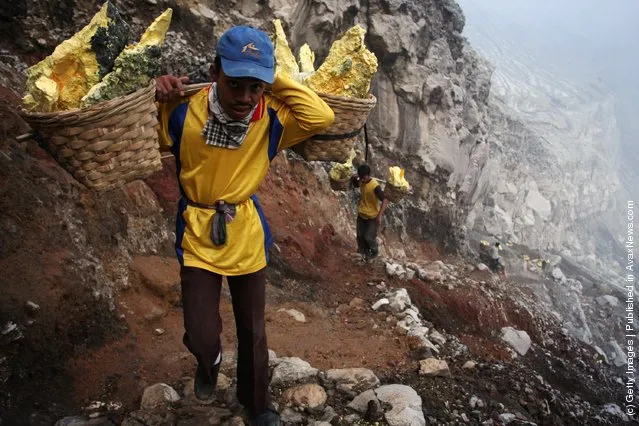
Traditional miners carry sulphur on the Ijen volcano complex on May 25, 2009 outside Banyuwangi, East Java, Indonesia. Miners carry the solidified yellow sulphur blocks from the crater floor to the rim for as many hours a day as they can tolerate, paid by the kilogram of sulphur they extract. The average wage is USD $.05 per kilogram of sulphur and a worker, depending on his strength and stamina, carry on average 3 baskets of 70-80kg per day, earning him around USD $11. (Photo by Ulet Ifansasti/Getty Images)
Details
08 Jul 2011 10:53:00
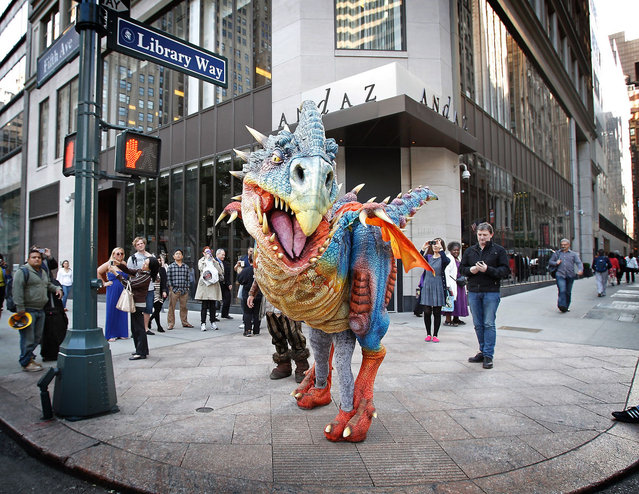
The Baby Nager dragon, from DreamWorks’ new “How to Train Your Dragon” Live Spectacular touring musical, shows off it’s colors outside of the New York Public Library

The Baby Nager dragon, from DreamWorks’ new “How to Train Your Dragon” Live Spectacular touring musical, shows off it’s colors outside of the New York Public Library. (Photo by Mark Von Holden)
Details
19 May 2012 13:05:00
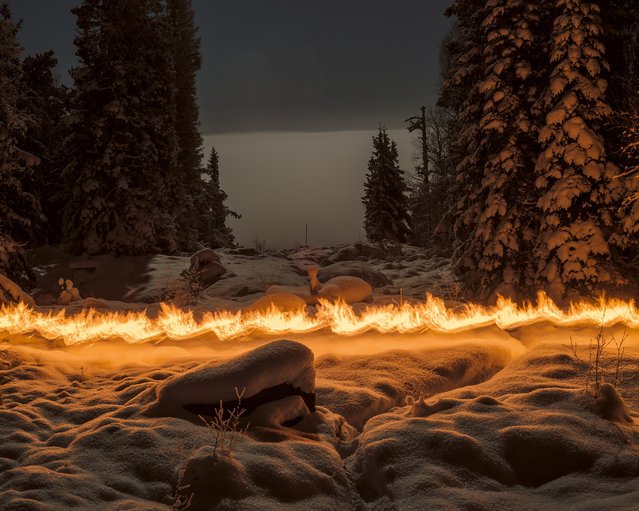
Border between Sweden and Norway at Moldusen. An approximately 20-meter wide clearing in the forest separates the two Scandinavian nations, consequently cutting Finnskogen in two. Grue Finnskog 2016. (Photo by Terje Abusdal/The Washington Post)

Border between Sweden and Norway at Moldusen. An approximately 20-meter wide clearing in the forest separates the two Scandinavian nations, consequently cutting Finnskogen in two. Grue Finnskog 2016. (Photo by Terje Abusdal/The Washington Post)
Details
12 Oct 2018 00:03:00
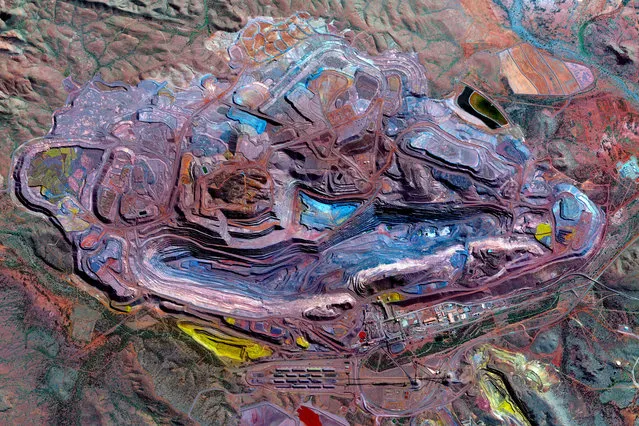
Mount Whaleback iron ore mine 23°21’32.3”S, 119°40’40.1”E. The Mount Whaleback Iron Ore Mine in the Pilbara region of Western Australia. Roughly 98% of the world’s mined iron ore is used to make steel and is thus a significant component in the construction of buildings, automobiles, and appliances such as refrigerators. (Photo by Daily Overview/DigitalGlobe, a Maxar Company)

Mount Whaleback iron ore mine 23°21’32.3”S, 119°40’40.1”E. The Mount Whaleback Iron Ore Mine in the Pilbara region of Western Australia. Roughly 98% of the world’s mined iron ore is used to make steel and is thus a significant component in the construction of buildings, automobiles, and appliances such as refrigerators. (Photo by Daily Overview/DigitalGlobe, a Maxar Company)
Details
16 Nov 2018 00:03:00
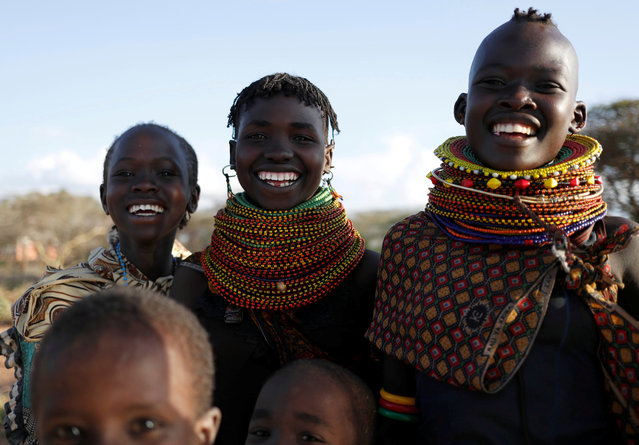
Young Turkana tribeswomen sing in a village near Baragoy, Kenya August 6, 2017. (Photo by Goran Tomasevic/Reuters)

Young Turkana tribeswomen sing in a village near Baragoy, Kenya August 6, 2017. Kenyans are due to go to the polls on Aug. 8. to vote in presidential elections after a tightly-fought race between President Uhuru Kenyatta and main opposition leader Raila Odinga. (Photo by Goran Tomasevic/Reuters)
Details
08 Aug 2017 07:05:00