Loading...
Done
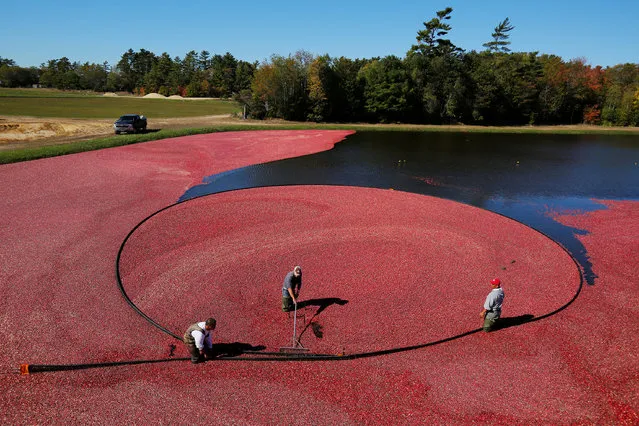
Workers harvest cranberries from one of third-generation farmer Larry Harju's bogs in Carver, Massachusetts, U.S. October 14, 2016. (Photo by Brian Snyder/Reuters)

Workers harvest cranberries from one of third-generation farmer Larry Harju's bogs in Carver, Massachusetts, U.S. October 14, 2016. The cranberries from Harju’s farm are a part of the 8 million barrels of cranberries Ocean Spray anticipates is grower-owners will produce this year. (Photo by Brian Snyder/Reuters)
Details
15 Oct 2016 10:45:00
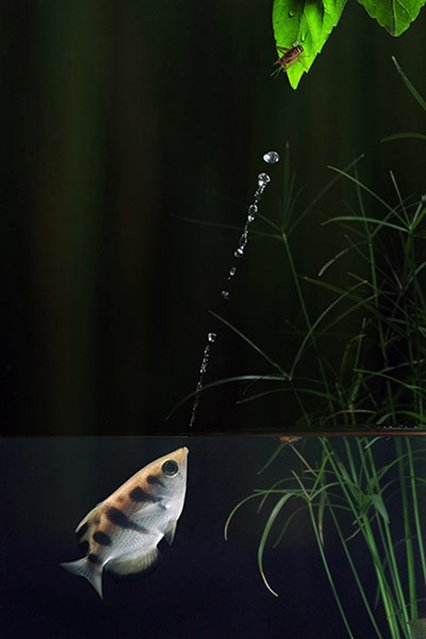
The Archerfish

The archerfish (spinner fish or archer fish) are a family (Toxotidae) of fish known for their habit of preying on land based insects and other small animals by literally shooting them down with water droplets from their specialized mouths. The family is small, consisting of seven species in the genus Toxotes; which typically inhabit brackish waters of estuaries and mangroves, but can also be found in the open ocean as well as far upstream in fresh water They can be found from India to the Philippines, Australia, and Polynesia.
Details
21 Nov 2012 12:54:00


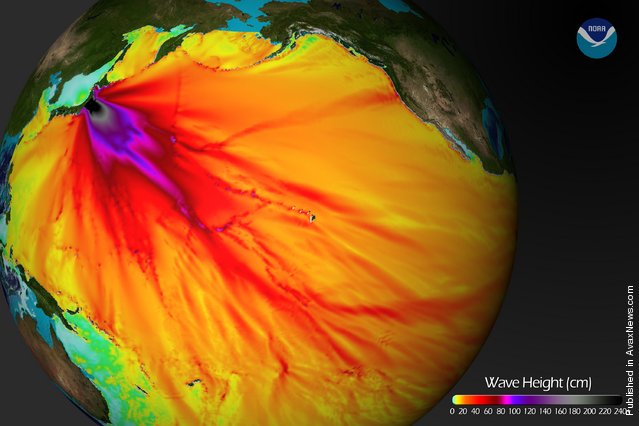
In this handout image provided by the National Oceanic and Atmospheric Administration (NOAA), model runs from the Center for Tsunami Research at the NOAA Pacific Marine Environmental Laboratory show the expected wave heights of the tsunami as it travels across the Pacific basin March 11, 2011. The largest wave heights are expected near the earthquake epicenter, off Japan. The wave will decrease in height as it travels across the deep Pacific but grow taller as it nears coastal areas. In general, as the energy of the wave decreases with distance, the near shore heights will also decrease (e.g., coastal Hawaii will not expect heights of that encountered in coastal Japan). (Photo by NOAA via Getty Images)
Details
13 Mar 2011 14:29:00
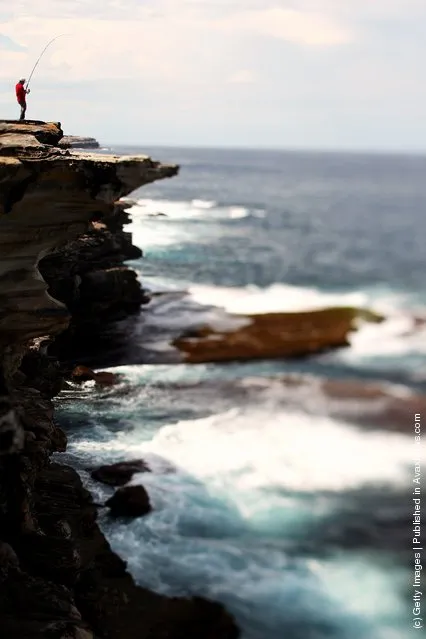
Rock Fishing In Sydney

A fisherman is seen standing on a cliff edge at Cape Bank in La Perouse on February 20, 2011 in Sydney, Australia. The practice of fishing from rock platforms, cliffs and rocky outcrops is notoriously dangerous with many anglers per year being washed into the ocean by dangerous surf or unexpected large waves. Angling is often reported as the sport having the highest mortality rate on average due to fishermen drowning with rocking fishing contributing to a high number of these deaths. (Photo by Mark Kolbe/Getty Images)
Details
16 Aug 2011 11:34:00
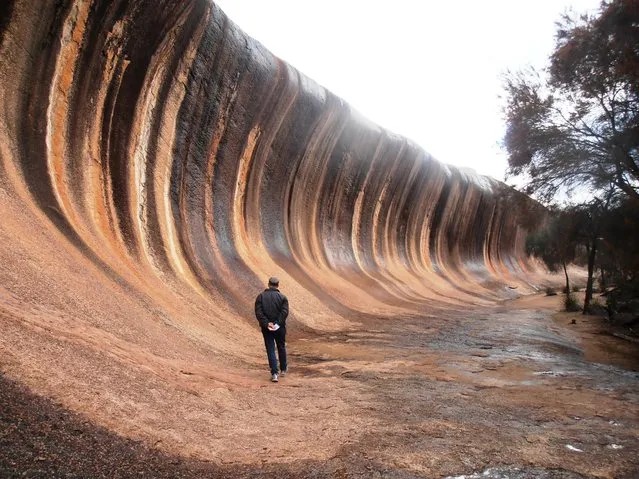
Wave Rock, Arizona

Wave Rock is a natural rock formation that is shaped like a tall breaking ocean wave. The "wave" is about 14 m (46 ft) high and around 110 m (360 ft) long. It forms the north side of a solitary hill, which is known as “Hyden Rock”. This hill, which is a granite inselberg, lies about 3 km (2 mi) east of the small town of Hyden and 296 km (184 mi) east-southeast of Perth, Western Australia. Wave Rock and Hyden Rock are part of a 160 ha (395-acre) nature reserve, Hyden Wildlife Park.
Details
12 Aug 2014 10:21:00
Balinese Hindu people take part in a cleansing ceremony called 'Melasti', in Denpasar, Bali, Indonesia, 25 March 2025. Melasti is a purification ritual where Balinese Hindus cleanse themselves and their sacred objects in the ocean to purify and renew spiritually, symbolizing the washing away of impurities and starting anew. It typically precedes Nyepi, the Day of Silence, marking the Balinese New Year. Balinese will celebrate Nyepi Day on 29 March 2025, during which Hindus on the island of Bali are not allowed to travel, work, light lamps, cook, or do any other activities. (Photo by Made Nagi/EPA)

Balinese Hindu people take part in a cleansing ceremony called “Melasti”, in Denpasar, Bali, Indonesia, 25 March 2025. Melasti is a purification ritual where Balinese Hindus cleanse themselves and their sacred objects in the ocean to purify and renew spiritually, symbolizing the washing away of impurities and starting anew. It typically precedes Nyepi, the Day of Silence, marking the Balinese New Year. Balinese will celebrate Nyepi Day on 29 March 2025, during which Hindus on the island of Bali are not allowed to travel, work, light lamps, cook, or do any other activities. (Photo by Made Nagi/EPA)
Details
07 Apr 2025 02:47:00
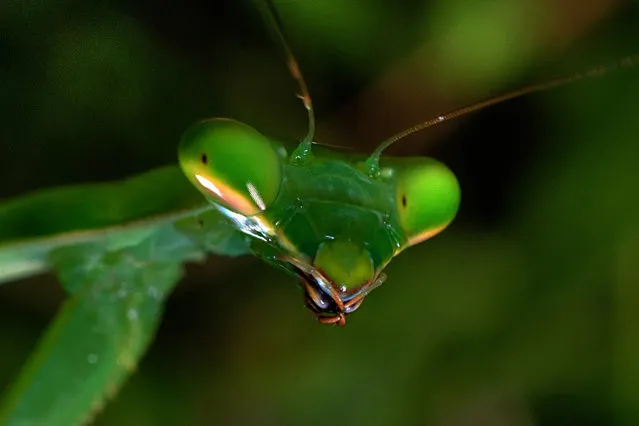
Close Encounter of the Insect Kind: Check out the awesome face on this praying mantis. I can't get over the mouth, it's like something from a science fiction movie. Of all photographic styles macro is definitely my favorite. I am constantly amazed, in every photo that I take, by the intricate level of detail that exists on even the smallest of creatures. It's a stark reminder that a very complex and infinitely beautiful world exists just beyond our human-sized level of perception. Photo taken in Donnybrook, Queensland, Australia. (Photo by Andrew Young/National Geographic Photo Contest

Close Encounter of the Insect Kind: “Check out the awesome face on this praying mantis. I can't get over the mouth, it's like something from a science fiction movie. Of all photographic styles macro is definitely my favorite. I am constantly amazed, in every photo that I take, by the intricate level of detail that exists on even the smallest of creatures. It's a stark reminder that a very complex and infinitely beautiful world exists just beyond our human-sized level of perception. Photo taken in Donnybrook, Queensland, Australia” – Andrew Young. (Photo by Andrew Young/National Geographic Photo Contest via The Atlantic)
Details
24 Sep 2012 09:18:00
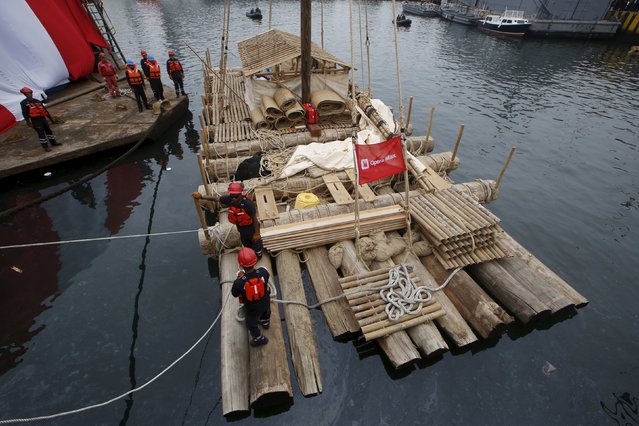
One of the two wooden rafts of the Kon-Tiki II expedition is prepared  at the port of Callao prior to the departure to Pascua island in Chile, in Callao, Peru, October 30, 2015. Fourteen men from various parts of the world set out on rafts to commemorate the  Norwegian navigator Thor Heyerdahl expedition 68 years ago. (Photo by Mariana Bazo/Reuters)

One of the two wooden rafts of the Kon-Tiki II expedition is prepared at the port of Callao prior to the departure to Pascua island in Chile, in Callao, Peru, October 30, 2015. Fourteen men from various parts of the world set out on rafts to commemorate the Norwegian navigator Thor Heyerdahl expedition 68 years ago. The original raft crossed the Pacific Ocean from South America to the Polynesian Islands. This rafts are a replica of ships used 6,000 years ago, but will be equipped with solar panel. (Photo by Mariana Bazo/Reuters)
Details
02 Nov 2015 08:00:00