Loading...
Done
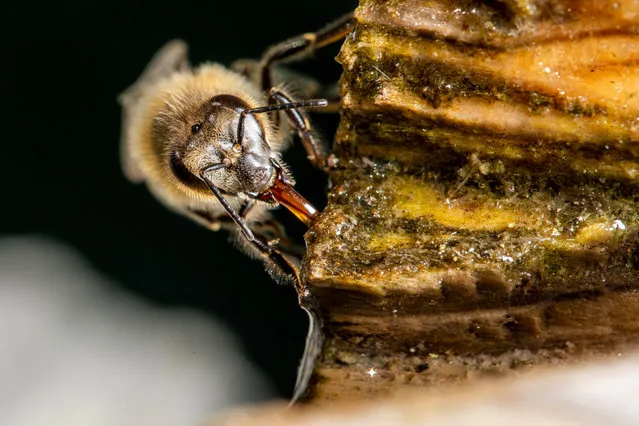
A Western honey bee feeds off acacia pollen at an apiary in Nagyszenas, eastern Hungary, 25 April 2020. The preparation of the bees for the acacia bloom began two weeks later than usual this year; due to the late frosts, this season's yield of Hungaricum acacia honey is expected to be lower. (Photo by Tibor Rosta/EPA/EFE)

A Western honey bee feeds off acacia pollen at an apiary in Nagyszenas, eastern Hungary, 25 April 2020. The preparation of the bees for the acacia bloom began two weeks later than usual this year; due to the late frosts, this season's yield of Hungaricum acacia honey is expected to be lower. (Photo by Tibor Rosta/EPA/EFE)
Details
08 Jan 2023 06:19:00
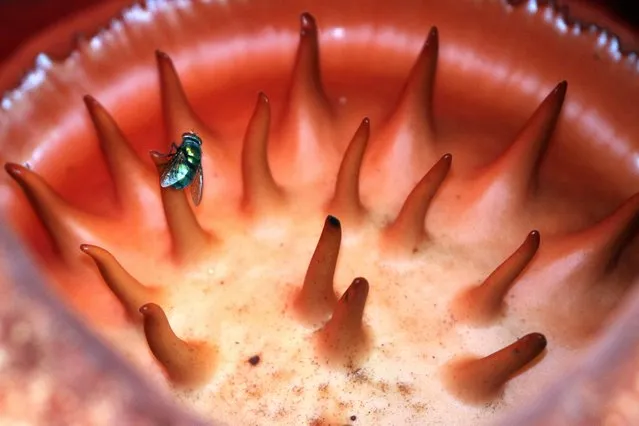
The Rafflesia Arnoldi flower (Amarphophallus titanum) which has been cultivated is seen in Palupuah Village, Agam District, West Sumatra, Indonesia, on April 13, 2022. The West Sumatera Nature Conservation Agency (BKSDA) estimates around seven Rafflesia Arnoldi flowers will bloom in Palupuah Village this year. (Photo by Adi Prima/Anadolu Agency via Getty Images)

The Rafflesia Arnoldi flower (Amarphophallus titanum) which has been cultivated is seen in Palupuah Village, Agam District, West Sumatra, Indonesia, on April 13, 2022. The West Sumatera Nature Conservation Agency (BKSDA) estimates around seven Rafflesia Arnoldi flowers will bloom in Palupuah Village this year. (Photo by Adi Prima/Anadolu Agency via Getty Images)
Details
11 Mar 2023 03:36:00
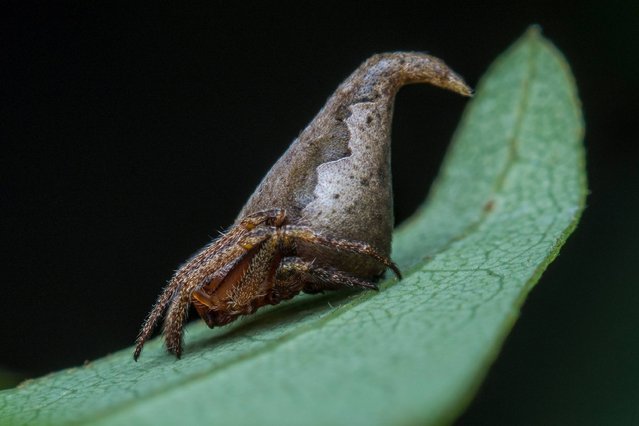
In this handout photograph received from Sumukha J.N on December 15, 2016, the newly-discovered spider Eriovixia Gryffindori sits on a leaf in the Kans in India's Western Ghats. (Photo by Sumukha J.N./AFP Photo)

In this handout photograph received from Sumukha J.N on December 15, 2016, the newly-discovered spider Eriovixia Gryffindori sits on a leaf in the Kans in India's Western Ghats. (Photo by Sumukha J.N./AFP Photo)
Details
17 Jun 2017 08:41:00
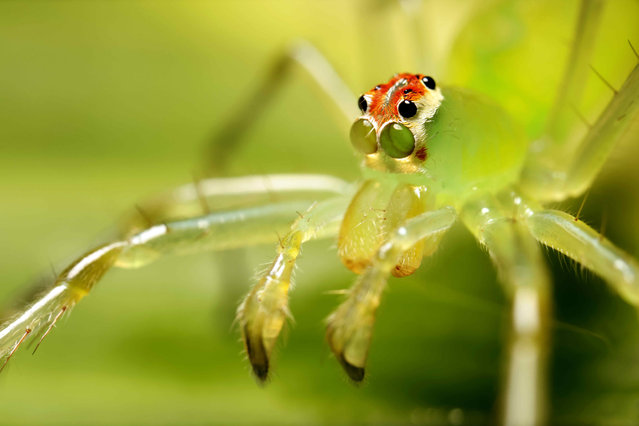
A green jumping spider (Lyssomanes viridis), in a forested area of Cerro de la Muerte, in San Jose, Costa Rica, 20 May 2025. International Day for Biological Diversity is celebrated every 22 May around the world. (Photo by Jeffrey Arguedas/EPA/EFE)

A green jumping spider (Lyssomanes viridis), in a forested area of Cerro de la Muerte, in San Jose, Costa Rica, 20 May 2025. International Day for Biological Diversity is celebrated every 22 May around the world. (Photo by Jeffrey Arguedas/EPA/EFE)
Details
14 Sep 2025 03:12:00
Models showcase Valentine's Day underwear celebrating the results of a recent survey revealing that men find the lingerie

Models showcase Valentine's Day underwear celebrating the results of a recent survey revealing that men find the lingerie, boxer shorts and vests, the biggest turn on ahead of February 14 Valentine celebrations, at Waterloo on February 2, 2006 in London, England. (Photo by Gareth Cattermole/Getty Images)
Details
19 Sep 2011 14:32:00
Anna Nicole Smith at boyfriend Christian Audigier's Hollywood apartment in Hollywood, CA, 1998. (Photo by Paul Harris/Hulton Archive)

Anna Nicole Smith at boyfriend Christian Audigier's Hollywood apartment in Hollywood, CA, 1998. (Photo by Paul Harris/Hulton Archive)
Details
10 Feb 2017 00:06:00
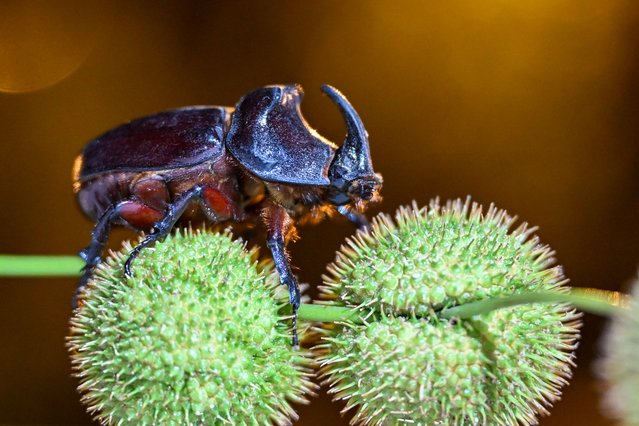
A “Rhino Beetle” (Oryctes nasicornis) is seen in Edremit, Van, Turkiye on August 2, 2024. Named “Rhino Beetle” due to the horn on its head, this beetle is commonly found in moist areas across Europe and Turkiye. (Photo by Ozkan Bilgin/Anadolu via Getty Images)

A “Rhino Beetle” (Oryctes nasicornis) is seen in Edremit, Van, Turkiye on August 2, 2024. Named “Rhino Beetle” due to the horn on its head, this beetle is commonly found in moist areas across Europe and Turkiye. (Photo by Ozkan Bilgin/Anadolu via Getty Images)
Details
24 Aug 2024 04:43:00
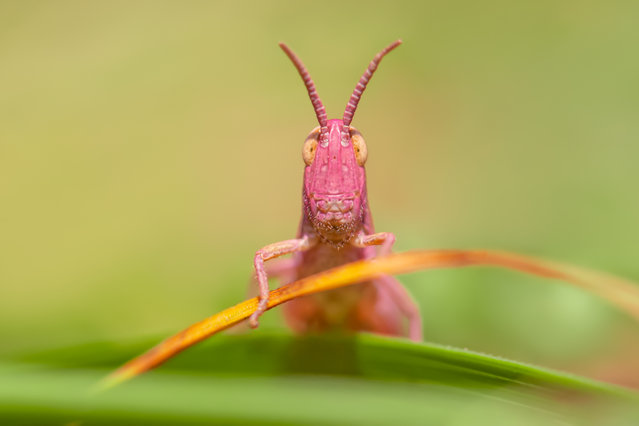
A rare grasshopper shines bright against its leafy background in North Holland, Netherlands in the first decade of October 2024. The insects are usually brown or green but turn pink due to a genetic mutation. (Photo by Roeselien Raimond/Media Drum Images)

A rare grasshopper shines bright against its leafy background in North Holland, Netherlands in the first decade of October 2024. The insects are usually brown or green but turn pink due to a genetic mutation. (Photo by Roeselien Raimond/Media Drum Images)
Details
09 Feb 2025 04:34:00