Loading...
Done
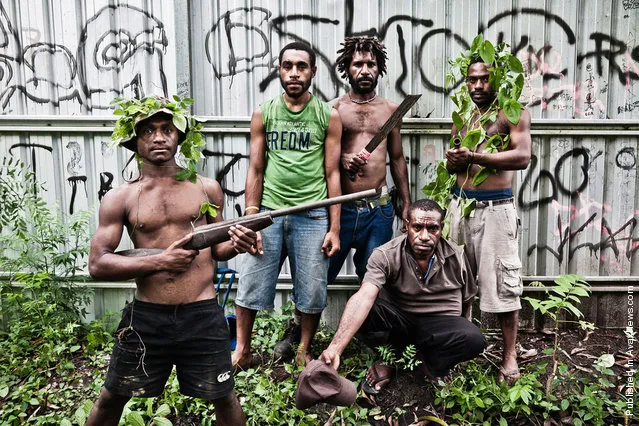
Members of the Raskol gang “Dirty Dons 585”, 9 Mile Settlement, Port Moresby. All of these young men committed a set of rapes and armed robberies. The gang members admit that two thirds of their victims are women

Members of the Raskol gang “Dirty Dons 585”, 9 Mile Settlement, Port Moresby. All of these young men committed a set of rapes and armed robberies. The gang members admit that two thirds of their victims are women. (Photo by Vlad Sokhin)
Details
20 Apr 2012 13:01:00
Andrea Abarca, (C) leads an aerobics class in Los Guidos de Desamparados July 23, 2015. (Photo by Juan Carlos Ulate/Reuters)

Andrea Abarca, (C) leads an aerobics class in Los Guidos de Desamparados July 23, 2015. More than 300 women participated in a physical health program organized by Abarca, which aims to combat obesity and sedentary behavior in poor women living in a slum. The National Nutrition Survey shows that the Costa Rican population has 62.4 percent of adult men who are obese, while among women the percentage was 77.3, according to local media. (Photo by Juan Carlos Ulate/Reuters)
Details
25 Jul 2015 12:22:00
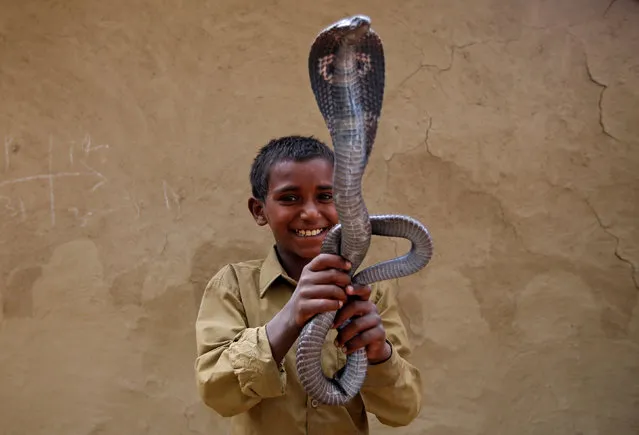
Ravi Nath poses for a photograph with a cobra snake in Jogi Dera (Snake charmers settlement), in the village of Baghpur, in the central state of Uttar Pradesh, India November 10, 2016. (Photo by Adnan Abidi/Reuters)

Ravi Nath poses for a photograph with a cobra snake in Jogi Dera (Snake charmers settlement), in the village of Baghpur, in the central state of Uttar Pradesh, India November 10, 2016. An ancient tribe of snake charmers, known as Saperas, have thrived over the generations by catching venomous snakes and making them dance to their music. Snakes are revered by Hindus in India and snake charmers are considered the followers of Lord Shiva, the blue-skinned Hindu god who is usually portrayed wearing a king cobra around his neck. (Photo by Adnan Abidi/Reuters)
Details
26 Jan 2017 13:06:00
A girl sits on a pile of rubbish at landfill site on the outskirts of Sanaa, Yemen November 16, 2016. (Photo by Mohamed al-Sayaghi/Reuters)

A girl sits on a pile of rubbish at landfill site on the outskirts of Sanaa, Yemen November 16, 2016. (Photo by Mohamed al-Sayaghi/Reuters)
Details
17 Nov 2016 11:34:00
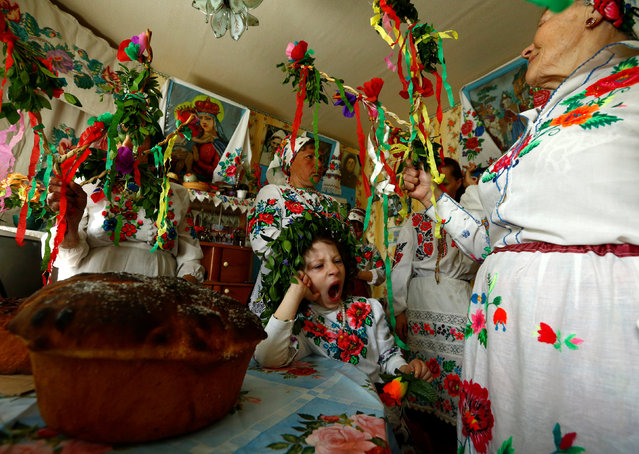
Villagers take part in a ritual celebrating the pagan god Yurya and pray for plentiful future harvests in the village of Pogost, Belarus May 6, 2016. (Photo by Vasily Fedosenko/Reuters)

Villagers take part in a ritual celebrating the pagan god Yurya and pray for plentiful future harvests in the village of Pogost, Belarus May 6, 2016. (Photo by Vasily Fedosenko/Reuters)
Details
08 May 2016 10:41:00
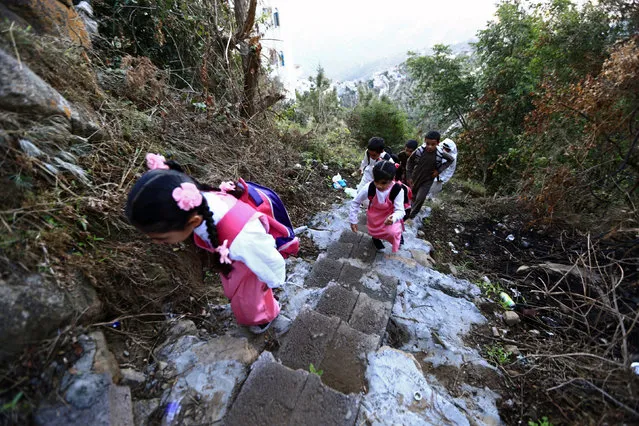
Saudi children of al-Fefi family walk up the stairs as they make their way to their schools through Fifa Mountain, in Jazan, south of Saudi Arabia, December 15, 2016. (Photo by Mohamed Al Hwaity/Reuters)

Saudi children of al-Fefi family walk up the stairs as they make their way to their schools through Fifa Mountain, in Jazan, south of Saudi Arabia, December 15, 2016. (Photo by Mohamed Al Hwaity/Reuters)
Details
18 Dec 2016 08:36:00
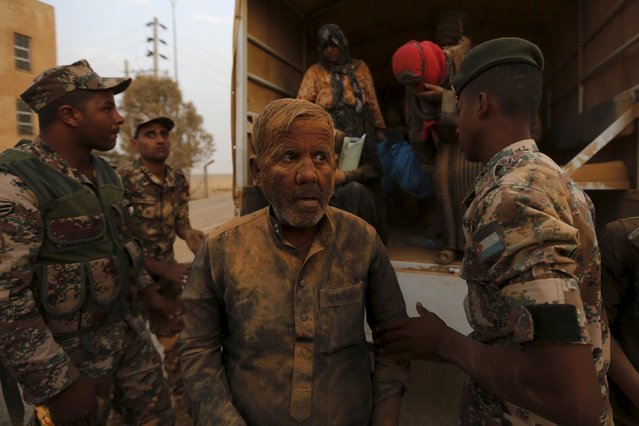
Syrian refugees covered with dust arrive at the Trabeel border, after crossing into Jordanian territory with their families, near the northeastern Jordanian border with Syria, and Iraq, near the town of Ruwaished, east of Amman September 10, 2015. (Photo by Muhammad Hamed/Reuters)

Syrian refugees covered with dust arrive at the Trabeel border, after crossing into Jordanian territory with their families, near the northeastern Jordanian border with Syria, and Iraq, near the town of Ruwaished, east of Amman September 10, 2015. (Photo by Muhammad Hamed/Reuters)
Details
11 Sep 2015 12:16:00
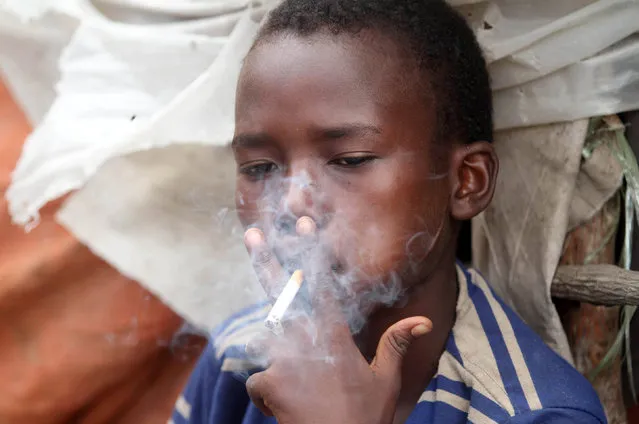
Abdulahi Yaroow, 13, smokes a cigarette while chewing khat at the same time in Mogadishu August 10, 2014. (Photo by Thomas Mukoya/Reuters)

Abdulahi Yaroow, 13, smokes a cigarette while chewing khat at the same time in Mogadishu August 10, 2014. Grown on plantations in the highlands of Kenya and Ethiopia, tonnes of khat, or qat, dubbed “the flower of paradise” by its users, are flown daily into Mogadishu airport, to be distributed from there in convoys of lorries to markets across Somalia. Britain, whose large ethnic Somali community sustained a lucrative demand for the leaves, banned khat from July as an illegal drug. This prohibition jolted the khat market, creating a supply glut in Somalia and pushing down prices, to the delight of the many connoisseurs of its amphetamine-like high. (Photo by Thomas Mukoya/Reuters)

Details
28 Aug 2014 10:35:00