Loading...
Done
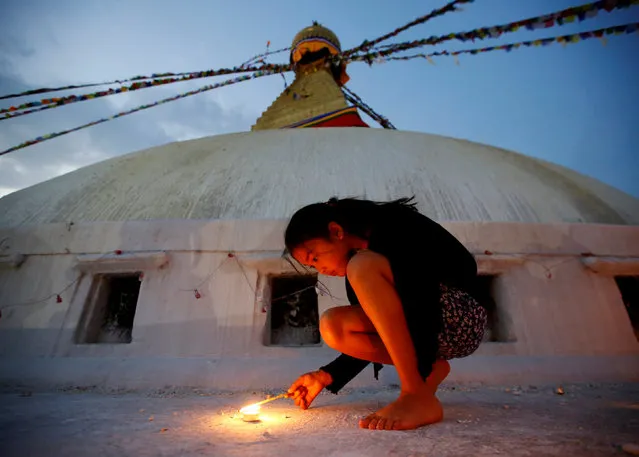
A girl lights a candle as she marks the anniversary of 2015 Nepal earthquake, at Boudhanath stupa in Kathmandu, Nepal April 25, 2017. (Photo by Navesh Chitrakar/Reuters)

A girl lights a candle as she marks the anniversary of 2015 Nepal earthquake, at Boudhanath stupa in Kathmandu, Nepal April 25, 2017. (Photo by Navesh Chitrakar/Reuters)
Details
14 May 2017 08:16:00
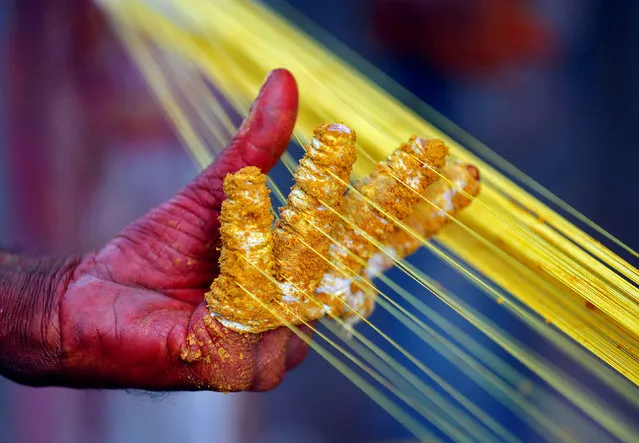
A worker applies colour to strings which will be used to fly kites, by a roadside in Ahmedabad, India, November 23, 2017. (Photo by Amit Dave/Reuters)

A worker applies colour to strings which will be used to fly kites, by a roadside in Ahmedabad, India, November 23, 2017. (Photo by Amit Dave/Reuters)
Details
27 Nov 2017 09:03:00
A small meadow pipit (left) is run off her feet as she tries to keep up with the demanding feeding schedule of an imposter - a larger cuckoo (right) on the Isle of Mull, Scotland in August 2022. (Photo by Graeme Cuerden/Solent News & Photo Agency)

A small meadow pipit (left) is run off her feet as she tries to keep up with the demanding feeding schedule of an imposter - a larger cuckoo (right) on the Isle of Mull, Scotland in August 2022. (Photo by Graeme Cuerden/Solent News & Photo Agency)
Details
28 Aug 2022 04:31:00
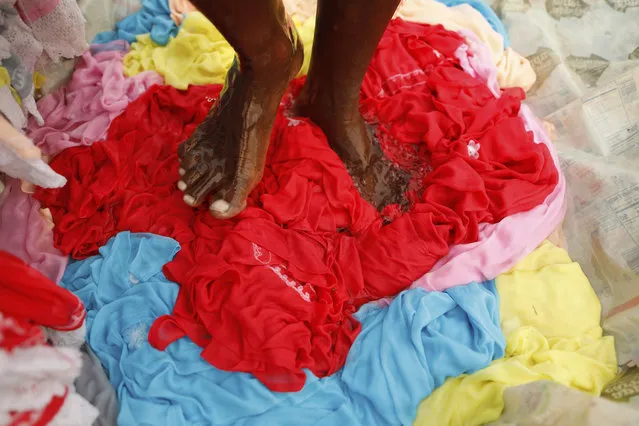
A dhobi, or a washerman washes cloths on the banks of the River Gomti in Lucknow, India, Saturday, September 12, 2020. Dhobis are traditional laundry workers who wash clothes by hand and dry them in the sun, an occupation which has been in existence for generations. Most cities in India have a Dhobi Ghat, or washermen's area, where the city's pile of clothes is laundered. This practice is still popular in India, despite of modern technology. Around 1,000 families work in Lucknow's Dhobi Ghat. However, in light of the novel coronavirus, their wages have decreased drastically. With each family earning around US$100-200 per month. (Photo by Rajesh Kumar Singh/AP Photo)

A dhobi, or a washerman washes cloths on the banks of the River Gomti in Lucknow, India, Saturday, September 12, 2020. Dhobis are traditional laundry workers who wash clothes by hand and dry them in the sun, an occupation which has been in existence for generations. Most cities in India have a Dhobi Ghat, or washermen's area, where the city's pile of clothes is laundered. This practice is still popular in India, despite of modern technology. Around 1,000 families work in Lucknow's Dhobi Ghat. However, in light of the novel coronavirus, their wages have decreased drastically. With each family earning around US$100-200 per month. (Photo by Rajesh Kumar Singh/AP Photo)
Details
25 Sep 2020 00:03:00
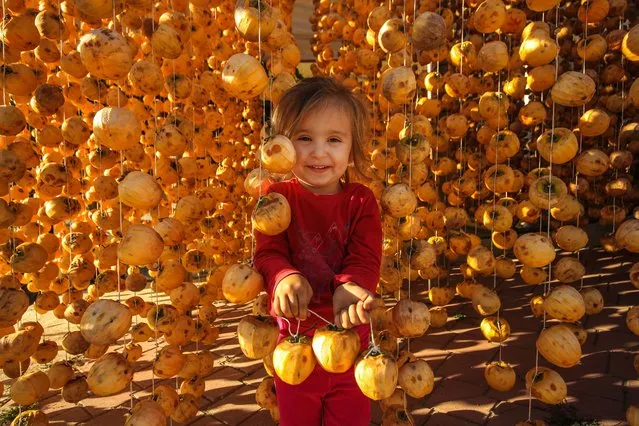
A child is seen with persimmons in Denizli, Turkiye on October 24, 2022. (Photo by Ummu Nisan Kandilcioglu/Anadolu Agency via Getty Images)

A child is seen with persimmons in Denizli, Turkiye on October 24, 2022. (Photo by Ummu Nisan Kandilcioglu/Anadolu Agency via Getty Images)
Details
09 Nov 2022 05:32:00
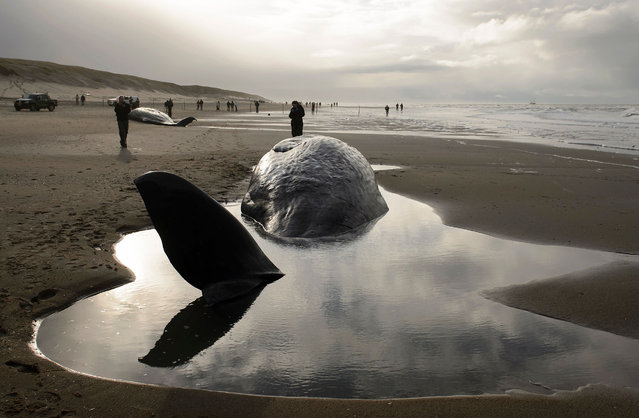
People stand near beached sperm whales on January 13, 2016, after they became stranded on the Dutch island of Texel the day before. Five sperm whales which became stranded on Texel have died, officials said January 13. Experts said the beached whales had already been badly injured and their chances of survival were poor. Volunteers tried to save them but called off their efforts late in the night because of bad weather and darkness, ANP news agency said. (Photo by Remko de Waal/AFP Photo/ANP)

People stand near beached sperm whales on January 13, 2016, after they became stranded on the Dutch island of Texel the day before. Five sperm whales which became stranded on Texel have died, officials said January 13. Experts said the beached whales had already been badly injured and their chances of survival were poor. Volunteers tried to save them but called off their efforts late in the night because of bad weather and darkness, ANP news agency said. (Photo by Remko de Waal/AFP Photo/ANP)
Details
17 Dec 2017 04:51:00
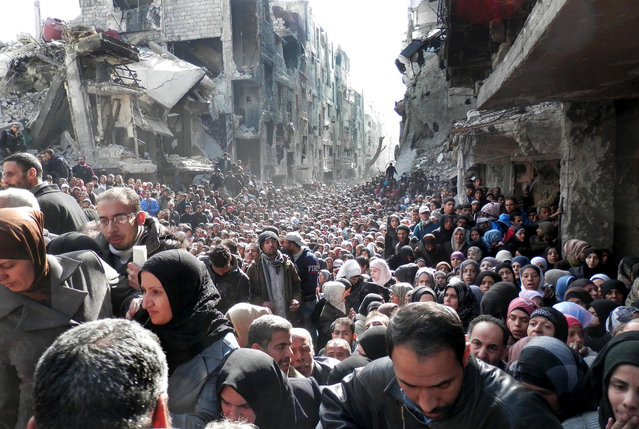
In this January 31, 2014 file photo released by the United Nations Relief and Works Agency for Palestine Refugees in the Near East (UNRWA), shows residents of the besieged Palestinian camp of Yarmouk, queuing to receive food supplies, in Damascus, Syria. That year, the U.N. was able to deliver food to about five percent of people in besieged areas including Yarmouk, while today estimates show the organization is reaching less than one percent. (Photo by UNRWA via AP Photo)

In this January 31, 2014 file photo released by the United Nations Relief and Works Agency for Palestine Refugees in the Near East (UNRWA), shows residents of the besieged Palestinian camp of Yarmouk, queuing to receive food supplies, in Damascus, Syria. That year, the U.N. was able to deliver food to about five percent of people in besieged areas including Yarmouk, while today estimates show the organization is reaching less than one percent. (Photo by UNRWA via AP Photo)
Details
07 Feb 2016 06:36:00
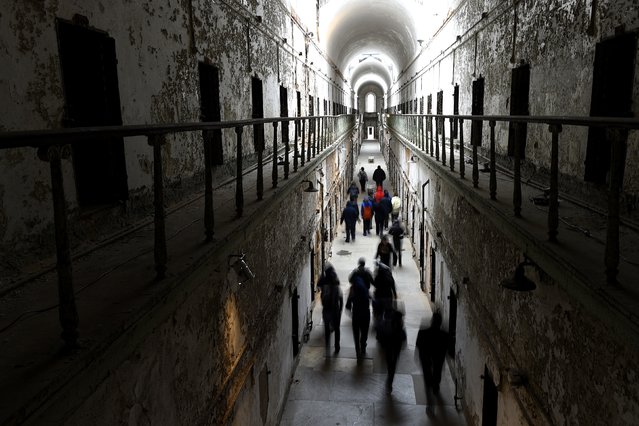
A tour group wanders through block 7 of Eastern State Penitentiary in Philadelphia, Pennsylvania April 30, 2014. Opened in 1829, with the original corrective system of “confinement in solitude with labor”, the penitentiary housed about 75,000 inmates in its 142 years of operation. At Eastern State reunions, former inmates, staff and guard gather to share memories and trade stories and get a chance to describe their experiences in question-and-answer sessions with the public. (Photo by Mark Makela/Reuters)

A tour group wanders through block 7 of Eastern State Penitentiary in Philadelphia, Pennsylvania April 30, 2014. Opened in 1829, with the original corrective system of “confinement in solitude with labor”, the penitentiary housed about 75,000 inmates in its 142 years of operation. At Eastern State reunions, former inmates, staff and guard gather to share memories and trade stories and get a chance to describe their experiences in question-and-answer sessions with the public. (Photo by Mark Makela/Reuters)
Details
07 May 2014 09:36:00